What Rivers & Water Sources Support Wildlife in Mikumi?
Mikumi National Park runs on the seasonal Mkata River and its tributaries, backed by a small number of permanent pools: the two hippo pools north of the main gate, the Mkata and Chamgore waterholes on the game drive circuit, and Mwanamboga below Stanley’s Kopje. Because nearly all of this water is seasonal, a dry season Mikumi safari works by finding the few sources still holding. The park lies in Tanzania’s Morogoro region, in a basin fed by run-off from the Uluguru and Rubeho mountains.
Below is what each water source does, how the system changes across the year, and what it means for where animals are.
The Mkata River at the Heart of a Mikumi Safari
The Mkata River is the park’s defining watercourse. It and its seasonal tributaries shape the alluvial plain that fills the northwestern part of Mikumi, laying down the black cotton soil that supports the grassland.
It is not a permanent river in the way the Rufiji or the Great Ruaha are. Channels run strongly through the rains and retreat sharply once they stop, leaving disconnected pools and damp ground rather than continuous flow.
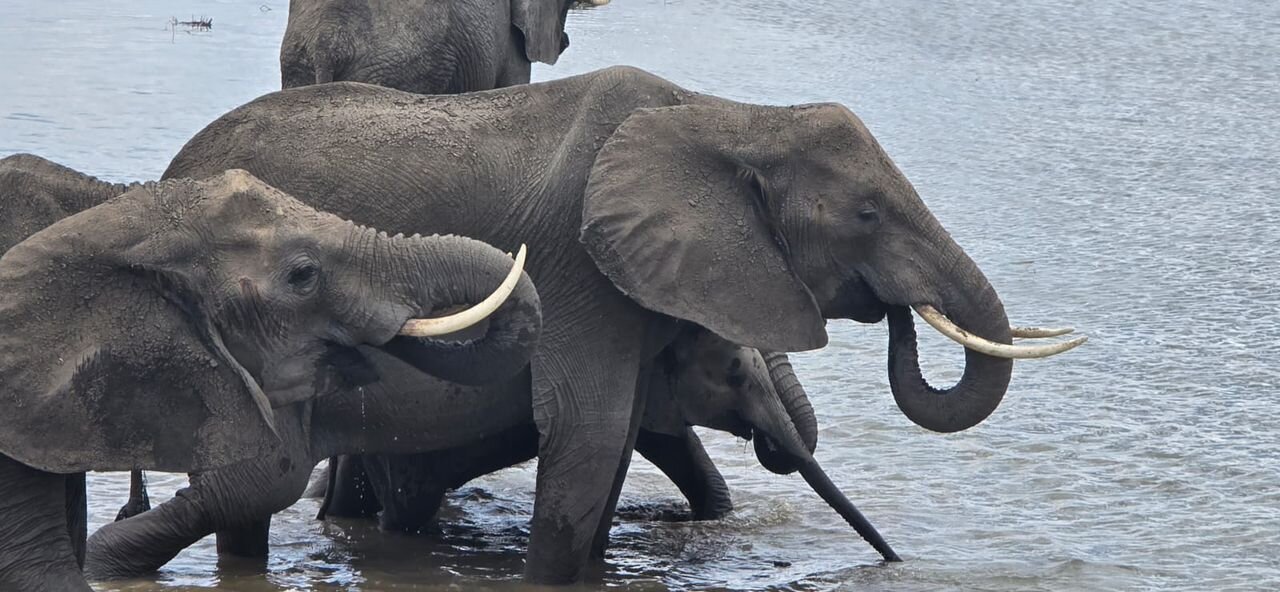
Its riverine fringe is the most productive strip of habitat in the park. Acacia and tamarind stands line the banks, giving shade that elephant and giraffe use through the heat of the day, and giraffe are commonly seen browsing those isolated stands. Open-billed storks fish the shallows.
The river corridor is also where guided walking safaris tend to run, since the vegetation is denser and the small detail more interesting than out on the open grass.
Mikumi has no big permanent river running through its game viewing area, which is exactly why the dry season works so well here. Water becomes scarce enough to concentrate everything. In parks with a major river, animals spread along it and never have to gather.
The Mkata Floodplain and Its Seasonal Swamps
The floodplain is what the river builds. Open grassland stretches to the horizon, broken by acacia, baobab, tamarind and patches of borassus palm, with the ground going from dust to standing water and back over the course of a year.
Mikumi’s vegetation is often described as woodland, swamp and grassland together, and the swamp element is easy to overlook because it disappears for half the year. Through the rains, shallow pans hold water across large parts of the plain, and that is precisely why game viewing gets harder: animals no longer need to visit any particular place.
The main tourist circuit of about 60 kilometres crosses this ground. In the dry months the black cotton soil sets hard and drives easily. After rain it turns to a heavy paste, and in March and April parts of the circuit are impassable.
The Hippo Pools: Mikumi’s Permanent Water
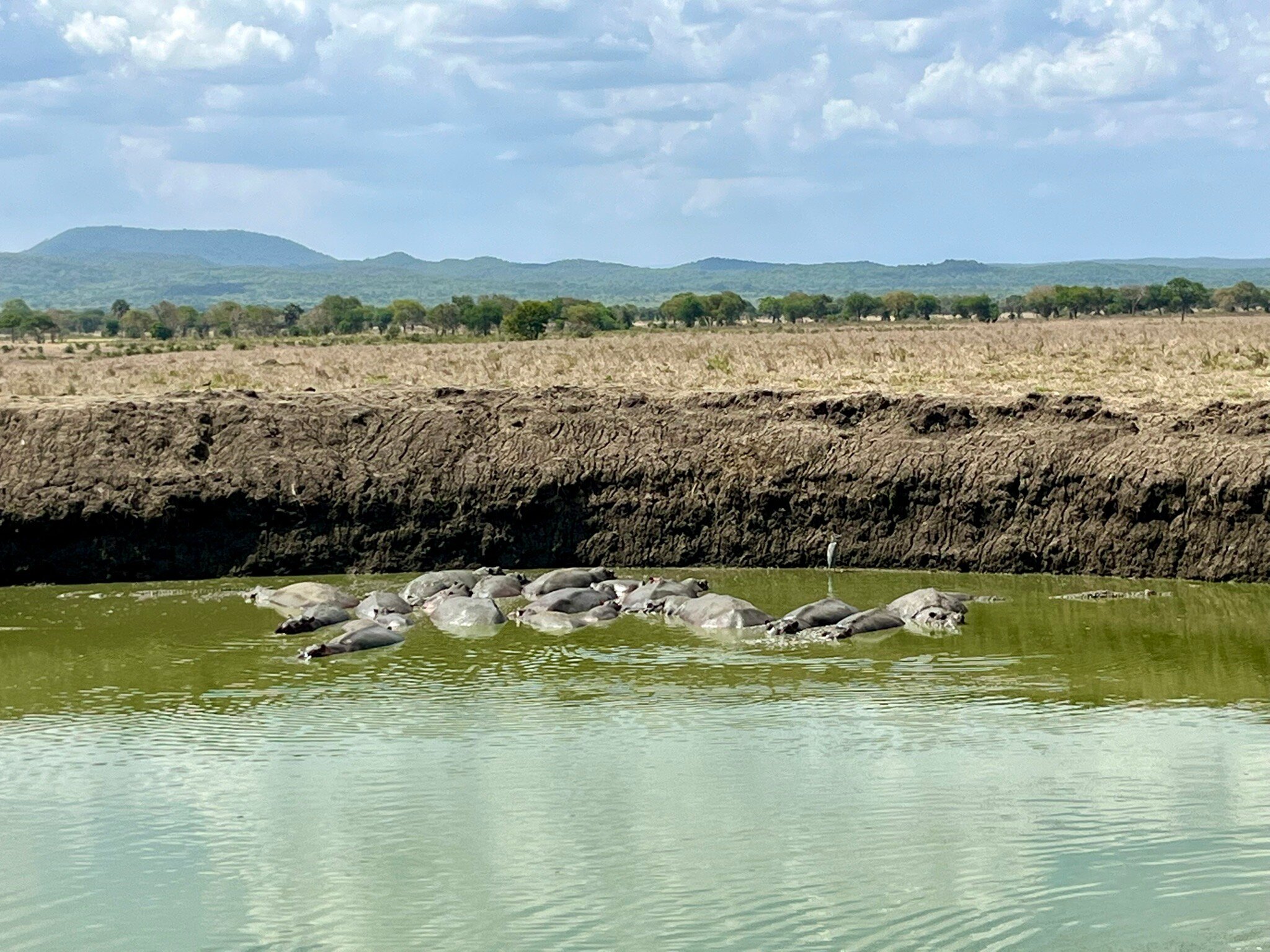
Two pools about five kilometres north of the main gate hold water year round and carry hundreds of hippo between them. They are the park’s most visited feature and the most reliable water on the whole circuit.
Permanence is what makes them matter ecologically. As seasonal channels dry back through the middle of the year, elephant, buffalo, zebra and antelope are pushed toward whatever still holds, and these pools take a large share of that traffic.
Nile crocodile share the water with the hippo. A designated viewing area lets visitors leave the vehicle, which is uncommon in Tanzanian parks, and there are toilets and a picnic spot alongside.
Hippo themselves keep unusual hours. They stay in the water through the middle of the day and leave after dark to graze, sometimes walking several kilometres before returning at first light.
The Mkata and Chamgore Waterholes on the Game Drive Circuit
Two waterholes appear by name in most Mikumi itineraries: Mkata and Chamgore. Both sit on the floodplain circuit within a normal morning’s drive of the main gate, and both reward the unfashionable tactic of parking and waiting.
Chamgore is the one associated most often with birds. Saddle-billed stork work the shallow edges, hamerkop patrol the margins and malachite kingfisher hunt from the reed stems. Monitor lizards work the mud, and pythons are recorded in the surrounding vegetation.
Through the dry season these pools pull in the plains game. Elephant tend to drink mid-morning and stay a while. Buffalo come in tight groups and leave quickly. Zebra, wildebeest, impala and waterbuck cycle through all day.
Give either pool thirty or forty minutes with the engine off. Animals that faded away when you arrived come back once the noise stops.
The Mwanamboga Waterhole Below Stanley’s Kopje
Mwanamboga sits on the Mkata Floodplain beneath the rock outcrop where Stanley’s Kopje camp is built, and guides frequently describe the surrounding ground as the best game viewing area in the park.
The camp’s twelve tents look down onto it from the lower perimeter of the hill, which means guests watch the water from their verandas rather than from a vehicle. That elevated angle over a waterhole is unusual and it is the main reason people book the camp.
Stanley’s Kopje operates from around June to February and closes through the wettest months because its access track becomes unreliable, so the Mwanamboga view is a dry season proposition.
Mikumi Wildlife Camp near park headquarters has its own waterhole, busy through the dry months with elephant, buffalo and impala.
In Mikumi the water does the guiding. Between June and October you do not look for animals across 3,230 square kilometres. You go to the handful of places that still hold water and let them come to you.
How Mountain Catchments Feed Water Into Mikumi
The park sits in a basin partly ringed by the Eastern Arc mountains, and its water comes off them.
The Uluguru range to the northeast, rising to about 2,630 metres, and the Rubeho plateau to the west, topping 2,286 metres, both intercept moisture moving inland from the Indian Ocean. The Rubehos receive more rain than the neighbouring plains for that reason. Uluguru forest streams gather into the Ruvu River, which supplies Dar es Salaam with its water.
Beyond the park’s boundaries, the Great Ruaha River runs in a steep sided valley separating the Rubeho Mountains from the Udzungwas to the south, and the Mkondoa River divides the Rubehos from the Ukaguru range to the north.
Mikumi itself gets what the mountains do not keep. That is the whole reason its seasonality is so pronounced.
How Water Concentrates Wildlife on a Dry Season Safari
From June to October the arithmetic is simple. Seasonal channels retreat, grass browns off and the number of drinking options falls sharply. Anything that needs water daily has to come to what remains.
September and October are the peak weeks. Buffalo can gather in herds of several hundred at a single source. Elephant come and stay. Predators know all of this, which is why lion are regularly seen near water through these months, often perched on the flattened tops of termite mounds watching the herds arrive.
From November to May the effect reverses. Water lies across the whole plain, animals disperse, grass grows past a metre and the waterholes lose their pulling power. The hippo stay, because the pools are their home rather than a drinking stop, but the supporting cast thins right out.
June to October: seasonal water gone, animals concentrated on the hippo pools and the named waterholes. The strongest game viewing of the year, peaking in September and October.
November to February: short rains fill shallow pans across the plain, game disperses, migrant birds arrive at the water in numbers. Best birding months.
March to May: long rains, high water, flooded ground and tall grass. Some circuit tracks impassable and Stanley’s Kopje closed for the season.
Birds and Reptiles of Mikumi’s Water Sources
Permanent water in country that dries out for half the year concentrates birds, and the pools are where a Mikumi birdwatching safari builds a list fastest. More than 400 species have been recorded across the park.
Open-billed storks gather around the hippo in flocks, working the mud the animals churn up. Yellow-billed stork, saddle-billed stork, marabou, hamerkop, herons and egrets use the same margins. Malachite kingfisher hunt from reed stems and African fish eagle call from the taller riverine trees.
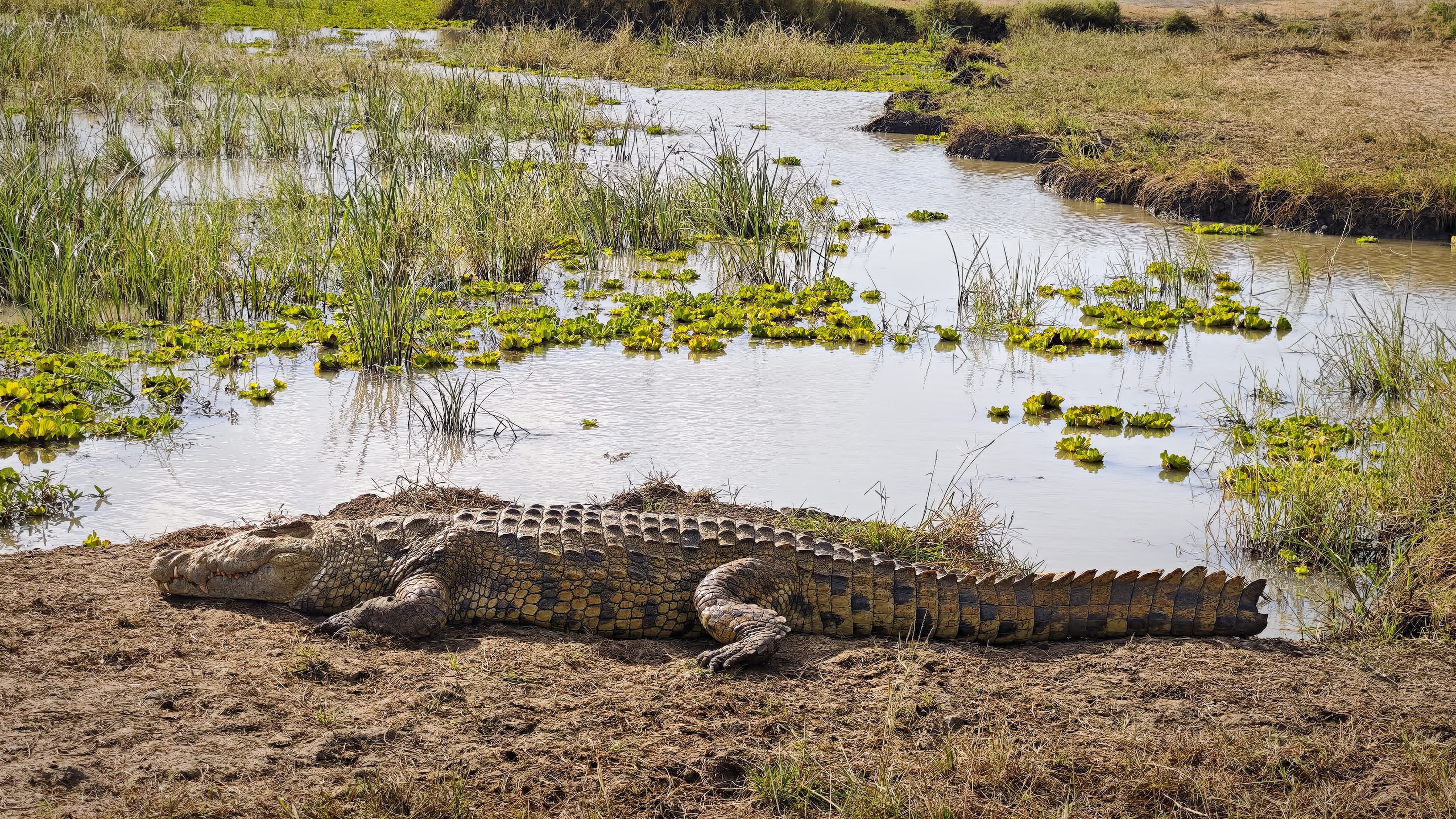
Nile crocodile inhabit the river systems and wetlands. Water monitors work the muddy fringes, hunting eggs and anything small enough to swallow, and they are common once you learn to spot the shape. Terrapins bask on exposed mud as levels drop, and frog chorus starts up in the evenings.
How Water Levels Change Access Across Mikumi
The road from Dar es Salaam is surfaced the whole way, so reaching the park is reliable in every month. What water changes is what you can do once inside.
In the dry season a high clearance two wheel drive handles most of the 60 kilometre circuit. After rain, four wheel drive becomes necessary, and in March and April parts of the floodplain simply cannot be driven. Tracks in the miombo hills toward the Vuma Hills deteriorate faster than the graded plain.
Stanley’s Kopje closes through the wettest months. Vuma Hills stays open all year, and lodges outside the boundary near Mikumi town operate in every month.
Questions About Water in Mikumi National Park
What is the main river in Mikumi National Park?
The Mkata River, which with its tributaries shapes the alluvial floodplain at the centre of the park. It is seasonal rather than permanent, running strongly through the rains and retreating to disconnected pools and damp ground in the dry months.
Are the hippo pools natural?
They are described in several sources as artificial pools, maintained as permanent water in a park where nearly everything else is seasonal. Two pools sit about five kilometres north of the main gate and hold hundreds of hippo along with Nile crocodile, with a designated viewing area where visitors can leave the vehicle.
Is there a charge to visit Mikumi’s waterholes and pools?
No separate charge. They sit on the standard game drive circuit and are covered by park entry, currently around US$30 per adult foreign non-resident per day and about US$10 for children aged 5 to 15, with lower rates for Tanzanian residents and East African citizens. Vehicle fees run roughly US$40 per day for a six to twelve seat safari vehicle.
When do animals gather at Mikumi’s water sources?
Most heavily from June to October, peaking in September and October when seasonal water has gone and the remaining pools are the only option. Within a day, elephant and buffalo most often drink mid-morning, while hippo are in the water through the middle of the day and out grazing at night.
Can I do a walking safari along the Mkata River?
Yes, with an armed ranger. Guided walks in Mikumi commonly run near the Mkata River corridor or around the hippo pools, last three to four hours and need advance booking. Charges run about US$20 for a walk of one to four hours and US$25 for a longer one, on top of park entry.
Does Mikumi have any permanent rivers?
Not within the main game viewing area. The Mkata is seasonal, which is why the permanent pools matter so much. The Great Ruaha River runs south of the park, separating the Rubeho Mountains from the Udzungwas, and the Mkondoa River lies to the north, but neither flows through the tourist circuit.
Booking Your Mikumi Trip
The safari companies and tour operators listed on this website put trips like this together for a living and know which camps, guides and routes actually deliver. We are an independent guide to Mikumi; we do not book or sell tours ourselves.
When you are ready, arrange your safari, tour or holiday with one of the recognised operators listed here. Tell them your dates and what matters most, and a real person, not a form, will handle the itinerary, park bookings and logistics for you.