Chamgore Waterholes
The Chamgore waterholes are one of the two named water sources on Mikumi National Park’s main game drive circuit, the other being Mkata, and they sit among the most productive stops on a Mikumi safari once the dry season takes hold. Guides bring vehicles here to wait rather than to pass through, because the water pulls in saddle-billed stork, hamerkop, malachite kingfisher, monitor lizards and, in the drier months, the plains game that has run out of options elsewhere. Mikumi lies in Tanzania’s Morogoro region, about four hours inland from Dar es Salaam.
This covers what Chamgore holds, how it changes across the year, and how to work it into a day on the floodplain circuit.
Where the Chamgore Waterholes Sit on the Mikumi Game Drive Circuit
Mikumi’s tourist road network runs across the Mkata Floodplain north and east of the Tanzam highway, covering roughly 60 kilometres of graded track. Chamgore sits on that circuit, in the swamp and grassland mosaic that makes up the park’s core game viewing area, reachable within a normal morning drive from the main gate.
The park’s vegetation up here is a mix of open grassland, seasonal swamp and scattered woodland, and the waterholes are the pivot points of the whole system. Everything else is seasonal. When the Mkata River channels retreat, the standing water is what remains.
A typical circuit strings Chamgore together with the Mkata waterhole and the hippo pools, which sit about five kilometres north of the main gate. Doing all three in one morning is normal and leaves room to sit at each.
Waterholes reward the vehicles that stop moving. Guides who have worked Mikumi for years say the same thing about Chamgore: park, cut the engine, and give it half an hour. Animals that had melted away when you arrived come back once the noise stops.
Wildlife at the Chamgore Waterholes on a Mikumi Safari
Through the dry months a Chamgore waterhole safari works on simple arithmetic. Water is scarce, animals need it daily, and the ones that need it most come to the few places still holding.
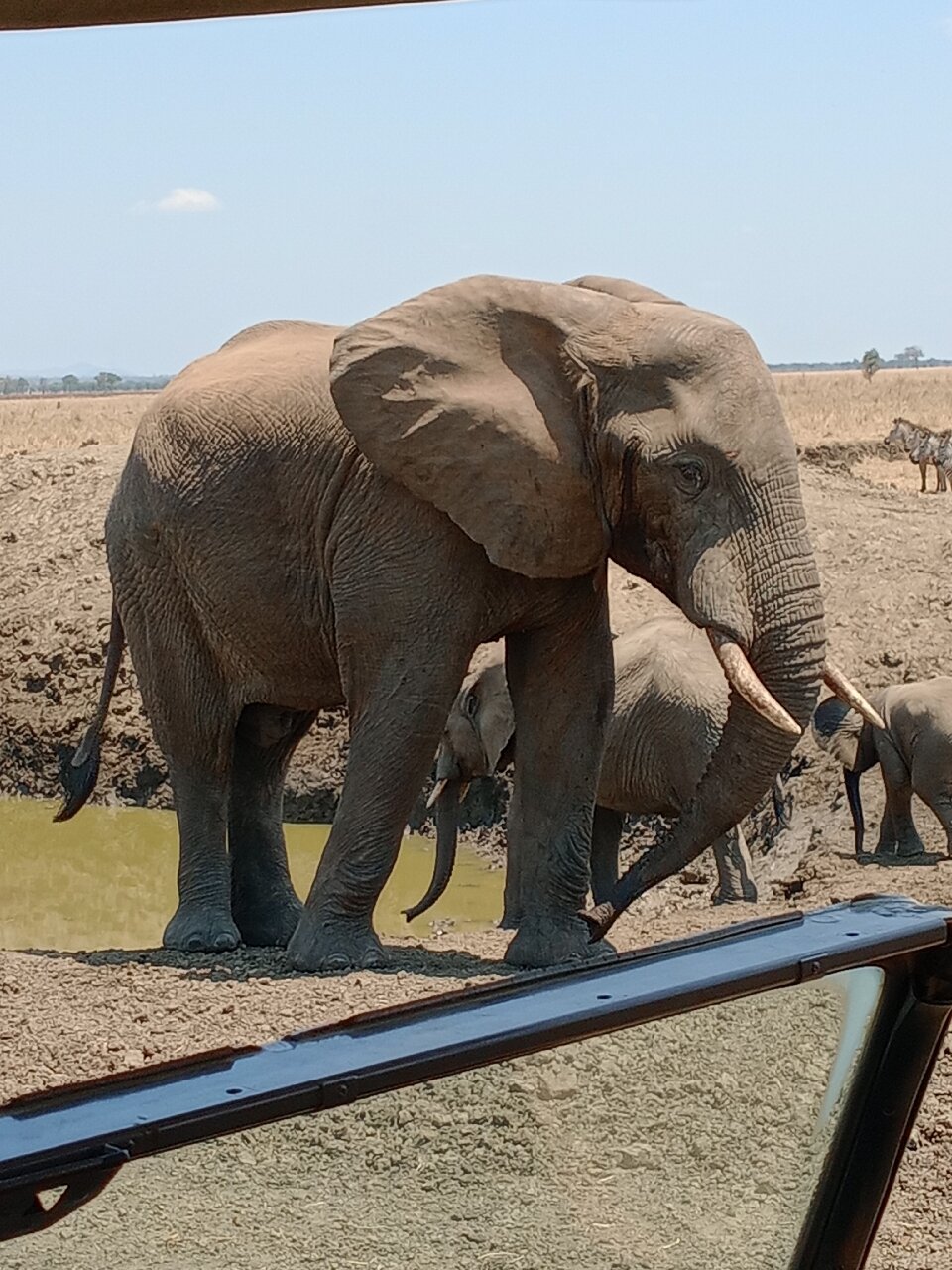
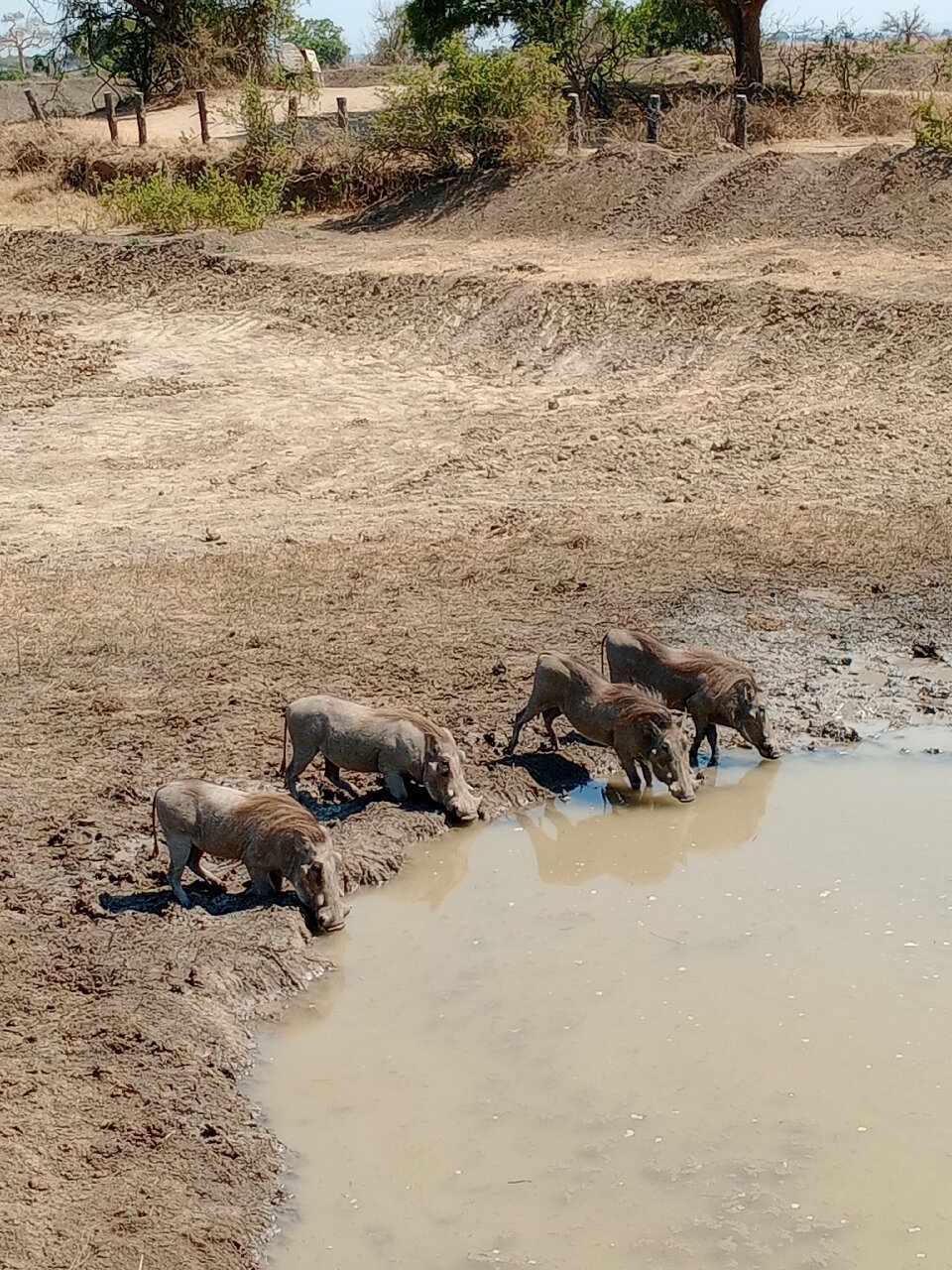
Elephant arrive mid-morning and can stay for an hour, drinking and then spraying mud across their backs. Buffalo come in tight groups and leave quickly. Zebra, impala, wildebeest and waterbuck cycle through in smaller numbers all day. Warthog run in, drink fast and go.
Predators know all this too. Lion in Mikumi are commonly seen on the floodplain, often using the flattened tops of termite mounds as lookouts over the grass, and the ground near water is where they wait. Sightings are regular through the dry season rather than certain on any given morning. Spotted hyena appear on early drives. Leopard are present in the park but genuinely rare to see.
Eland, the largest antelope in the world, are seen on the Mkata plains with a consistency few Tanzanian parks match, and the open ground around the waterholes is as good a place as any to find them.
Birdwatching Safaris at the Chamgore Waterholes
Chamgore is named in itineraries alongside its birds more often than its mammals, and with reason. Saddle-billed stork work the shallow edges, tall and unmistakable with the red and black bill. Hamerkop patrol the margins in their odd hunched way. Malachite kingfisher hunt from reed stems, small and impossibly bright.
Mikumi has more than 400 recorded bird species, and permanent water in country that dries out for half the year concentrates a good share of them. Open-billed and yellow-billed stork, herons, egrets and various waders all use the same shallows. African fish eagle call from taller trees nearby.
Out on the surrounding grass, look for yellow-throated longclaw, black-bellied bustard, secretary bird and the lilac-breasted roller that everyone photographs. Bateleur and martial eagle work the airspace above. A Mikumi birdwatching safari built around the waterholes can build a substantial list in a morning, and from November through April the resident cast is joined by European and North African migrants.
The waterholes reward patience in a way the open plain does not. On the grass you drive to find animals. Here you sit still and the animals come to you.
Reptiles at Chamgore: Monitor Lizards, Pythons and Crocodile
Water monitors work the muddy fringes at Chamgore, hunting eggs, frogs and anything small enough to take. They are large lizards, easily over a metre, and once you learn to look for the shape at the water’s edge you find them regularly.
Pythons are recorded in the vegetation around Mikumi’s pools, and Chamgore is one of the places named in that context. Sightings are entirely down to luck, and most visitors never see one, which is fine by most visitors.
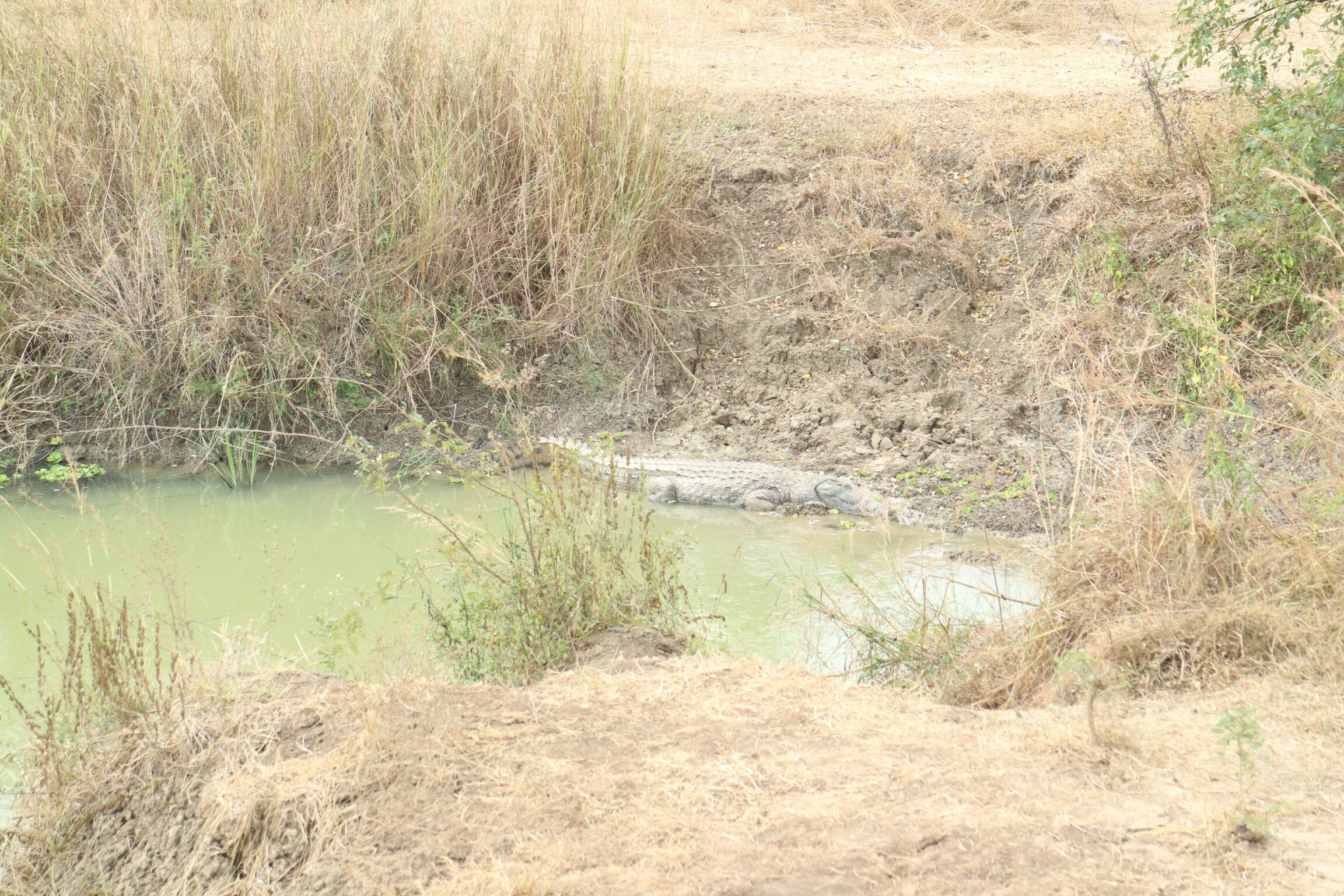
Nile crocodile inhabit the park’s river systems and wetlands. They are more reliably seen at the hippo pools than at the smaller waterholes, though they move.
Terrapins bask on exposed mud when the water drops. Frog chorus starts up in the evening and is one of the sounds people remember from camps near water.
Best Time of Day for a Chamgore Waterhole Game Drive
Early morning is the strongest window. Gates open at first light, the air is cool, predators are still moving from the night and the light across the grass is at its best. Reaching Chamgore within the first two hours of the day gives you the highest chance of catching something at the water before the heat pushes everything into shade.
Mid-morning is when elephant and buffalo tend to drink, so a slow circuit that arrives at the waterhole around nine or ten often works better than one that rushes there at dawn and leaves.
Late afternoon brings a second flush of movement as the temperature drops, and the light returns. Gates close at six in the evening, which sets the outer limit on how long you can sit.
How the Dry Season Transforms a Chamgore Waterhole Safari
Everything about the waterholes depends on the calendar. The dry season runs from June to October, and from late June onwards the grass thins, the seasonal water disappears and the concentration effect builds. September and October are the peak weeks, when large herds come to drink at the last remaining sources and the viewing is at its most consistent all year.
The wet season inverts it. From November to May water lies everywhere across the floodplain, so nothing has to visit a particular pool. The waterholes still hold birds and resident species, but the mammal traffic thins right out. Grass grows past a metre in places, which cuts visibility further.
March and April are the wettest, when black cotton soil on parts of the circuit becomes difficult and some tracks close.
June to October, dry: the waterholes at their most productive, with elephant, buffalo, zebra and antelope concentrating at the last water. September and October are the strongest weeks.
November to February, short rains: green plains, migrant birds present, mammals dispersed because water is available everywhere. Best birding of the year at the pools.
March to May, long rains: highest water, tallest grass, poorest track conditions on the circuit. Fewest visitors and the hardest game viewing.
Photography Tips for a Chamgore Waterhole Safari
Shoot low. Waterhole photographs improve enormously when the camera drops toward the animal’s eye level rather than looking down from a raised seat, so work from the lowest window you can and rest the lens on a bean bag.
A polariser cuts surface glare and brings back reflections and detail in the shallows, which matters more here than anywhere else in the park. For birds like malachite kingfisher, something long is needed, since they sit further out than they look.
Wait for behaviour rather than portraits. Elephant spraying mud, buffalo pushing in at the edge, a stork striking. Midday light is flat and hard, so if you have a choice, take the waterhole early or late and use the middle of the day for the drive between stops.
Combining Chamgore with Mikumi’s Other Water Sources
A sensible Mikumi day links the water. The hippo pools sit around five kilometres north of the main gate and hold hippo, crocodile and a permanent bird population, with a viewing area where you can leave the vehicle. The Mkata waterhole is the other named stop alongside Chamgore. Further out, the Kisingura circuit runs through different country again, and Stanley’s Kopje overlooks the Mwanamboga waterhole from a rock outcrop.
Doing three water stops with real sitting time at each fills a morning properly, and it is a far better use of the day than covering maximum distance. The floodplain circuit is only 60 kilometres. There is no prize for finishing it early.
Getting to the Chamgore Waterholes from Dar es Salaam
Mikumi’s main gate sits on the Tanzam highway roughly 280 to 300 kilometres from Dar es Salaam, four to five hours by road via Morogoro on good tarmac. The waterhole circuit begins a few kilometres inside the gate.
Day trips from the coast are possible and popular, though they mean a five in the morning departure and only a few hours of park time. One night inside or beside the park buys you a dawn start, which is when the waterholes are at their best. Kikoboga airstrip inside the park handles light aircraft from Dar es Salaam, Zanzibar, Nyerere and Ruaha.
Questions About the Chamgore Waterholes
Is there an extra charge to visit the Chamgore waterholes?
No. They sit on the standard game drive circuit and are covered by Mikumi park entry. Adult foreign non-residents currently pay around US$30 per person per day and children aged 5 to 15 about US$10, with lower rates for Tanzanian residents and East African citizens. A safari vehicle adds roughly US$40 per day, a private car around US$10.
How long should I spend at a waterhole in Mikumi?
Thirty to forty minutes with the engine off is a reasonable minimum. Animals that leave when a vehicle arrives usually return once things go quiet, and the most interesting behaviour tends to happen after the first ten minutes rather than during them.
What is the best month to visit the Chamgore waterholes?
September and October, at the end of the long dry season, when water is scarcest and the concentration of animals at the remaining pools peaks. The dry season overall runs June to October. November to February suits birders better.
Can you get out of the vehicle at Chamgore?
No. Leaving the vehicle is only permitted at designated areas in Mikumi, principally the viewing area at the hippo pools and the picnic sites. Elsewhere on the circuit you stay in the car unless you are on a formal walking safari with an armed ranger.
What are the chances of seeing lions at the waterholes?
Regular through the dry season but not guaranteed on any given drive. Lion in Mikumi are commonly seen on the Mkata Floodplain, often perched on termite mounds watching the herds. Leopard and African wild dog are both present in the wider ecosystem and both are rare sightings.
Can I do a walking safari near the waterholes?
Guided walking safaris run in Mikumi with an armed ranger, usually near the Mkata River corridor or around the hippo pools rather than at the open waterholes. Walks last around three to four hours, need advance booking, and cost roughly US$20 to US$40 for a small group on top of park entry.
Booking Your Mikumi Trip
The safari companies and tour operators listed on this website put trips like this together for a living and know which camps, guides and routes actually deliver. We are an independent guide to Mikumi; we do not book or sell tours ourselves.
When you are ready, arrange your safari, tour or holiday with one of the recognised operators listed here. Tell them your dates and what matters most, and a real person, not a form, will handle the itinerary, park bookings and logistics for you.