Where Are the Best Game-Viewing Areas in Mikumi?
The best game viewing on a Mikumi safari is on the Mkata Floodplain northeast of the Tanzam highway, and within it the strongest areas are the ground around the Mwanamboga waterhole, the hippo pools five kilometres north of the main gate, the Kisingura circuit, and the Chamgore and Mkata waterholes. The miombo foothills toward the Vuma Hills hold a different set of species again. Mikumi covers 3,230 square kilometres in Tanzania’s Morogoro region, with a tourist road circuit of roughly 60 kilometres.
Below is each area in turn, what it produces, and how to link them into a sensible day.
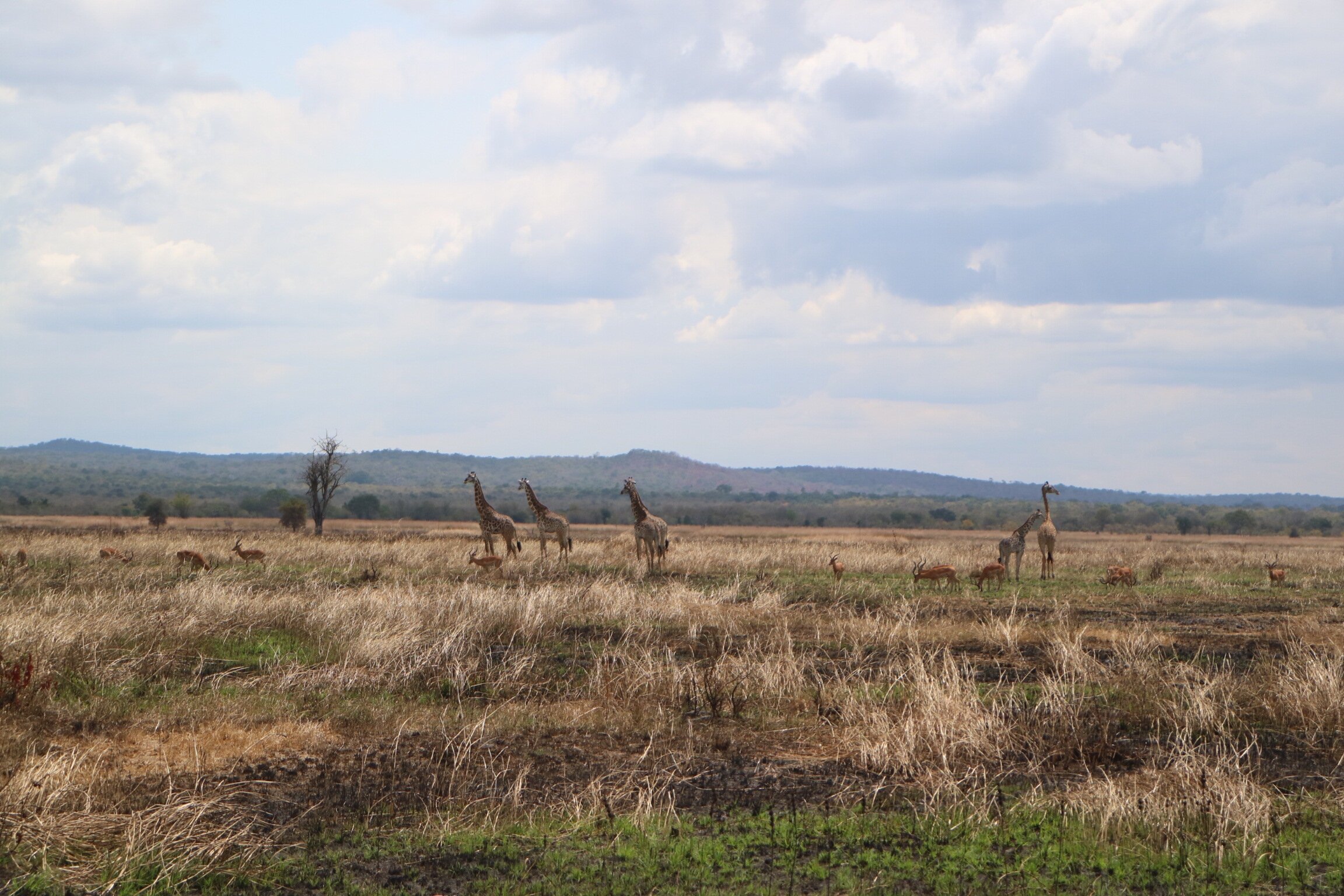
The Mkata Floodplain: The Core Game Viewing Area of Mikumi
Almost everything worth seeing sits on the Mkata Floodplain. It is the alluvial plain built by the seasonal Mkata River, filling the northwestern part of the park with open grassland broken by acacia, borassus palm, black hardwood and the occasional baobab.
The main tourist circuit runs about 60 kilometres of graded track across it, with loops branching off and rejoining so a morning drive and an afternoon drive can cover different ground.
This is where the plains game concentrates: Burchell’s zebra, blue wildebeest, impala, buffalo, warthog and eland. Mikumi is widely rated the most reliable park in Tanzania for eland, the largest antelope in the world. Lion use the flattened tops of termite mounds as lookouts over the herds.
Roughly four fifths of the park lies south of the highway with minimal roads and no facilities. That country is for well equipped expeditions, not for game drives.
Do not try to cover the whole circuit in a morning. Sixty kilometres driven slowly with real stops at two or three waterholes fills a half day properly, and the animals arrive at vehicles that have been sitting quietly rather than at ones passing through.
The Mwanamboga Waterhole Area on a Mikumi Game Drive
Guides and camp operators repeatedly describe the ground around the Mwanamboga waterhole as the best game viewing area in the park, and it is worth taking that seriously.
Mwanamboga sits on the floodplain beneath the rocky kopje on which Stanley’s Kopje camp is built. The camp’s twelve tents look down onto the water from the lower perimeter of the hill, which gives an elevated view over a waterhole that few properties anywhere can match.
Through the dry season the pool draws elephant, buffalo, zebra and antelope, and predators position themselves around that traffic. The open ground surrounding it is prime lion country.
Stanley’s Kopje operates from around June to February and closes through the wettest months because its access track becomes unreliable, so this area is at its most accessible in the dry season anyway.
The Hippo Pools Area Near the Mikumi Main Gate
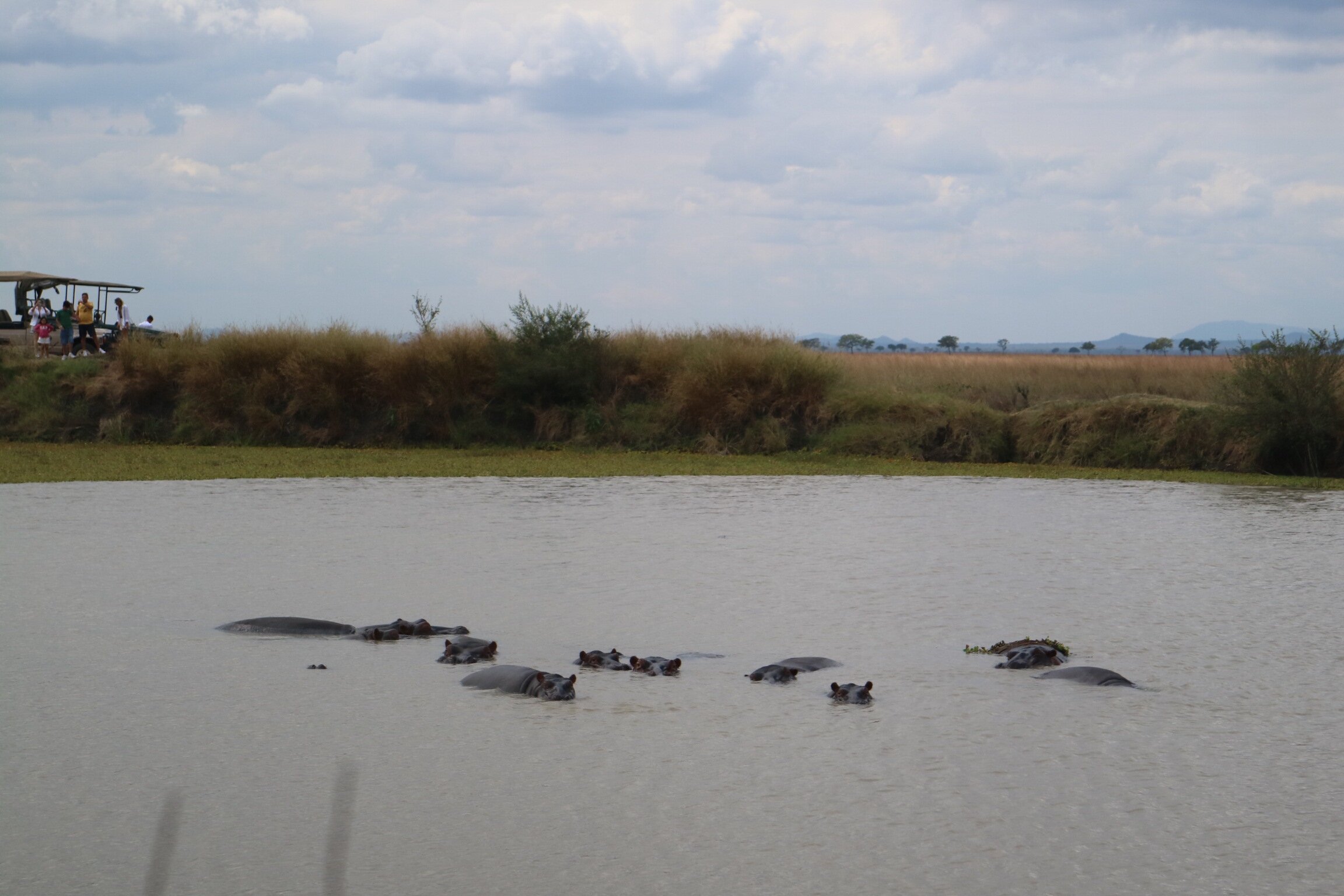
Two permanent pools about five kilometres north of the main gate hold hundreds of hippo along with Nile crocodile, and they are the most visited feature in the park.
What makes the area strong is permanence. In a park where nearly all surface water is seasonal, these pools hold year round, so from June to October they pull in elephant, buffalo and antelope that have run out of options elsewhere.
A designated viewing area lets visitors leave the vehicle, which is uncommon in Tanzanian parks, with toilets and a picnic spot alongside. Open-billed storks gather around the hippo in flocks, joined by yellow-billed stork, herons, hamerkop and malachite kingfisher.
Hippo run opposite hours to the rest of the park, staying in the water through the middle of the day and grazing at night, so aim for the pools between ten and two.
The Kisingura Circuit for Mikumi Game Drives
The Kisingura circuit is named alongside the hippo pools and Vuma Hill as one of the most rewarding drives in Mikumi, and it runs through different country from the central floodplain loops.
It sits closer to the treeline, which changes the species mix and gives cover that the open plain does not. Itineraries that mention Mkata Plain, Kisingura area and the hippo dams together are describing a full working day in the park.
Mikumi is at its best in the early morning and late afternoon, when the light is low and the wildlife most active, and Kisingura rewards those hours as much as anywhere.
Ask your guide whether it is holding game before committing a morning to it, since conditions shift across the season.
The Chamgore and Mkata Waterholes on the Circuit
Two waterholes appear by name in most Mikumi itineraries: Mkata and Chamgore. Both sit on the floodplain circuit within a normal morning’s drive of the main gate.
Chamgore is the one associated most often with birds. Saddle-billed stork work the shallow edges, hamerkop patrol the margins, malachite kingfisher hunt from reed stems, and monitor lizards work the mud. Pythons are recorded in the surrounding vegetation.
Through the dry months both pools draw the plains game hard. Elephant tend to drink mid-morning, buffalo come in tight groups and leave quickly, and zebra, wildebeest and impala cycle through all day.
Park, cut the engine and give either pool thirty or forty minutes. That single habit produces more than an extra twenty kilometres of driving.
Mikumi’s best areas are not secrets. They are the four or five places holding water, and in the dry season everything in the park has to visit one of them.
The Kikoboga Area Near Park Headquarters
Kikoboga sits in the centre of the park near headquarters and the airstrip, and game viewing around it is frequently called underrated.
Mikumi Wildlife Camp looks out over its own waterhole, which gets busy through the dry season with elephant, buffalo and impala as regular visitors. Lion, giraffe and zebra are all seen in the immediate vicinity of the camp.
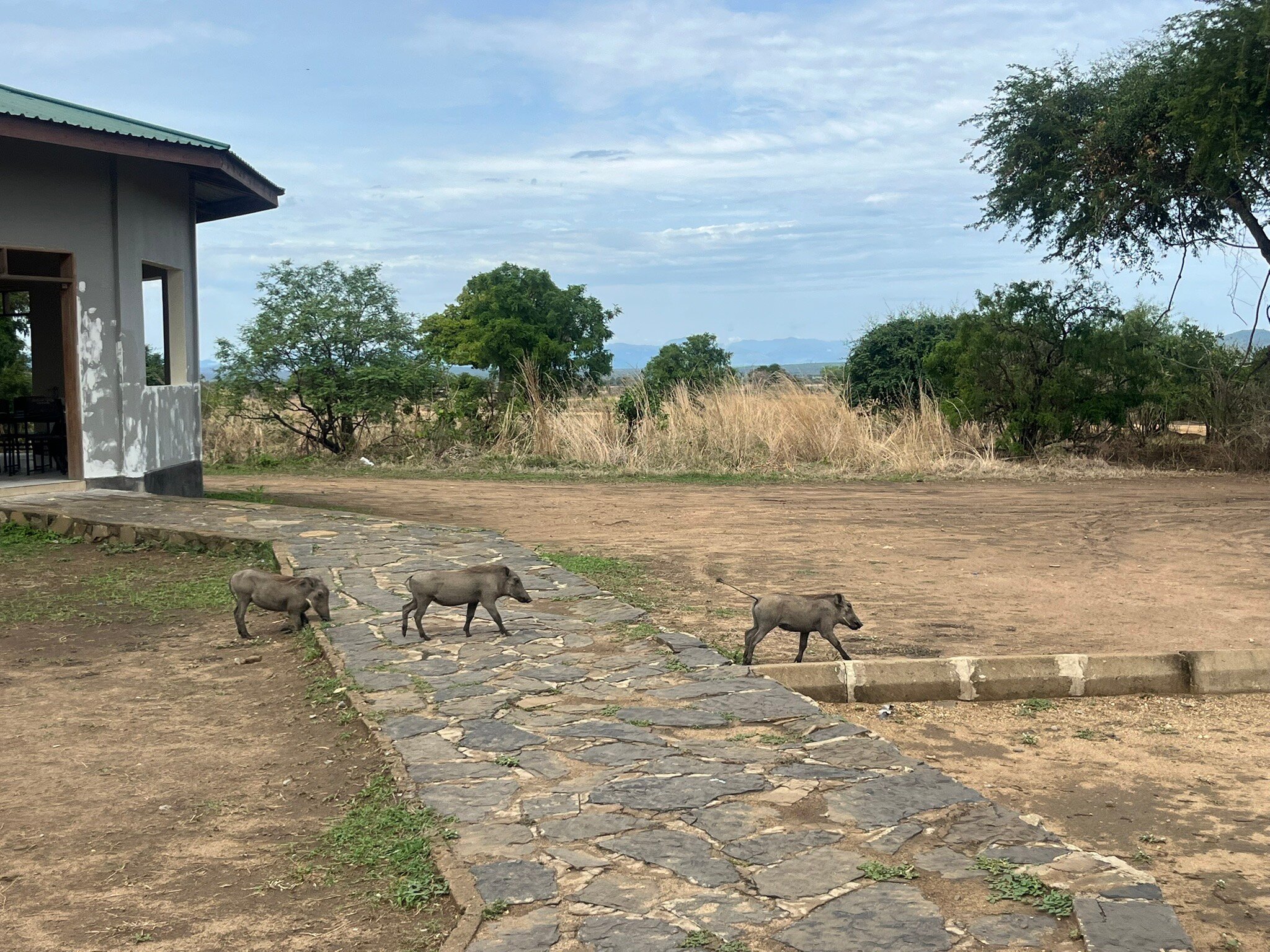
Yellow baboons are a permanent presence around this central strip, and troops here have been studied for decades because of how they use the highway that runs through the park.
The area’s weakness is proximity to the tarmac. Research on the floodplain found that in tall grassland, eland, bohor reedbuck, black-backed jackal, elephant and wildebeest all used ground within 600 metres of the highway far less often than expected, with zebra avoiding within 200 metres. The productive ground sits further north.
The Miombo Foothills Toward the Vuma Hills
Where the plain lifts toward the mountains, grassland gives way to miombo woodland dominated by brachystegia, and the species change with it.
Greater kudu and sable antelope favour these wooded foothills and are seldom seen out on open grass. A mature sable bull carries backswept horns close to a metre long, black flanks and a white face mask. Lichtenstein’s hartebeest works the woodland edge.
Sightings here are harder and slower. Canopy closes overhead in places and an animal thirty metres off the track can be genuinely hidden. What the area offers is species you will not find anywhere else in the park.
Vuma Hills Tented Camp sits up here and stays open year round, putting the woodland on your doorstep. Reaching it from the floodplain takes a half day, which is why short itineraries skip it and go home without seeing sable.
Mwanamboga and the central floodplain: the strongest all round game viewing in Mikumi. Elephant, buffalo, zebra, eland and lion on termite mounds through the dry season.
Hippo pools and Chamgore: permanent and semi permanent water drawing hippo, crocodile, waterbirds and dry season traffic from across the plain.
Miombo foothills near the Vuma Hills: sable antelope, greater kudu, Lichtenstein’s hartebeest and woodland birds. Slower going and a different species list.
How to Link Mikumi’s Best Areas Into a Day
Start at first light on the floodplain, working the termite mounds and the open ground while predators are still moving and the light is low. Reach water around nine or ten, when elephant and buffalo most often drink, and sit.
Take the middle of the day at the hippo pools, where hippo are at their most active and the picnic area lets you get out of the vehicle. Baboons will raid an unattended table, so keep bags closed.
Head out again from about four as temperatures drop, taking a different loop from the morning. Gates close at six.
On a three night trip, give one full morning to the miombo foothills rather than repeating the floodplain a third time.
Getting to Mikumi’s Game Viewing Areas
The main gate sits on the Tanzam highway roughly 283 to 300 kilometres from Dar es Salaam, four to five hours by road via Morogoro. The floodplain circuit begins within minutes of it.
In the dry season a high clearance two wheel drive handles much of the graded circuit. After rain, four wheel drive becomes necessary, and in March and April parts of it cannot be driven. Tracks in the miombo hills deteriorate faster than the plain.
Kikoboga airstrip inside the park handles light aircraft from Dar es Salaam, Zanzibar, Nyerere and Ruaha.
Questions About Mikumi’s Game Viewing Areas
Which is the single best game viewing area in Mikumi?
The ground around the Mwanamboga waterhole on the Mkata Floodplain, which camp operators and guides consistently name as the park’s strongest area. The hippo pools near the main gate and the Chamgore waterhole are the other reliable spots, particularly through the dry season from June to October.
Does it cost extra to visit different areas of Mikumi?
No. Park entry covers the whole park, currently around US$30 per adult foreign non-resident per day and about US$10 for children aged 5 to 15, with lower rates for Tanzanian residents and East African citizens. A six to twelve seat safari vehicle adds roughly US$40 per day. Reaching the miombo foothills costs time rather than money.
How long does it take to drive Mikumi’s game viewing circuit?
The main circuit is about 60 kilometres. Driven slowly with stops at two or three waterholes, it fills a half day comfortably. Most people split it into a morning drive of three to four hours and an afternoon drive of similar length rather than attempting it in one run.
Where do I go to see sable antelope in Mikumi?
The miombo-covered foothills, particularly toward the Vuma Hills in the southwest. Sable and greater kudu are seldom seen on the open floodplain, so an itinerary that stays on the main circuit will not produce either. Early morning gives the better odds, and sightings are regular rather than certain.
Is the area near the highway worth driving?
Less than the ground further north. Research on the floodplain found several large mammals used the strip within 600 metres of the highway far less often than expected, with zebra avoiding within 200 metres. Animals are commonly visible from the tarmac, but the productive game viewing sits deeper into the circuit.
Can I explore southern Mikumi?
Only on a specialist trip. Roughly four fifths of the park lies south of the highway with minimal roads and no facilities, described as suited to well equipped expeditions. The accessible exception is the southwestern corner around the Vuma Hills, which is reachable on a normal itinerary.
Booking Your Mikumi Trip
The safari companies and tour operators listed on this website put trips like this together for a living and know which camps, guides and routes actually deliver. We are an independent guide to Mikumi; we do not book or sell tours ourselves.
When you are ready, arrange your safari, tour or holiday with one of the recognised operators listed here. Tell them your dates and what matters most, and a real person, not a form, will handle the itinerary, park bookings and logistics for you.