Hippo Pool Visit in Mikumi National Park
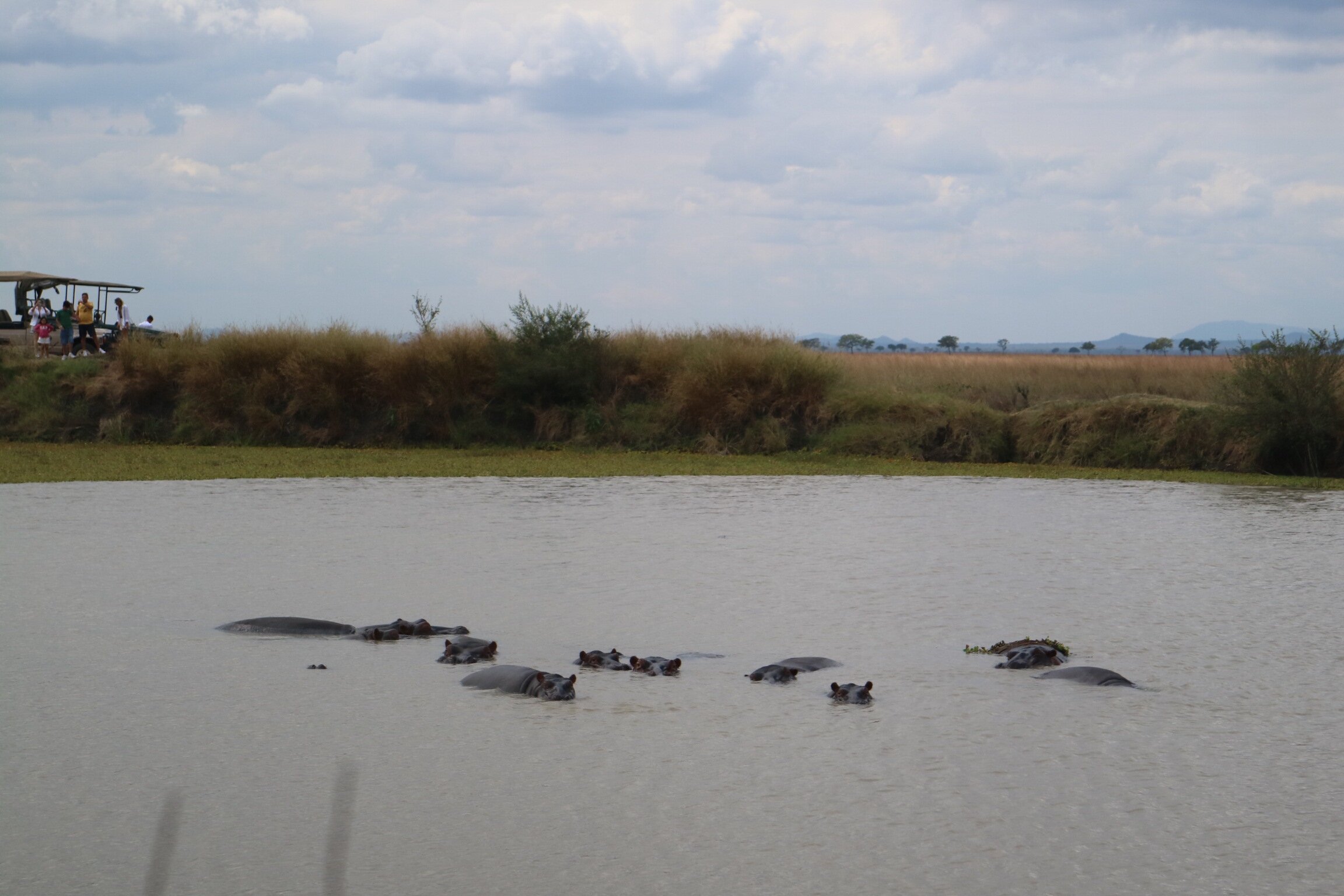
A hippo pool visit is a standard stop on almost every Mikumi safari, taking in two permanent pools about five kilometres north of the main gate where hundreds of hippo share the water with Nile crocodile. It is one of the few places in the park where visitors may leave the vehicle, using a designated viewing area with toilets and a picnic spot alongside. Best visited between mid-morning and early afternoon, when hippo are in the water rather than out grazing. Mikumi sits in Tanzania’s Morogoro region, four to five hours from Dar es Salaam.
Below is how a visit works in practice, when to arrive, and what to do while you are there.
What a Hippo Pool Visit in Mikumi Involves
The stop is short by design and long by choice. Most guides build it into a morning circuit or use it as the lunch break on a full day drive, and how much you get from it depends almost entirely on how long you stay.
You park, walk to the viewing area, and watch from solid ground set back from the water. That is unusual in Tanzania, where visitors are normally confined to vehicles, and it is the main reason the pools appear on virtually every Mikumi itinerary.
Toilets and a picnic spot make it the natural place to break a long morning. Many two day trips from Dar es Salaam take lunch here.
Vehicles arrive, stay ten minutes and leave. Those that stay forty minutes see considerably more, since hippo submerge for five or six minutes at a stretch and a short stop can coincide entirely with a lot of still brown water.
Time your visit for late morning rather than dawn. Hippo graze on land at night, sometimes walking several kilometres, and return before first light. They stay in the pools through the middle of the day, so ten until two shows the most animals harsh light or not.
Watching Hippo Behaviour at the Mikumi Pools
Hippo pack close in the shallows and on a good dry season day the surface can look more like animal than water. Sources put the resident population in the hundreds across the pool system.
Sound is what most visitors remember. The deep rolling grunt carries a long way across open ground and is one of the few African animal noises that genuinely surprises people who have only heard it on film.
Watch for yawning displays, which are threat rather than tiredness, bulls jostling for position, and calves riding on their mothers’ backs. Territorial disputes flare up and subside within seconds.
Give it time. The interesting behaviour usually starts after the first ten minutes rather than during them, once the group has settled to your presence.
Crocodile and Reptiles on a Hippo Pool Safari
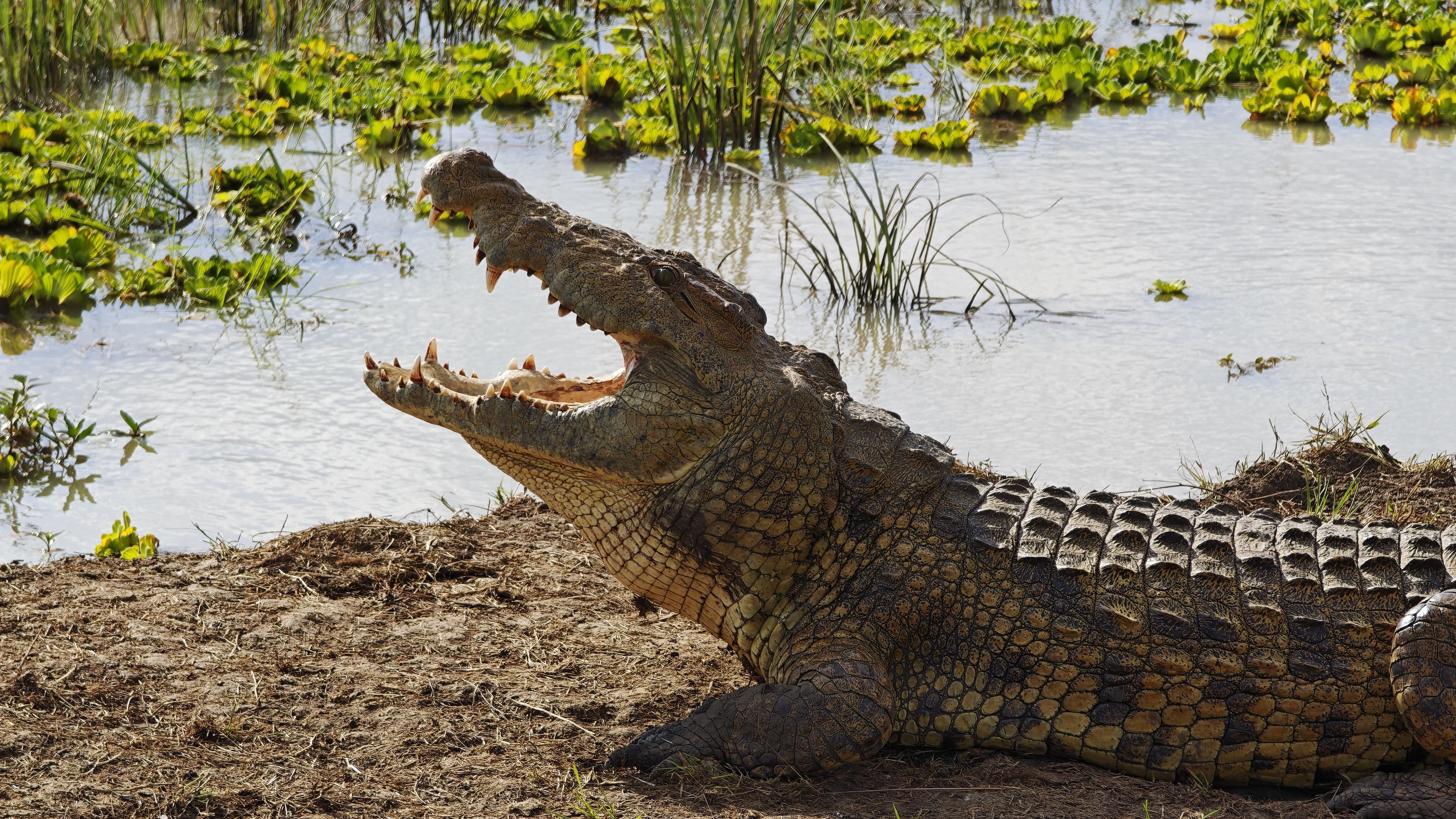
Nile crocodile share both pools and are easy to overlook, since a large one lying half submerged reads as a log until it moves.
On cooler mornings they haul out onto the bank to warm, which is when they are simplest to see and photograph. Later in the day they slide back and become part of the scenery again.
Water monitors work the muddy fringes, hunting eggs, frogs and anything small enough to swallow. They are large lizards, often over a metre, and common once you learn to spot the shape at the water’s edge.
Pythons are recorded in the reeds and vegetation around the pools, though sightings are entirely down to luck. Terrapins bask on exposed mud as levels drop.
Birdwatching During a Mikumi Hippo Pool Visit
The pools are the best single birding stop in a park with more than 400 recorded species, because permanent water in country that dries out for half the year concentrates everything.
Open-billed storks gather around the hippo in flocks, working the mud the animals churn up for snails and mussels. That combination is one of the defining images of Mikumi and easy to watch from the viewing area.
Yellow-billed stork, saddle-billed stork, marabou, hamerkop, herons and egrets use the same margins. Malachite kingfisher hunt from the reed stems, small and impossibly bright against the green.
African fish eagle call from the taller trees nearby. From November through April, European and North African migrants join the resident cast and push the numbers up sharply.
The storks and the hippo occupy the same few metres of water without friction, because the storks are working the mud the hippo stir up. Most people photograph the hippo and drive off before noticing.
Dry Season Traffic at the Mikumi Hippo Pools
The pools hold water year round in a park where nearly everything else is seasonal, and that permanence is what makes them matter ecologically rather than just scenically.
As the seasonal channels of the Mkata River retreat between June and October, elephant, buffalo, zebra and antelope are pushed toward whatever still holds. The pools take a large share of that traffic, particularly in September and October when water is scarcest.
So a dry season visit is about more than hippo. Sitting there for an hour in October can produce elephant coming down to drink, buffalo arriving in tight groups, and the plains game cycling through all day.
In the wet months the supporting cast thins out, because water is available across the whole floodplain and nothing has to visit. The hippo stay, since the pools are their home rather than a drinking stop.
Safety Rules During a Hippo Pool Visit
Stay inside the marked viewing area. It is set back deliberately, on ground the hippo do not use, and the rangers on site enforce it.
Hippo kill more people across Africa each year than most predators do, almost always because somebody ended up between an animal and its water. Do not walk along the bank looking for a better angle, and never position yourself between the pool and open grassland, which is a hippo’s escape route.
Keep noise down. Sudden sound startles them and a startled hippo moves fast for something that size. Crocodile share the same water.
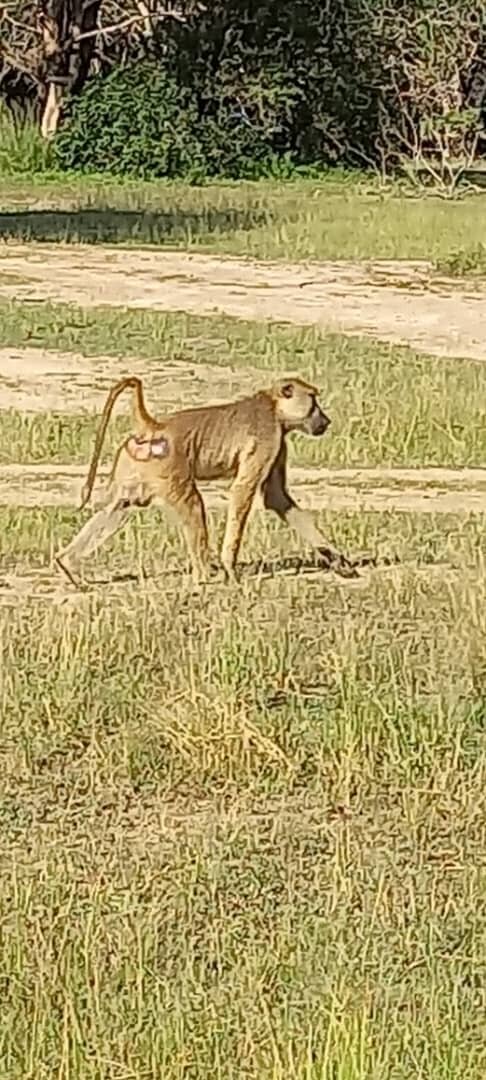
Baboons are the more likely nuisance. Troops raid the picnic area, so keep vehicle windows closed when parked, bags zipped and hands on food. Never feed them.
Photography at the Mikumi Hippo Pools
Being out of the vehicle gives angles a car cannot, so use them. Get low rather than shooting down at the water, since a lower viewpoint puts you closer to eye level with the animals.
A polariser is worth having. It cuts glare off the surface and brings back reflections and detail in the shallows, which matters more here than anywhere else in the park.
Midday light is flat and harsh, which is the trade for visiting when the hippo are actually in the water. Work with it by focusing on behaviour rather than portraits: a yawn, a bull pushing in, a stork striking.
Something long is needed for malachite kingfisher and the smaller waterbirds, which sit further out than they look.
Combining a Hippo Pool Visit With the Rest of Mikumi
The pools sit five kilometres north of the main gate on the standard circuit, so they slot into almost any itinerary without a detour.
A sensible morning links them with the Mkata and Chamgore waterholes, giving three water stops with real sitting time at each. Mwanamboga sits below the rocky kopje where Stanley’s Kopje camp is built, in ground guides rate as the park’s strongest.
Guided walking safaris in Mikumi often run near the pools or along the Mkata River corridor, with an armed ranger, lasting three to four hours in the early morning. Walks do not go to the water’s edge, though hippo paths leading away from the pools are a standard feature.
Because the pools sit so close to the gate, they are the one Mikumi attraction that works properly on a day trip from Dar es Salaam.
Questions About Visiting the Mikumi Hippo Pools
Is there a separate charge for a hippo pool visit in Mikumi?
No. The pools sit on the standard game drive circuit and are covered by park entry, currently around US$30 per adult foreign non-resident per day and about US$10 for children aged 5 to 15, with lower rates for Tanzanian residents and East African citizens. A safari vehicle adds roughly US$40 per day.
Can I get out of the vehicle at the hippo pools?
Yes, within the designated viewing area, which is one of the few places in Mikumi where leaving the car is permitted. Stay inside the marked zone, follow ranger instructions and do not walk toward the water or along the bank. There are toilets and a picnic spot alongside.
What time of day is best for a hippo pool visit?
Between about ten in the morning and two in the afternoon, when hippo are in the water rather than out grazing. They leave the pools after dark to feed and return before first light, so a dawn visit often shows fewer animals than late morning. The light is harder at midday, which is the trade.
How long should I spend at the hippo pools?
Thirty to forty minutes as a minimum. Hippo submerge for five or six minutes at a time, so a ten minute stop can coincide almost entirely with empty water. The behaviour worth watching usually begins after the first ten minutes.
What else can I see at the hippo pools?
Nile crocodile share both pools, water monitors work the muddy edges and pythons are recorded in the surrounding vegetation. Open-billed storks gather in flocks around the hippo, alongside yellow-billed and saddle-billed stork, herons, hamerkop and malachite kingfisher. In the dry season elephant and buffalo come down to drink.
Are the hippo pools worth visiting in the rainy season?
The hippo are resident year round, so they are always there. What changes is the supporting cast, since water lies across the whole floodplain from November to May and other animals stop needing to visit. Birding is better in those months, and access on the tracks leading in can be poor in March and April.
Booking Your Mikumi Trip
The safari companies and tour operators listed on this website put trips like this together for a living and know which camps, guides and routes actually deliver. We are an independent guide to Mikumi; we do not book or sell tours ourselves.
When you are ready, arrange your safari, tour or holiday with one of the recognised operators listed here. Tell them your dates and what matters most, and a real person, not a form, will handle the itinerary, park bookings and logistics for you.