Elephant, Buffalo & Zebra Plains in Mikumi National Park
The open plains of the Mkata Floodplain are where a Mikumi safari delivers its big herds: Burchell’s zebra and blue wildebeest moving across the grass, buffalo gathering in groups of several hundred at the dry season waterholes, and elephant working the acacia and tamarind stands along the river. All three are commonly seen from the graded circuit of roughly 60 kilometres northeast of the Tanzam highway. Mikumi covers 3,230 square kilometres in Tanzania’s Morogoro region.
Below is where each species sits on the plain, how they behave through the day, and how the seasons move them.
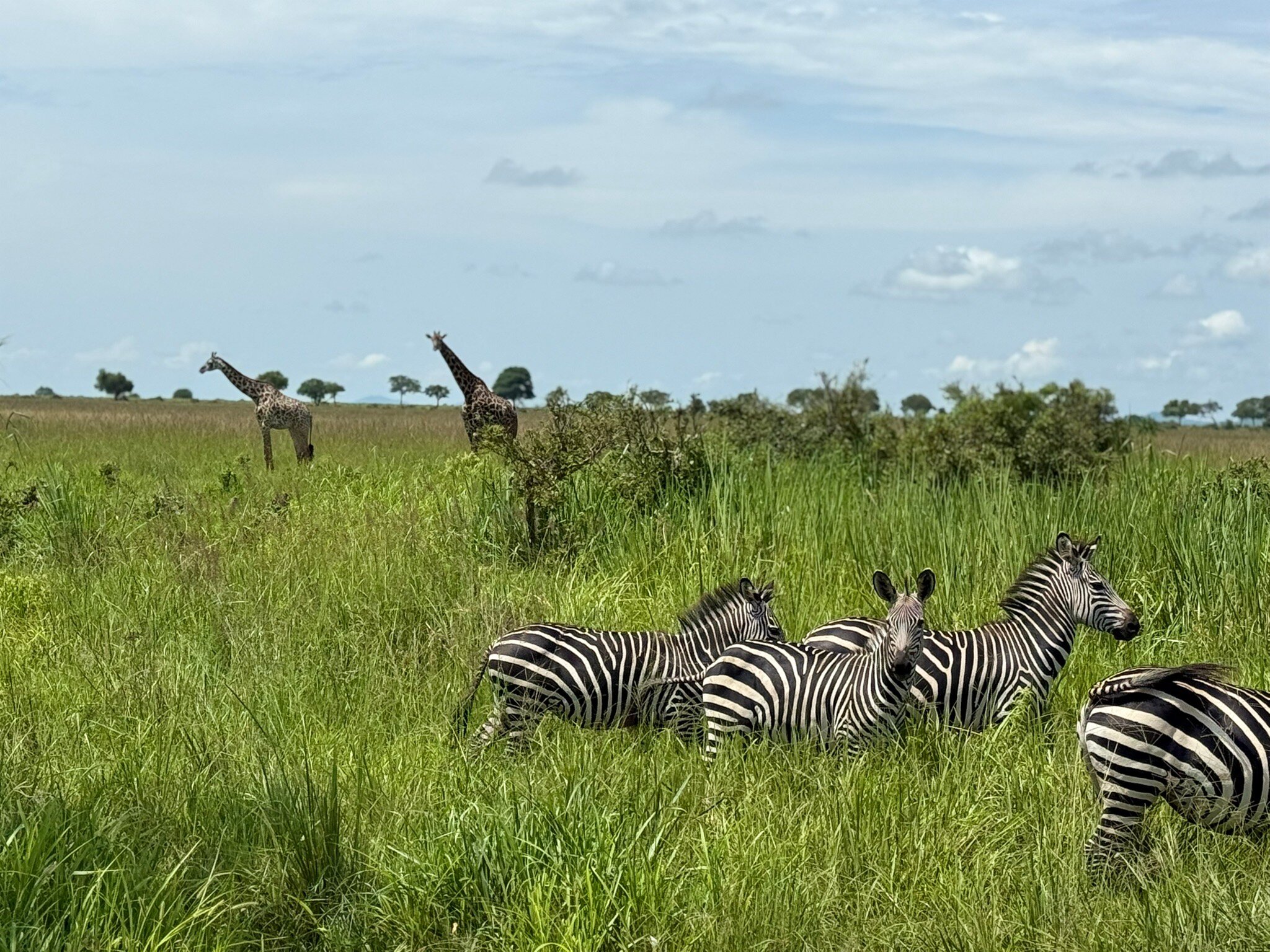
The Mkata Floodplain as Mikumi’s Big Herd Country
The floodplain is an alluvial plain built by the seasonal Mkata River, filling the northwestern part of the park with open grassland broken by acacia, borassus palm, black hardwood and the occasional baobab.
Black cotton soil underlies it, which is why the ground sets hard in the dry season and turns to heavy paste after rain. The comparison to the southern Serengeti plains is visual and it holds, though game here is more varied and less densely concentrated.
What the plain supports is grazing at scale. Zebra, wildebeest, impala, buffalo, warthog, eland and waterbuck all use it, with the herds shifting according to where water is.
The tourist circuit crosses this ground and carries virtually all commercial game viewing. Roughly four fifths of Mikumi lies south of the highway and is not used for ordinary drives.
Do not treat the herds as scenery on the way to something better. Zebra and buffalo are what tell you where the predators are, and a herd standing rigid all facing one direction is the most useful piece of information available on the plain.
Zebra and Wildebeest Herds on the Mikumi Plains
Burchell’s zebra are the animals most visitors see first and see most. They move across the open grass in sizeable herds, frequently mixed with blue wildebeest and impala, and they are commonly visible even from the highway that crosses the park.
Mixed herding is worth watching for. Zebra and wildebeest graze different parts of the same sward and their combined senses give better predator detection than either has alone, which is why they so often move together.
Research on the floodplain found that in tall grassland, zebra used ground within 200 metres of the highway far less often than expected, with several other species avoiding a wider band out to 600 metres. That is one reason the productive herd country sits further north on the circuit.
Foals appear during the wet season as calving accelerates with the new grass.
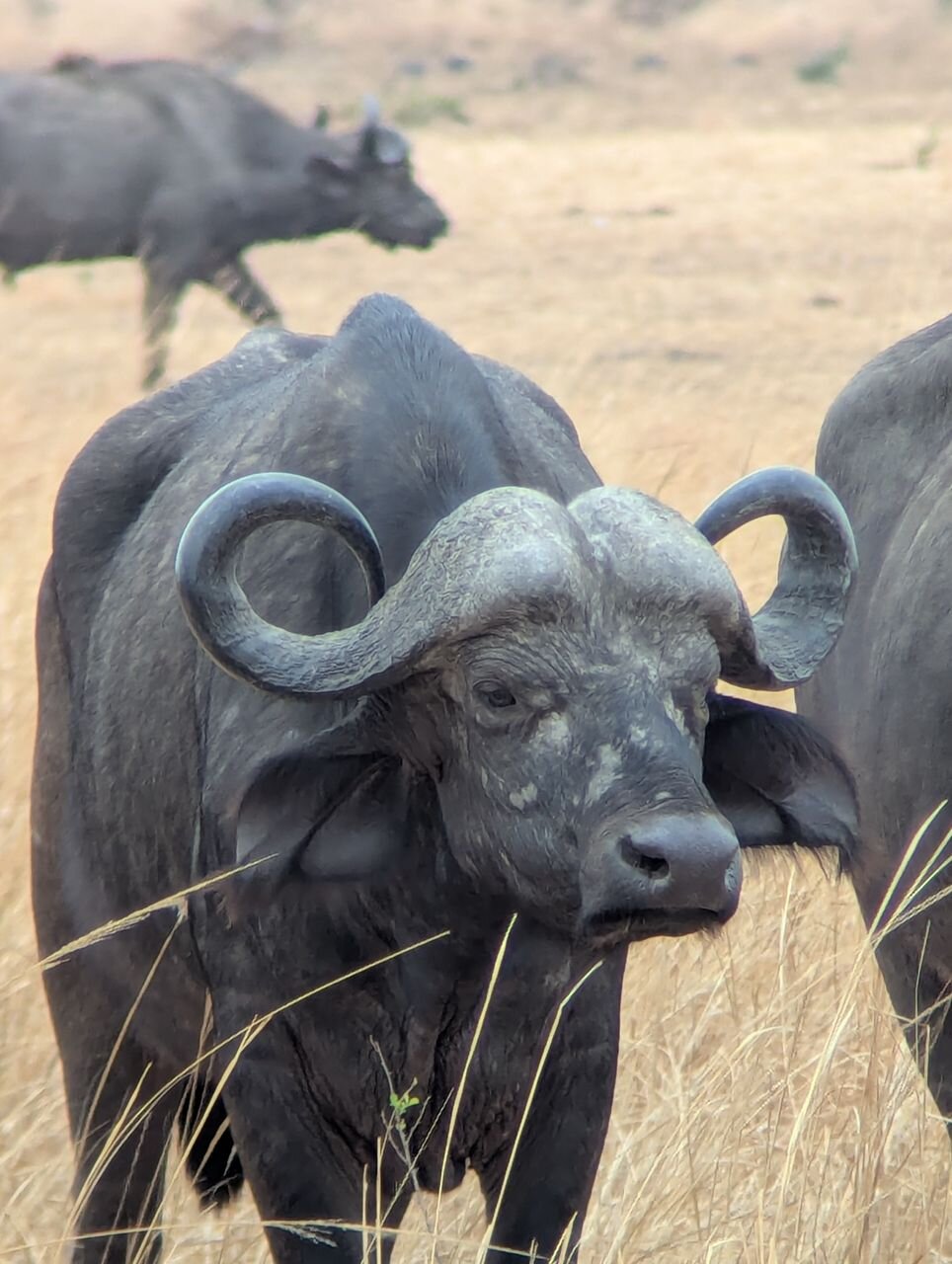
Buffalo Herds at the Mikumi Waterholes
Buffalo are the species that most rewards the dry season. As water becomes scarce, herds of up to several hundred gather at the remaining pools, and a large herd arriving to drink is one of the bigger sights Mikumi produces.
They come in tight, drink fast and leave. Unlike elephant, they do not linger, so catching them is a matter of being at water at the right moment rather than waiting all morning.
Old bulls separate from the main herd and are often found alone or in small bachelor groups near cover. They are unpredictable and guides give them room.
Buffalo are also the animal most often killed on the highway crossing the park, with 135 recorded in the fifteen years from 1973, which says a good deal about how much they move across the corridor.
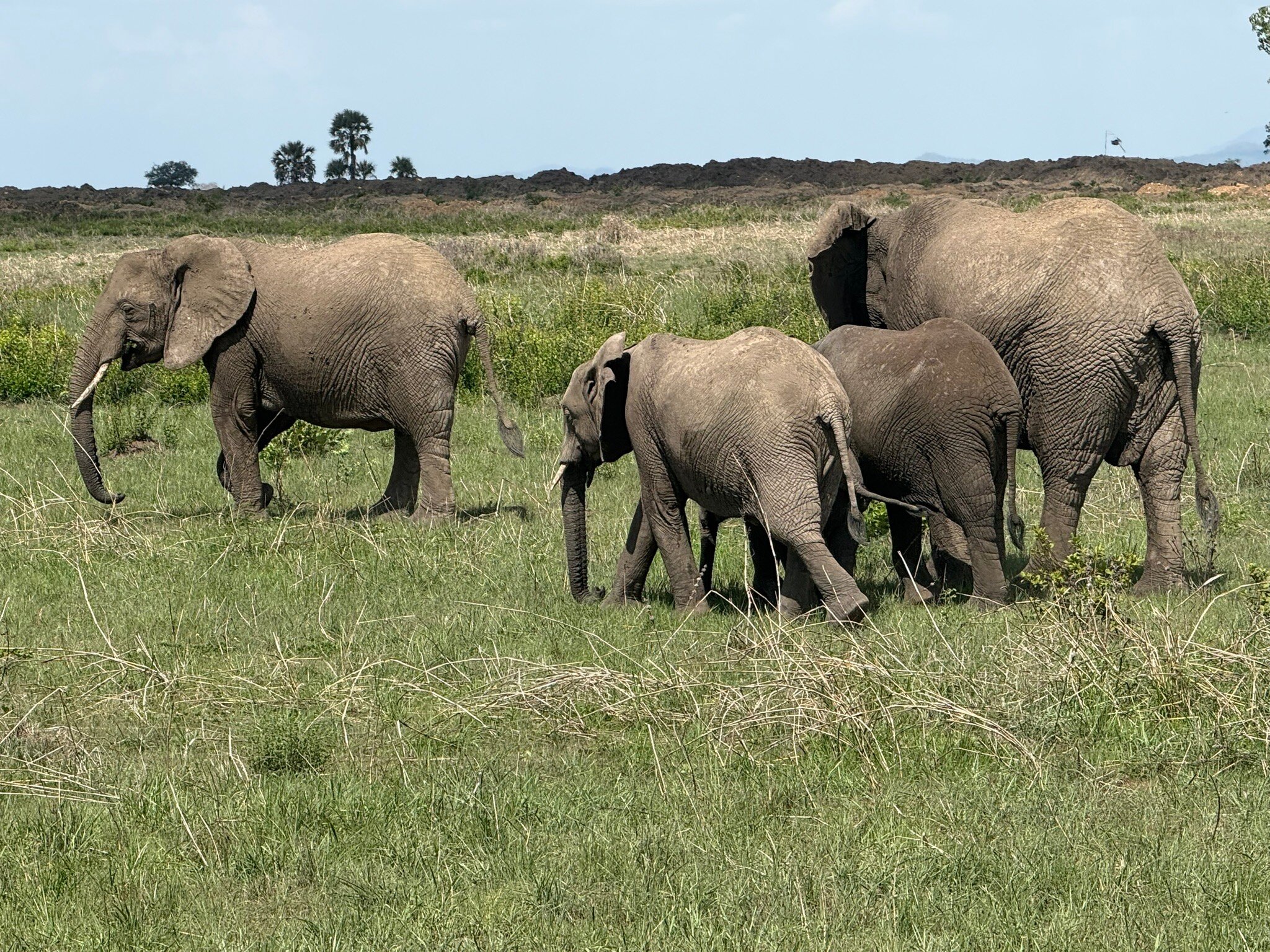
Elephant on the Mikumi Plains and Riverine Stands
Elephant behave differently from the plains grazers, and finding them means looking at trees rather than grass.
The isolated acacia stands fringing the Mkata River are described as islands of shade favoured by Mikumi’s elephants, and that is where they spend the heat of the day. Tamarind is the other draw, since the fruit will hold a group under a single tree for hours. Giraffe browse the same stands.
They come to water mid-morning, roughly between nine and eleven, drink at length and then throw mud and dust across their backs before returning to shade.
Numbers are not fixed. Elephant and buffalo are recorded using Ukwiva Forest Reserve on the Rubeho massif west of the park, and researchers suggest some animals move annually between those mountain forests and Mikumi. The park also connects to Nyerere National Park to the south.
Look at the treeline for elephant and the open grass for zebra. It sounds obvious and it is the single most common reason people drive past a herd standing thirty metres inside the shade.
Eland and the Other Antelope of the Mikumi Plains
Alongside the headline three, the floodplain carries the antelope that Mikumi is genuinely known for.
Common eland are the reason serious wildlife watchers rate this park. The Mkata Floodplain is widely described as the most reliable place in Tanzania to see the largest antelope in the world, with mature bulls close to a tonne, heavy dewlaps and spiralled horns.
Lichtenstein’s hartebeest is regularly seen on open ground and at the woodland edge, unusual enough that many visitors have never heard of it. Bohor reedbuck occur on the plain. Waterbuck hold near wetter ground and impala are everywhere in the acacia country.
Greater kudu and sable antelope are the exceptions, holding to the miombo woodland on the rising foothills rather than the open plain.
How the Seasons Move Mikumi’s Herds
Everything here runs on water. From June to October the seasonal channels retreat, the grass browns and lies down, and the herds concentrate on the few remaining pools. September and October are the peak weeks, when buffalo gatherings are largest and elephant most predictable at water.
From November the rains spread water across the whole plain and the concentration dissolves. Animals no longer need to visit any particular place, grass grows past a metre, and the same herds become far harder to find.
Calving accelerates in the wet months as new grass comes through, which brings foals and calves onto the plain and predator activity with them.
June to October: herds concentrated at the hippo pools, Chamgore, Mkata and Mwanamboga. Buffalo in the hundreds and elephant drinking mid-morning. The strongest months.
November to February: green plains, dispersed herds, calving underway. Animals present in the same numbers but spread out and screened by rising grass.
March to May: grass over a metre, wet ground and difficult tracks. Herds hardest to locate, with some circuit loops impassable.
Best Times of Day on the Mikumi Plains
The first two hours after gates open at first light catch the herds spreading out to graze after a night bunched together, with the best light of the morning across the grass.
Mid-morning belongs to water, and that is when elephant and buffalo most often drink. A slow circuit reaching the waterholes around nine or ten frequently beats one that rushes there at dawn.
The middle of the day is quiet, with no shade anywhere on the open plain. From about four the herds start moving toward water again and the light returns, with gates closing at six.
Late afternoon toward the Rubeho mountains in the west gives the best wide photography of the day, with animals lit from the front against a darkening plateau.
Photographing Mikumi’s Plains Herds
Use the mountains. The Uluguru range rises to about 2,630 metres northeast and the Rubeho plateau to 2,286 metres west, and a line of buffalo placed small in the frame against a ridge tells more about this park than a tight portrait does.
That makes a wide lens genuinely useful here, which is not true of most plains parks. Something in the 100 to 400 range covers the rest.
Ask the driver to cut the engine at herd sightings. Vibration causes more soft images than anything else, and a quiet vehicle lets animals settle and resume normal behaviour.
Shoot from the lowest window rather than standing through the roof by default, and keep the camera bagged between stops because dust on the tracks is relentless.
Questions About Mikumi’s Plains Herds
What does it cost to see the herds on the Mikumi plains?
Standard park entry covers it, currently around US$30 per adult foreign non-resident per day and about US$10 for children aged 5 to 15, with lower rates for Tanzanian residents and East African citizens. A six to twelve seat safari vehicle adds roughly US$40 per day and a private car around US$10.
How big do buffalo herds get in Mikumi?
Herds of up to several hundred are recorded gathering at waterholes during the dry season, when scarce water forces them to concentrate. They drink quickly and move on rather than lingering, so catching a large herd is a matter of being at water at the right moment.
Where do I see elephants on the Mikumi plains?
In the acacia and tamarind stands fringing the Mkata River, where they shelter through the heat, and at the hippo pools and named waterholes mid-morning when they come to drink. Numbers vary because elephant move between Mikumi, the Rubeho forest reserves to the west and Nyerere National Park to the south.
Are zebra and wildebeest always together in Mikumi?
Not always, but frequently. They graze different parts of the same sward and their combined senses improve predator detection, so mixed herds are common on the floodplain, often with impala alongside. Both are among the most visible species in the park.
What is the best month for seeing herds in Mikumi?
September and October, at the tail of the long dry season, when water is scarcest and the concentration at the remaining pools peaks. Grass is also at its shortest then, which makes spotting far easier across the whole plain.
Can I see eland on the Mikumi plains?
Yes, and it is one of the park’s real strengths. The Mkata Floodplain is widely rated the most reliable place in Tanzania for eland, the largest antelope in the world. They are seen on open grass, most consistently through the dry season.
Booking Your Mikumi Trip
The safari companies and tour operators listed on this website put trips like this together for a living and know which camps, guides and routes actually deliver. We are an independent guide to Mikumi; we do not book or sell tours ourselves.
When you are ready, arrange your safari, tour or holiday with one of the recognised operators listed here. Tell them your dates and what matters most, and a real person, not a form, will handle the itinerary, park bookings and logistics for you.