TANZAM Highway Corridor
The TANZAM Highway corridor is the stretch of the A7 Tanzania to Zambia road that runs straight through Mikumi National Park, making Mikumi the only protected area in Tanzania cut by a national trunk road. That road is why a Mikumi safari is the easiest one in the country to reach from Dar es Salaam, and it is also the park’s central conservation problem. Mikumi sits in the Morogoro region, roughly 280 kilometres inland from the coast, with the highway dividing it into a busy northern section and a much larger, seldom visited south.
Below is what the corridor means in practice: what you see from it, how it shapes animal behaviour, and how to drive it without adding to the toll.
What the TANZAM Highway Corridor Means for a Mikumi Safari
Every other major Tanzanian park asks you to fly or commit a long day to a rough road. Mikumi asks you to drive four hours on tarmac. That single fact explains almost everything about how the park is used: weekend trips from Dar es Salaam, day visits, overnight stops on the way to Ruaha, business travellers with two spare days.
The highway was first paved between 1973 and 1974 and upgraded to a full tarmac road in 1989 and 1990. Traffic has risen steadily since, and the corridor now carries the freight of a regional trade route through the middle of a national park.
Gates sit at each end of the park section, though they are unmanned, and vehicles in transit pass through without stopping. Eleven speed bumps have been built along the corridor to slow traffic. Passing through is free; entering the park proper for a game drive requires paying fees at the main gate.
Driving the highway through Mikumi is not a safari and does not require park fees. If you want to leave the tarmac and use the game viewing circuit, you pay TANAPA entry at the main gate like everyone else. The distinction catches out self-drivers who assume seeing zebra from the road counts as a visit.
Wildlife Watching From the TANZAM Highway Through Mikumi
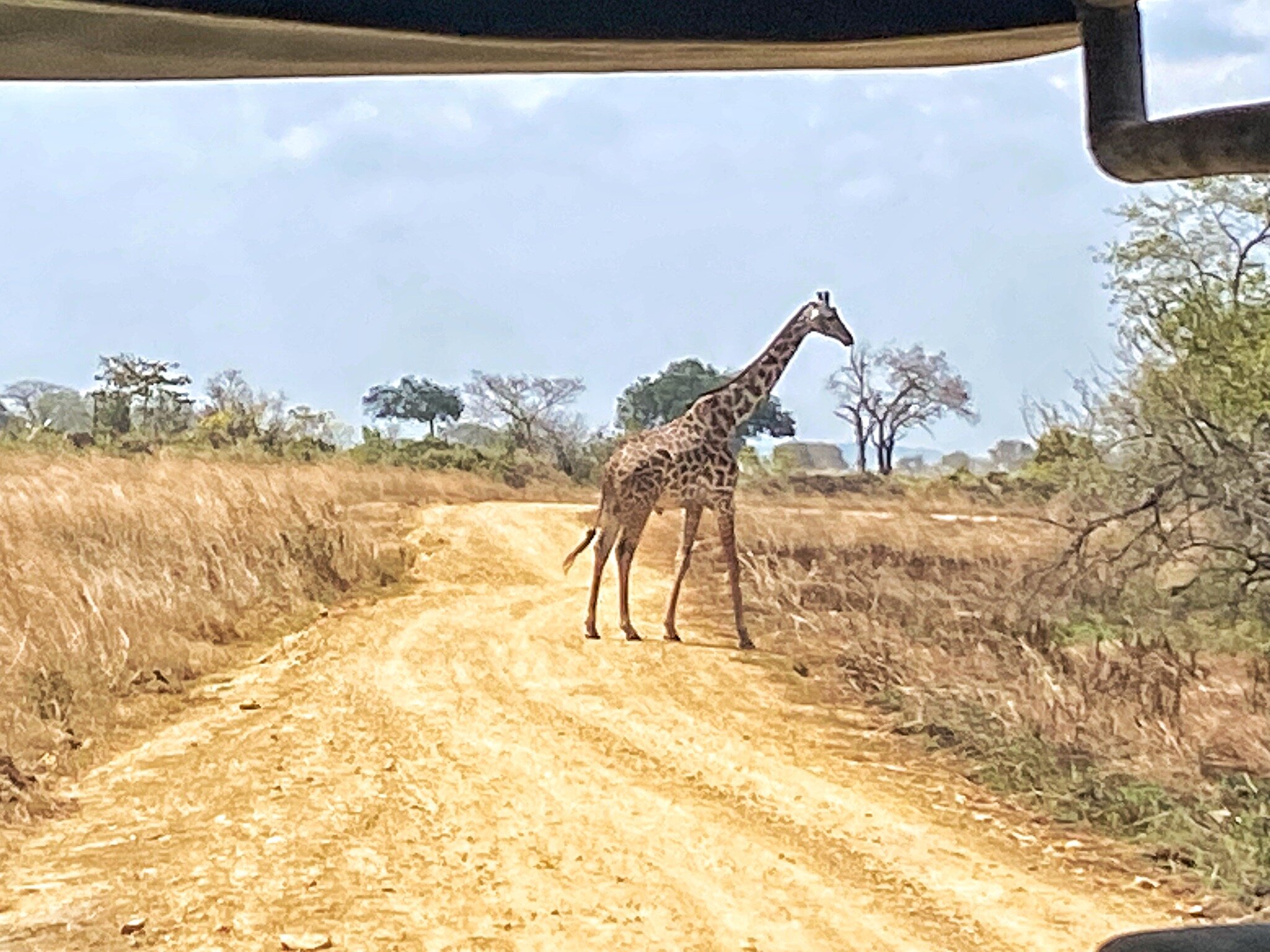
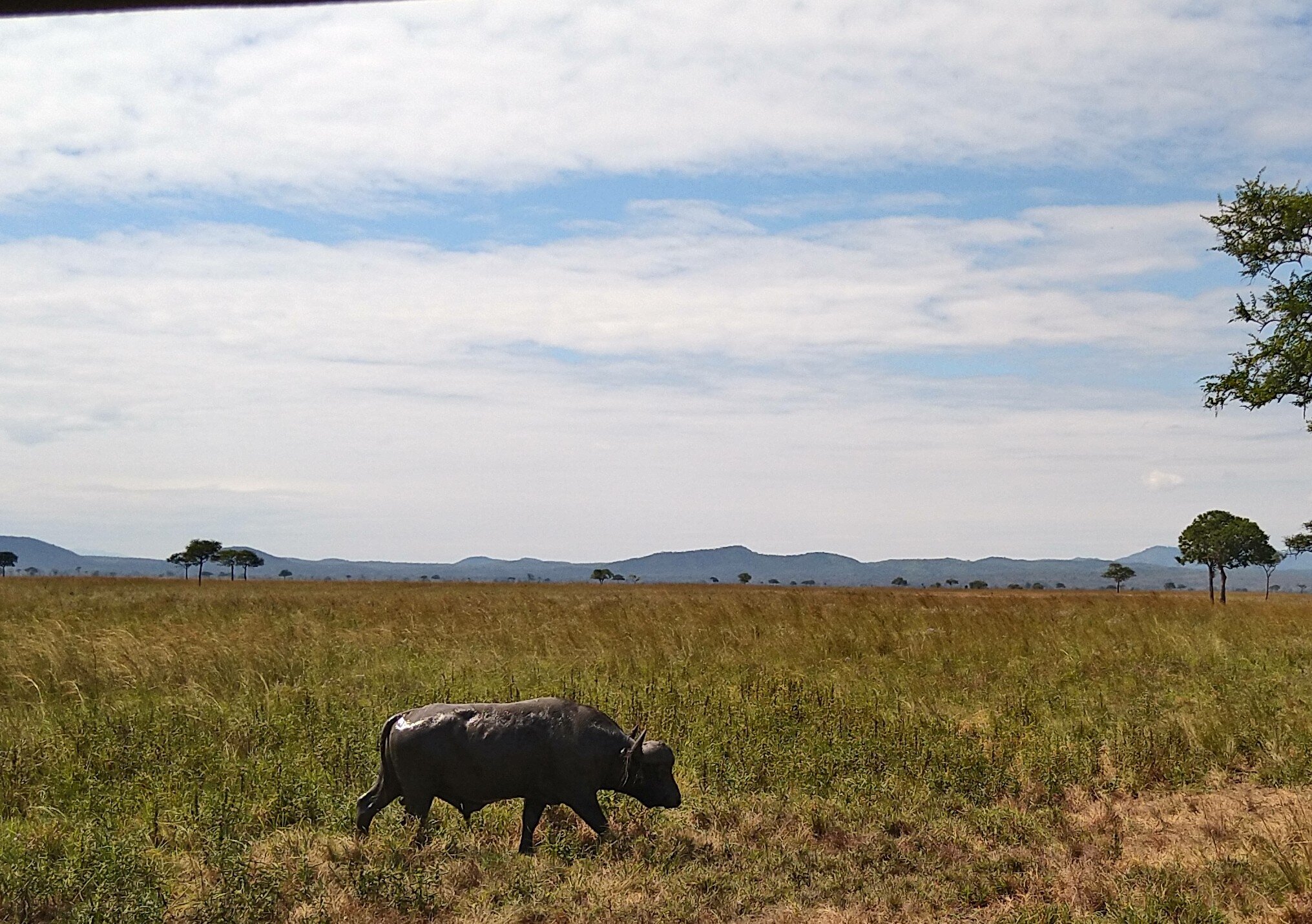
Animals are commonly visible from the tarmac, which is unusual anywhere and a genuine curiosity of this park. Zebra, impala, giraffe, warthog and baboon are all regularly seen on the verges and the open ground either side, and elephant and buffalo cross the corridor.
The plains beside the highway are the same Mkata Floodplain grassland that makes the park’s game circuit productive, so the wildlife is not a thin edge population putting on a show. It is the real thing, seen from the wrong vehicle.
What you cannot do is stop. Halting on the highway to photograph animals is dangerous on a road carrying long-distance trucks, and it encourages animals to associate vehicles with food. Rangers discourage it and so should common sense.
The proper version of the same view costs park fees and takes you onto the circuit north of the road, where you can switch the engine off and wait.
How the Highway Splits the Mikumi Safari Circuit
Roughly four fifths of Mikumi lies south of the TANZAM highway. Almost none of that southern portion is developed for tourism, and it is described as suitable for well-equipped expeditions rather than ordinary drives. The gentle foothills and miombo woodland down there see very few people.
The visited part of the park is the Mkata Floodplain northeast of the road, served by a graded tourist circuit of about 60 kilometres. That is where the hippo pools, the named waterholes and the open grass sit, and it is where virtually every commercial Mikumi game drive takes place.
The Vuma Hills, on the southwestern side, are the main exception, holding a tented camp and miombo woodland where sable antelope and greater kudu are found.
A road through a park does more than divide the map. It divides the animal populations that use either side, which is the substance of the conservation concern.
Road Mortality on the TANZAM Corridor and What It Means for Mikumi Safaris
Wildlife road mortality in Mikumi has been recorded systematically since the road was first paved, which makes this one of the better documented cases in Africa.
Between 1973 and 1988, 456 large mammals were recorded killed on the corridor. Of those, 135 were buffalo, 17 were elephant, 17 were giraffe and three were hippo. Between 1992 and 2008 the recorded figure rose to 2,241 animals. Current estimates put mortality at over 360 animals a year.
Smaller animals take the heaviest share by count. One fifteen month study recorded 111 mammals, 55 birds and 183 reptiles killed on the paved road. Reptiles die in numbers that rarely make it into the headline figures.
Baboons are among the species regularly killed, which is a direct consequence of how they use the road.
Vehicle collisions in Mikumi are more than an animal problem. Hitting a buffalo at highway speed damages the vehicle and injures people, which is why speed bumps went in and why the issue keeps returning to the agenda.
Why Large Mammals Keep Away From the Highway on a Mikumi Safari
Foot surveys carried out on the Mkata Floodplain during the late dry season across several years looked at how thirteen large mammal species distributed themselves relative to the highway. The results are consistent and useful for anyone planning where to spend a morning.
In grassland taller than a metre, eland, bohor reedbuck, black-backed jackal, elephant and wildebeest all used the ground within 600 metres of the highway far less often than expected. Zebra in the same vegetation avoided the strip within 200 metres.
The pattern means the corridor pushes an avoidance zone out into the park on both sides, so the road removes more habitat than the width of tarmac suggests. It also means the productive game viewing sits further north on the circuit rather than close to the road, which is where guides take you anyway.
Species respond differently. Some are barely affected, others keep well clear.
Yellow Baboon Watching Along the TANZAM Highway
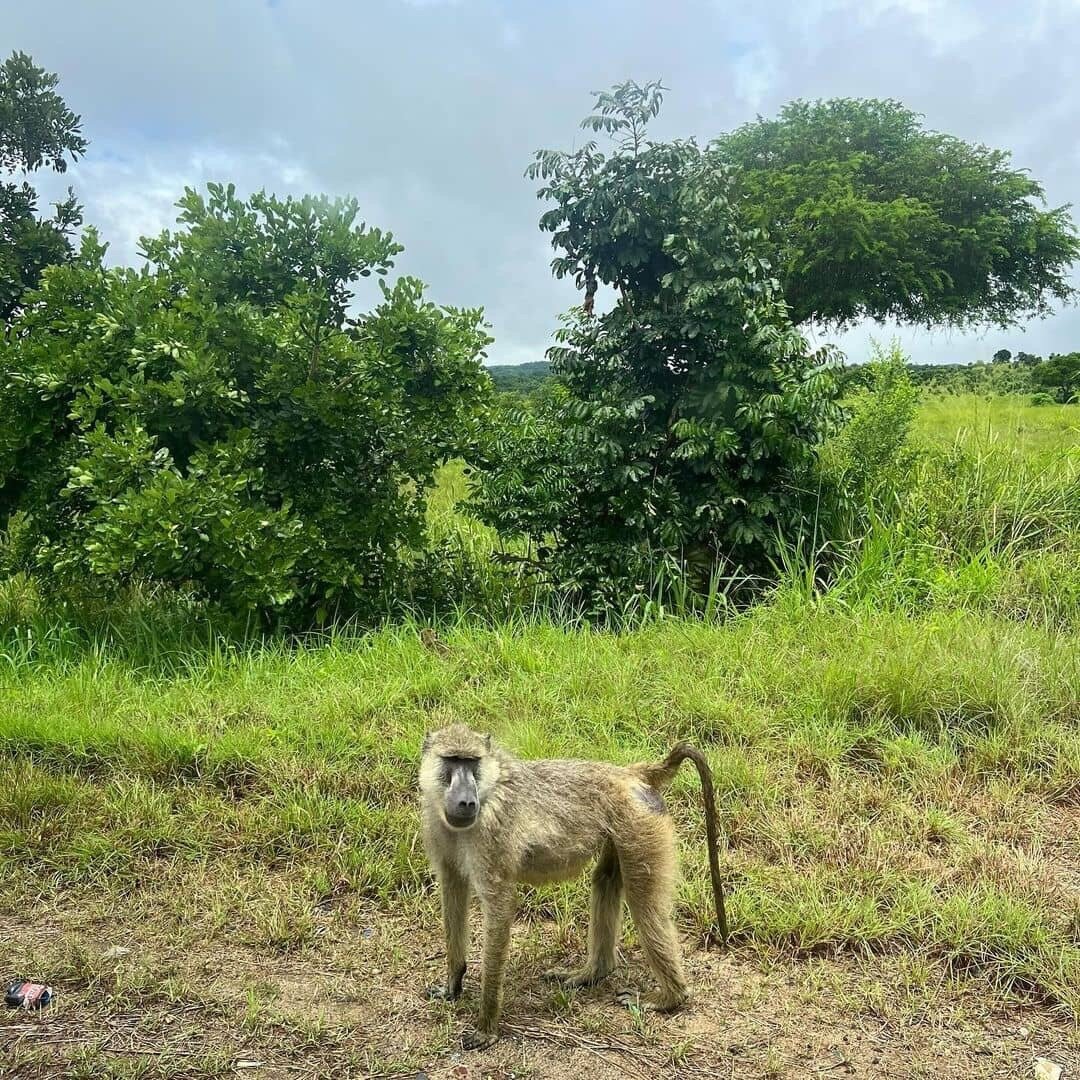
Yellow baboons around Mikumi use the highway as a bridge between foraging areas rather than treating it as a barrier, and two habituated troops here have been studied closely to work out what that does to their feeding.
The finding was that the road has little effect on their feeding and foraging behaviour, which sounds reassuring until you set it against the mortality figures. Baboons crossing freely is exactly why baboons get hit.
They are highly visible along the corridor and around Kikoboga near park headquarters. Watching a troop for twenty minutes shows the social structure clearly: grooming lines, hierarchy, juveniles testing limits.
Do not feed them, from a vehicle or anywhere else. Baboons that learn to associate cars with food spend more time near the road, and that is a direct route to a dead animal.
Driving the TANZAM Corridor Safely on a Mikumi Trip
Slow down through the park section and stay slow between the speed bumps rather than accelerating between them. Most collisions happen because a driver was going fast enough that stopping was never an option.
Dawn and dusk are the worst windows, when animals move most and light is poorest. Night driving through the corridor is where the largest animals get hit, since a buffalo standing on warm tarmac gives almost no warning at speed.
Do not stop on the carriageway to photograph. Do not feed anything. Give animals on the verge a wide berth and expect the second one, because zebra and baboon rarely cross alone. If you hit something, report it at the main gate rather than driving on.
Conservation Along the Corridor and Mikumi Safari Tourism
Mikumi’s corridor has become a reference case in Tanzanian conservation debate. When road upgrades are proposed through other protected areas, Mikumi is the example that gets cited, precisely because the mortality data exists and the outcome is visible.
Mitigation so far has been modest: eleven speed bumps and unmanned gates at either end. Speed enforcement is limited and the gates do not stop transit traffic.
Tourism sits awkwardly inside this. The road is what makes Mikumi affordable and reachable, and the park’s visitor numbers depend on it. It also degrades the sense of wilderness, and a tarmac trunk road in the middle of a national park changes what people feel they have paid for.
Mikumi’s wider ecological value does not rest on the corridor. The park connects to Nyerere National Park to the south, the Udzungwa Mountains to the southwest and the Rubeho forests to the west, forming part of a system spanning tens of thousands of square kilometres. Elephant and buffalo appear to move seasonally between mountain forest and the plains.
Getting to Mikumi Along the TANZAM Highway from Dar es Salaam
The drive runs roughly 280 to 300 kilometres from Dar es Salaam via Morogoro, four to five hours on surfaced road in a private vehicle, longer if you leave during the city’s morning traffic. The same road continues southwest toward Iringa, Ruaha and eventually Zambia.
Public buses run the corridor daily and stop at Mikumi town, which is how independent travellers arrive, though you still need a vehicle for the park itself. The standard gauge railway covers Dar es Salaam to Morogoro much faster than the road, and some operators use it for the first leg before switching to a vehicle.
Kikoboga airstrip inside the park takes light aircraft from Dar es Salaam, Zanzibar, Nyerere and Ruaha. Park gates close at six in the evening and late arrivals are turned away.
Questions About the TANZAM Highway Through Mikumi
Do I have to pay park fees to drive through Mikumi on the highway?
No. Transit traffic on the A7 passes through without stopping, and the gates at either end of the park section are unmanned. Fees apply when you enter the park proper to use the game viewing circuit. Adult foreign non-residents currently pay around US$30 per person per day, with a vehicle fee of roughly US$40 per day for a safari vehicle and around US$10 for a private car.
Can you see animals from the TANZAM highway?
Yes, commonly. Zebra, impala, giraffe, warthog and baboon are regularly visible from the road, and elephant and buffalo cross it. Stopping on the carriageway is dangerous and discouraged. Seeing animals from the tarmac is not a substitute for a game drive on the circuit, where you can park and wait.
How many animals are killed on the road through Mikumi?
Current estimates put mortality at over 360 animals a year. Recorded figures rose from 456 large mammals between 1973 and 1988 to 2,241 animals between 1992 and 2008. One fifteen month study logged 111 mammals, 55 birds and 183 reptiles.
Is there a speed limit through the park?
Speed restrictions apply through the park section and eleven speed bumps have been installed to enforce them physically. Enforcement beyond the bumps is limited. The practical advice is to hold a low speed throughout rather than accelerating between bumps, and to take particular care at dawn, dusk and after dark.
Does the highway spoil a Mikumi safari?
It depends what you want. The game viewing circuit sits northeast of the road on the Mkata Floodplain, and once you are a few kilometres in, the tarmac is out of sight and largely out of earshot. Camps close to the road, including Mikumi Wildlife Camp at around three hundred metres from it, do carry night traffic noise. Camps further out do not.
Which part of Mikumi is on which side of the road?
Roughly four fifths of the park lies south of the highway and is largely undeveloped, suited to well-equipped expeditions rather than ordinary drives. The Mkata Floodplain circuit northeast of the road carries nearly all commercial game viewing. The Vuma Hills, holding a tented camp and miombo woodland, sit on the southwestern side.
Booking Your Mikumi Trip
The safari companies and tour operators listed on this website put trips like this together for a living and know which camps, guides and routes actually deliver. We are an independent guide to Mikumi; we do not book or sell tours ourselves.
When you are ready, arrange your safari, tour or holiday with one of the recognised operators listed here. Tell them your dates and what matters most, and a real person, not a form, will handle the itinerary, park bookings and logistics for you.