Which Animals Are Most Common in Mikumi?
The animals you are most likely to see on a Mikumi safari are impala, Burchell’s zebra, warthog, yellow baboon and giraffe, followed closely by buffalo, wildebeest, elephant and hippo at the pools. Lion are common enough to be a realistic expectation over two mornings without being a daily certainty, while leopard and African wild dog sit at the rare end. Mikumi covers 3,230 square kilometres in Tanzania’s Morogoro region and holds four of the Big Five.
Below is an honest ranking by how often each species turns up, and what changes those odds.
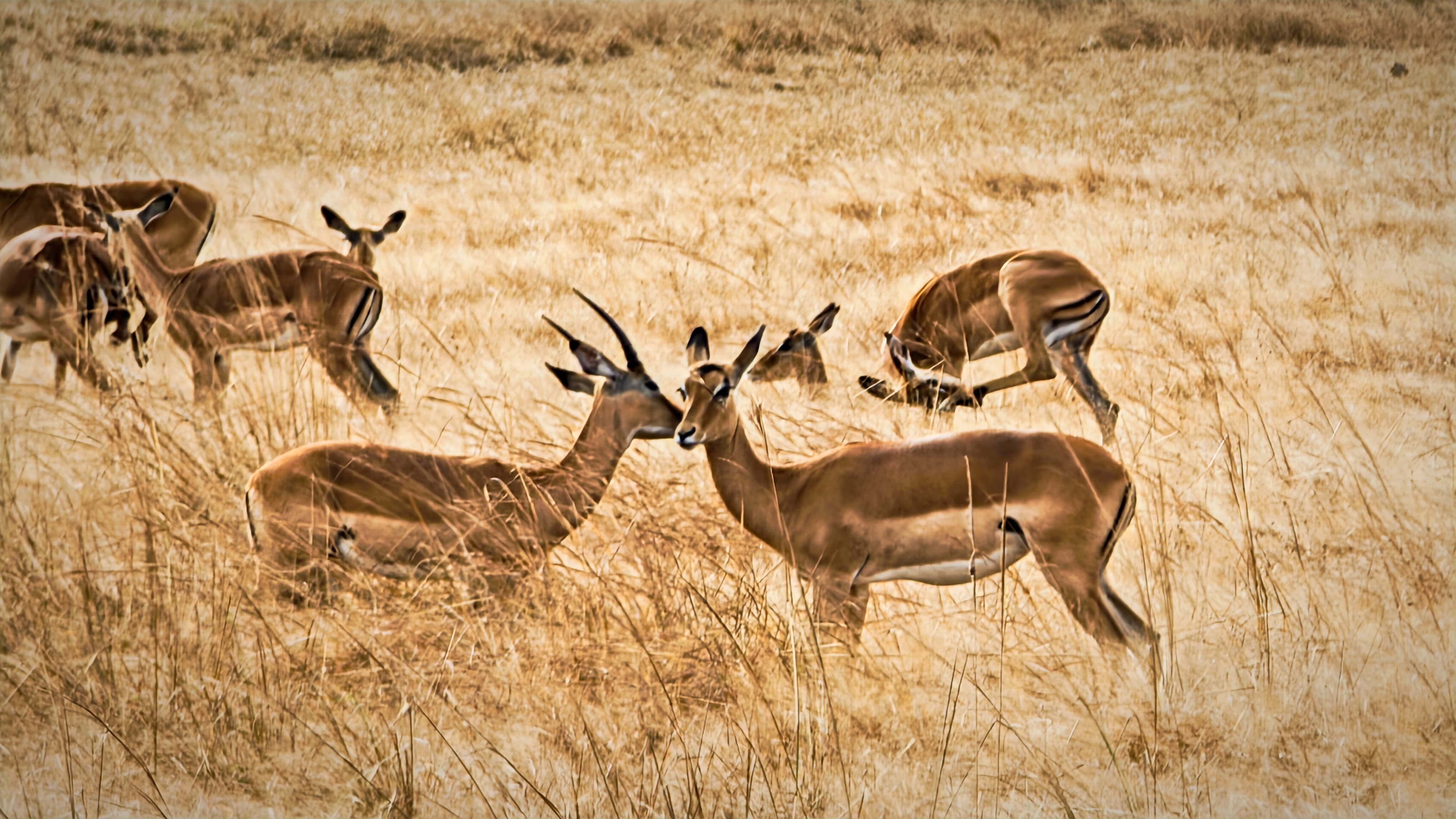
The Animals You Will Almost Certainly See on a Mikumi Safari
Some species are near guaranteed on any daylight drive across the Mkata Floodplain, and it is worth knowing which so you can spend your attention elsewhere.
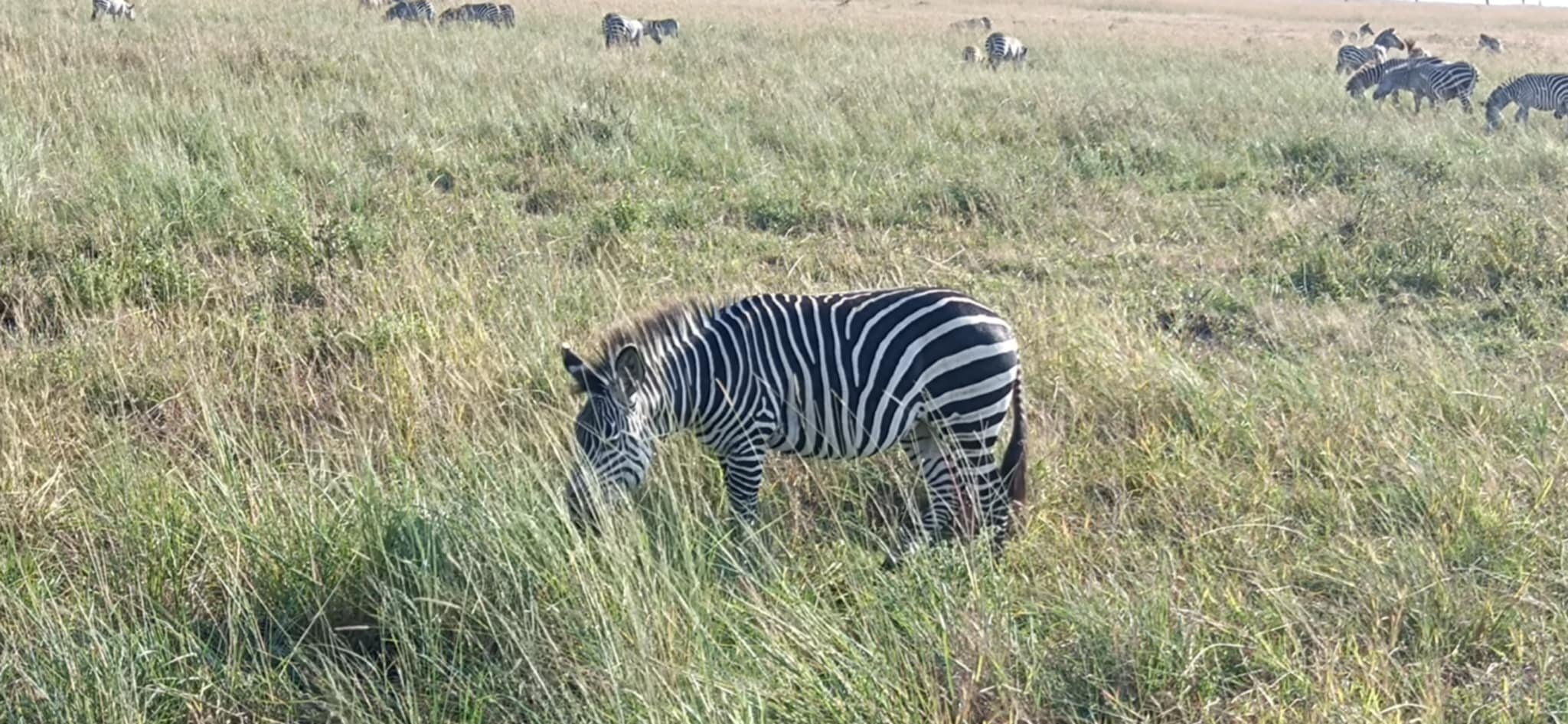
Impala are everywhere in the acacia country, in herds that break and leap when something startles them. Burchell’s zebra move across the open grass constantly and are among the most visible species even from the highway. Warthog trot the verges and the waterhole edges with their tails up.
Yellow baboon are a permanent presence, especially around Kikoboga near park headquarters, where troops have been studied for decades. Giraffe browse the isolated acacia stands fringing the Mkata River, often on the same trees for hours.
These five are the baseline. If you drive the circuit for a morning and see none of them, something unusual is happening.
Do not drive past the common animals to hunt for the rare ones. Zebra, impala and giraffe are where the interesting behaviour happens, and a pride of lion tends to be found by watching what the herds are watching.
Buffalo, Wildebeest and Eland on the Mkata Floodplain
The next tier is common in the dry season and patchier once the rains scatter everything.
Buffalo gather in serious numbers as water becomes scarce, with herds of several hundred recorded at a single waterhole between June and October. They come in tight groups, drink and leave. They are also the species most often killed on the highway crossing the park, which says a good deal about how much they move.
Blue wildebeest move across the grass in sizeable herds, frequently mixed with zebra and impala. Common eland are the species Mikumi is genuinely known for, and the floodplain is widely rated the most reliable place in Tanzania to see the largest antelope in the world.
Waterbuck hold near wetter ground, bushbuck browse in denser cover and Lichtenstein’s hartebeest turn up at the woodland edge, unusual enough that many visitors have never heard of it.
Elephant Sightings and How Common They Are in Mikumi
Elephant are commonly seen but their numbers in the park are not fixed, which makes them less predictable than the plains game.
They favour the acacia and tamarind stands fringing the Mkata River, where the shade is, and come to water mid-morning through the dry season. Tamarind fruit will hold a group under a single tree for hours.
What makes them variable is movement. Elephant and buffalo are recorded using Ukwiva Forest Reserve on the Rubeho massif west of the park, and researchers suggest some animals move annually between those mountain forests and Mikumi. The park also connects to Nyerere National Park to the south.
So a herd on the plain last month may be elsewhere this one. In the dry season, working the waterholes mid-morning is the reliable tactic.
Hippo and Crocodile at the Mikumi Pools
Hippo are as close to guaranteed as anything gets, which puts them in a category of their own. Two permanent pools about five kilometres north of the main gate hold hundreds of them year round, and they are the single most visited feature in the park.
The catch is timing. Hippo stay in the water through the middle of the day and leave after dark to graze, returning before first light. Arriving at dawn often shows fewer animals than arriving at eleven, which runs contrary to normal safari logic.
Nile crocodile share both pools and inhabit the park’s river systems. They are easy to miss until they move, and easiest to see on cooler mornings when they haul out onto the bank to warm.
Water monitors work the muddy fringes and are common once you learn the shape.
Common in Mikumi means seen on most drives, not seen on every drive. Nothing in a national park is on a schedule, and any operator saying otherwise is selling rather than guiding.
How Common Are Lions in Mikumi?
Lion sit at the boundary between common and uncertain, and this is where expectations most often go wrong.
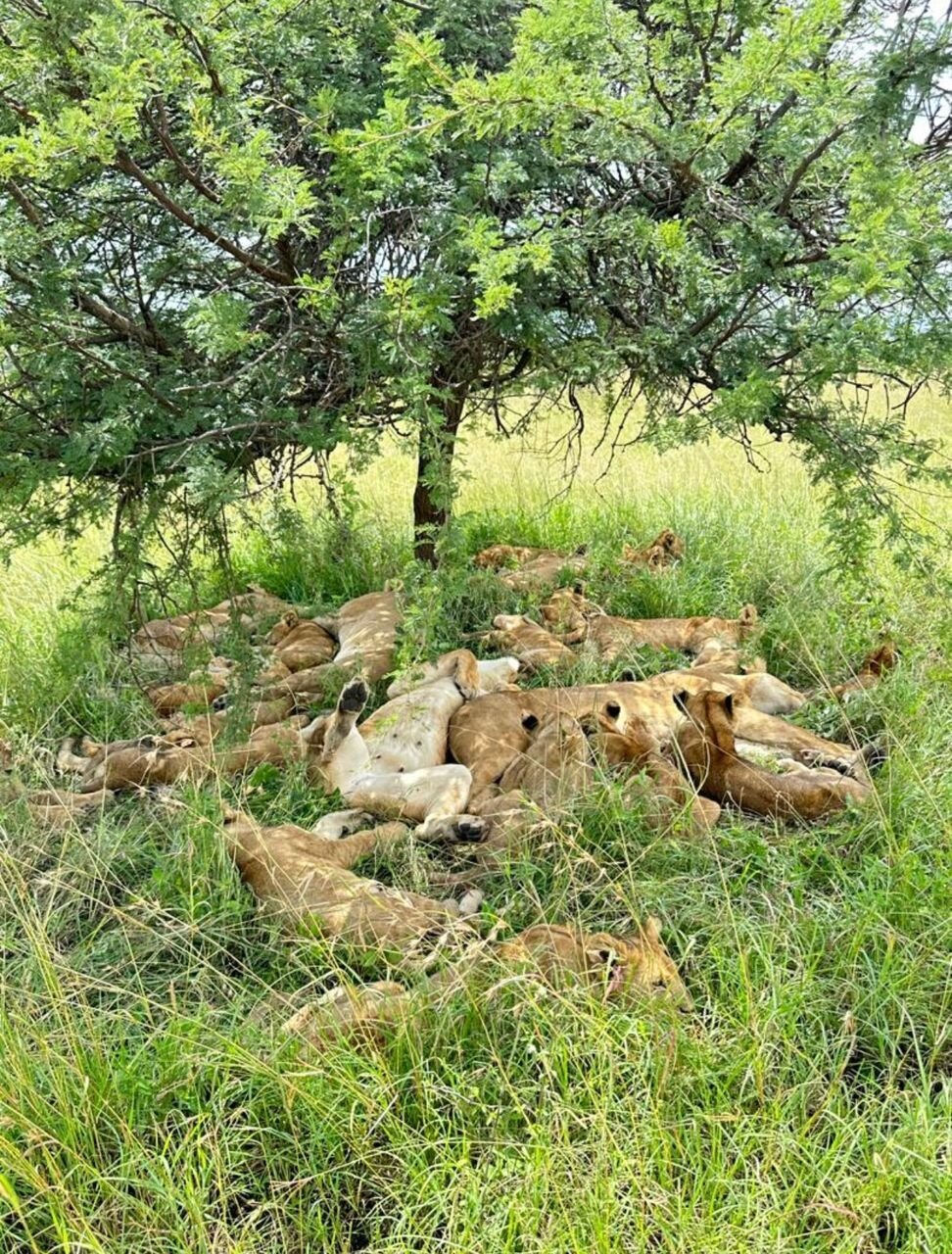
Guides describe them as occasional rather than abundant. They are seen regularly on the Mkata Floodplain through the dry season, using the flattened tops of termite mounds as lookouts over the herds, and September and October give the best odds because the grass is at its shortest.
Over two mornings in October, a sighting is a reasonable expectation. Over one afternoon in April, it is not.
During the rains, when grass grows past a metre, lion in Mikumi have been recorded resting in trees, which comes up often enough here to be worth asking about and rarely enough that nobody should plan around it.
The Rare Animals of Mikumi National Park
At the far end of the scale sit species that are present, genuinely wild, and unlikely on any given trip.
Leopard are described as rare in Mikumi. They favour acacia and sausage trees along the river, hunt at night and lie up through the heat. Night game drives, permitted here with an armed ranger, offer the most realistic chance.
African wild dog range across the wider Selous ecosystem to the south and pass through occasionally, which makes Mikumi one of the few East African parks where a sighting is possible at all. The regional population was hit by a rabies epidemic in the past and came close to disappearing.
Spotted hyena turn up on early drives more often than either. Black-backed jackal work the open ground. Cheetah are not present in Mikumi.
Rhino were wiped out by poaching decades ago, leaving four of the Big Five. TANAPA has stated an intention to reintroduce black rhino from South Africa, though nothing has been confirmed as delivered.
Near certain: impala, zebra, warthog, yellow baboon, giraffe and hippo at the pools. Seen on virtually every drive in any season.
Common in the dry season: buffalo, wildebeest, eland, elephant, waterbuck and crocodile. Concentrated at water from June to October, scattered once the rains come.
Uncommon to rare: lion regularly but not daily, sable and greater kudu in the miombo only, spotted hyena on early drives, leopard and African wild dog rare at any time.
Which Common Animals Live Where in Mikumi
Habitat explains most of the variation in what people see, and it is the single most useful thing to understand before a drive.
The open Mkata Floodplain holds the plains game: zebra, wildebeest, impala, buffalo, warthog, eland and the lion that follow them. The graded tourist circuit of about 60 kilometres crosses this ground and carries virtually all commercial game viewing.
The riverine acacia and tamarind fringe holds elephant and giraffe in the shade, and the occasional leopard above them. The pools hold hippo, crocodile, monitor lizards and the densest birdlife.
The miombo woodland on the rising foothills toward the Vuma Hills holds greater kudu and sable antelope, both seldom seen on open grass. An itinerary that stays on the floodplain will not produce either, which is the most common gap in a short trip.
Primates and Smaller Mammals You Will Notice
Yellow baboon dominate the primate list and are impossible to miss. Troops around picnic areas and camps will take food from a table or an open vehicle without hesitation, so keep windows up when parked and bags closed. Never feed them, since habituated animals spend more time near the road and end up in the mortality figures.
Vervet monkeys work the same margins in smaller numbers, and colobus occur in wooded areas.
After dark the list changes. Bushbaby, genet and civet come out, and a night drive is the only way most visitors see any of them. Mongoose, porcupine and honey badger occur but are seldom seen.
How the Seasons Change What Is Common in Mikumi
The dry season from June to October is when the common animals become easy. Water disappears, herds concentrate on the remaining pools and short grass makes everything visible. September and October are the peak.
From November to May, water lies across the whole plain and animals disperse. Grass grows past a metre, which hides anything smaller than a giraffe. The same species are present in the same numbers; they are simply spread out and screened.
Birding runs the opposite way, peaking from November to April when European and North African migrants arrive to join more than 400 recorded resident species.
Questions About Mikumi’s Most Common Animals
What is the most commonly seen animal in Mikumi?
Impala and Burchell’s zebra, closely followed by warthog, yellow baboon and giraffe. All five are seen on virtually every daylight drive across the Mkata Floodplain, and zebra and baboon are commonly visible even from the highway that crosses the park.
What does it cost to see Mikumi’s wildlife?
Park entry currently runs around US$30 per adult foreign non-resident per day and about US$10 for children aged 5 to 15, with lower rates for Tanzanian residents and East African citizens. A six to twelve seat safari vehicle adds roughly US$40 per day. A night game drive, which is the best chance at nocturnal species and leopard, costs around US$50 per adult non-resident.
Am I likely to see lions in Mikumi?
Over two mornings in the dry season, yes, reasonably. Lion are described as occasional rather than abundant and are seen regularly on the floodplain from June to October, often on termite mounds. September and October give the best odds because the grass is shortest. A single afternoon drive in the wet season is a poor bet.
Which animals are rare in Mikumi?
Leopard and African wild dog. Both are present but genuinely uncommon, with leopard favouring riverine acacia and sausage trees and wild dog passing through from the wider Selous ecosystem. Cheetah are not present. Rhino were lost to poaching decades ago, leaving four of the Big Five.
Why did I not see sable antelope in Mikumi?
Almost certainly because the drive stayed on the floodplain. Sable and greater kudu live in the miombo woodland on the rising foothills, particularly toward the Vuma Hills in the southwest, and are seldom seen on open grass. Reaching that country takes a half day, which is why short itineraries miss both species.
How many animals will I see in a day at Mikumi?
On a full dry season day working the floodplain circuit and the waterholes, a species list in the twenties to thirties is realistic including birds. Sightings are commonly good rather than guaranteed, and the honest measure of a Mikumi day is the quality of a few long sightings rather than the length of the list.
Booking Your Mikumi Trip
The safari companies and tour operators listed on this website put trips like this together for a living and know which camps, guides and routes actually deliver. We are an independent guide to Mikumi; we do not book or sell tours ourselves.
When you are ready, arrange your safari, tour or holiday with one of the recognised operators listed here. Tell them your dates and what matters most, and a real person, not a form, will handle the itinerary, park bookings and logistics for you.