Lion Tracking in Mikumi National Park
Lion tracking in Mikumi National Park is done from a vehicle on the Mkata Floodplain, working termite mounds, prey concentrations and the previous night’s tracks rather than following radio collars. Guides here treat lion as regular rather than abundant, and a two morning stay in the dry season gives a reasonable chance rather than a certainty. Mikumi covers 3,230 square kilometres in Tanzania’s Morogoro region and its lion are known for using termite mounds as lookouts.
Below is how tracking actually works in this park, what the tells are, and how to give yourself the best odds.
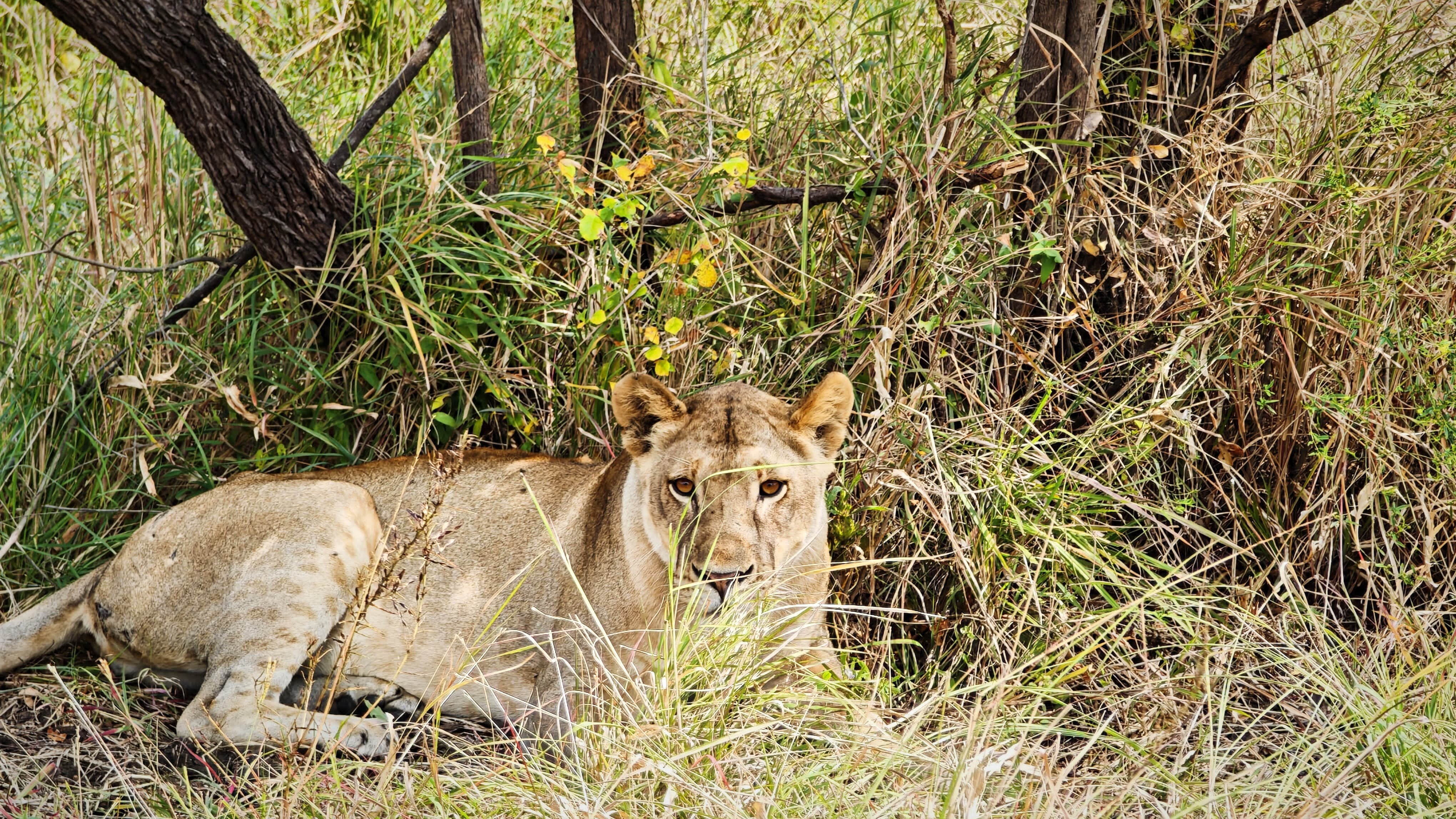
How Lion Tracking Works on a Mikumi Safari
There is no formal lion tracking permit or collared-animal programme in Mikumi in the way there is for gorillas or chimpanzees elsewhere in East Africa. What happens is a game drive run with intent: a guide who knows recent pride movements working ground where lion have been seen.
That makes the guide the whole variable. Ask what has been seen over the past week rather than accepting a general claim about the park, because pride movements shift and a week-old sighting is far more useful than a season-old statistic.
Everything happens from the vehicle on the graded circuit of roughly 60 kilometres across the floodplain. Getting out to follow tracks on foot is not permitted outside a formal walking safari with an armed ranger, and walking safaris are not run toward lion.
Sightings in Mikumi are described as occasional rather than abundant. Anyone promising you a lion is selling.
The most useful thing you can do is book two mornings rather than one. Lion tracking is a numbers game in a park where sightings are regular rather than daily, and doubling your attempts does more than any technique.
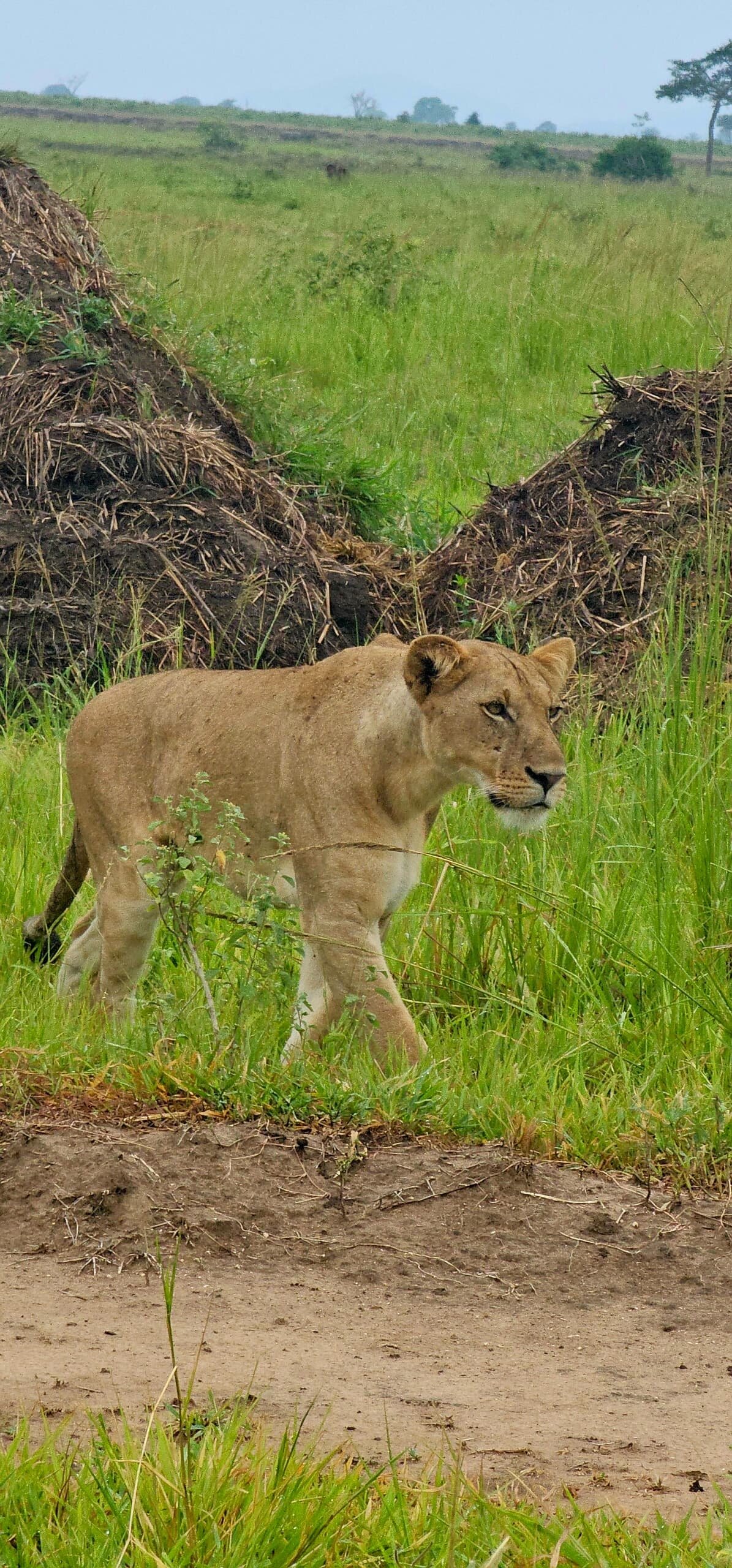
Termite Mounds and the Mikumi Lion Technique
Mikumi has a specific tell that works nowhere else quite so reliably, and knowing it changes how you look at the plain.
Lion here use the flattened tops of termite mounds as lookouts over the herds. A mound gives a lioness roughly a metre of extra height, which is enough to see over grass that would otherwise hide zebra, wildebeest, impala and buffalo moving across the floodplain. Prides use them habitually through the dry season.
For a visitor, that turns lion spotting from sweeping open ground into checking specific structures. Work the mounds methodically with binoculars. A shape on top of a mound at first light is a lion far more often than it is a rock or a termite chimney.
The technique works best in September and October, when short grass leaves the mounds standing clear of the vegetation and visible from a long way off.
Reading Prey Movement to Find Lion in Mikumi
The second technique is indirect and often better than looking for lion at all.
Watch what the herds are watching. Zebra, impala and wildebeest all give away a predator’s position through posture: heads up in unison, all facing one direction, alarm calls from impala, and a refusal to move toward water they clearly want to reach.
Through the dry season the prey itself concentrates, because seasonal channels of the Mkata River retreat and animals must come to the few remaining pools. Buffalo gather in herds of several hundred. That concentration makes lion behaviour more predictable in space, and easier to see.
Guides work the ground around the hippo pools, the Mkata and Chamgore waterholes and Mwanamboga below Stanley’s Kopje for exactly this reason.
Vultures circling or dropping are the other signal worth following, since a kill will often still have lion on it in the early morning.
Tracks, Calls and Signs on a Mikumi Lion Safari
Guides read the tracks left overnight on the graded circuit, which holds prints well in the dry season. Fresh pug marks in the dust tell you a pride crossed here, roughly when, and in what direction.
Direction of travel matters more than the print itself. A pride heading toward water at dawn will be somewhere near it an hour later.
Roaring carries several kilometres at night and in the early morning, and anyone staying at an unfenced camp inside the park may hear it. Mentioning what you heard and roughly from which direction is genuinely useful information for your guide at breakfast.
Alarm calls from baboon troops are another reliable indicator, and Mikumi has yellow baboons in numbers, particularly around Kikoboga near park headquarters.
Lion tracking in Mikumi is mostly a matter of looking at the right things. Mounds, not grass. Herds, not the horizon. Fresh prints in the dust, not the map.
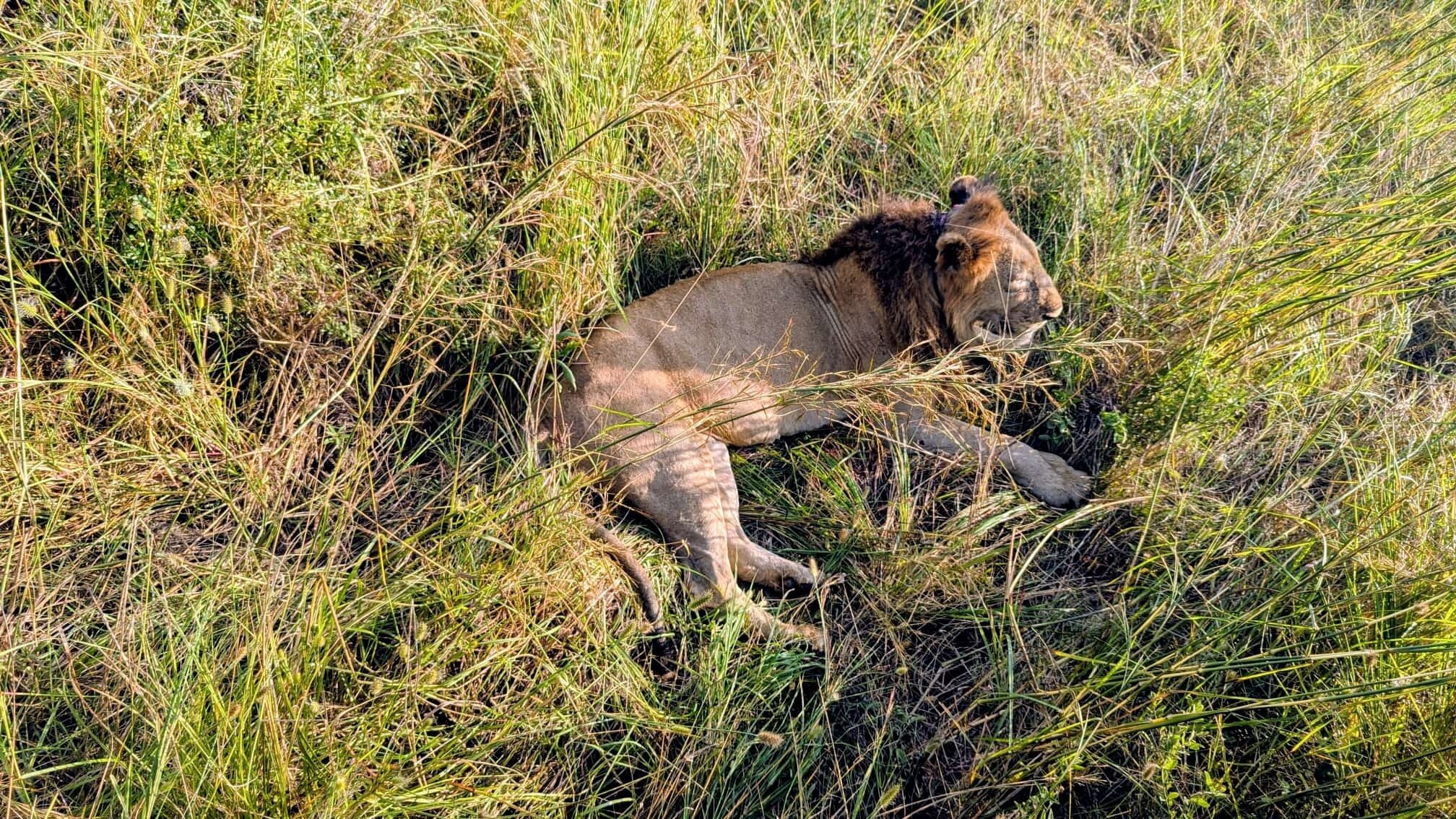
Tree Climbing Lions During the Mikumi Rains
During the wet season, when grass grows past a metre, lion in Mikumi have been recorded resting high in trees rather than on mounds.
It comes up often enough in accounts of this park to be worth asking about, and some sources rate the chance of seeing tree climbing lion here as better than in most Tanzanian parks. It is luck rather than something to build a trip around.
The behaviour makes sense in context. When ground cover is too tall to see over and the ground is wet, a horizontal acacia branch does the same job a mound does in October, with a breeze and fewer insects on top.
If you are visiting between November and May, tracking shifts to the riverine acacia and sausage trees along the Mkata River rather than the open plain. Tell your guide that lion are your priority so he works that ground.
Best Time of Day and Year for Lion Tracking in Mikumi
The first two hours after gates open at first light are the most productive of the day. Lion are still moving from the night, the air is cool enough for them to stay active, and low light picks out shapes on the mounds.
By nine or ten the heat drives them into whatever cover exists and open-plain tracking becomes unproductive. From about four in the afternoon they begin stirring again, and gates close at six.
Across the year, September and October are the peak, combining the shortest grass with the tightest prey concentration. The wider dry season from June to October all works. November to May makes tracking considerably harder.
September and October: the best tracking of the year. Shortest grass, prey concentrated at the last water, lion visible on termite mounds at distance.
June to August: good and improving as the plain dries. Coldest mornings of the year, which keeps lion active later into the morning.
November to May: tall grass and scattered prey. Tracking shifts to the riverine trees, with a better chance of finding lion resting above ground.
Night Drives as Part of a Mikumi Lion Safari
Night game drives are permitted in Mikumi, which is unusual in Tanzania, and they catch the front end of the lion’s active night that daylight drives cannot reach.
Drives run roughly eight until eleven in the evening with an armed ranger and a vehicle fitted with a spotlight, and they need booking in advance. Charges run around US$50 per adult non-resident on top of park entry.
They also produce the only realistic chance of leopard in Mikumi, along with genet, civet, bushbaby and spotted hyena on the move.
The cost is the following morning, since getting back near midnight and up before first light is a hard combination. On a two night stay, take the night drive on the first evening.
Where to Base Yourself for Lion Tracking in Mikumi
Sleeping inside the park is the practical advantage, because park entry runs 24 hours from when you clear the gate and keeps covering you overnight. That puts you on the circuit at opening rather than driving toward the gate.
Stanley’s Kopje sits on a rocky kopje above the Mwanamboga waterhole in ground guides rate as the park’s strongest, though it closes through the wettest months. Mikumi Wildlife Camp near park headquarters has its own busy waterhole and lion are seen in the immediate vicinity. Vuma Hills sits in the southwestern hills, further from the floodplain but open year round.
Lodges outside the boundary near Mikumi town cost less and mean a drive to the gate plus a fresh entry fee each morning, which is precisely the hour you most want.
Questions About Lion Tracking in Mikumi
Is there a lion tracking permit in Mikumi?
No. Unlike gorilla or chimpanzee trekking, there is no separate permit or collared-animal programme. Lion tracking here means a game drive run with intent by a guide who knows recent pride movements, covered by standard park entry at around US$30 per adult foreign non-resident per day plus roughly US$40 per day for a safari vehicle.
How likely am I to see lions in Mikumi?
Over two mornings in the dry season, reasonably likely. Guides describe lion here as occasional rather than abundant, and sightings are regular without being daily. September and October give the best odds because the grass is shortest. A single afternoon drive in April is a poor bet.
Can I track lions on foot in Mikumi?
No. Walking safaris run in Mikumi with an armed ranger, costing around US$20 for one to four hours and US$25 for longer, but they focus on tracks, dung and feeding sign rather than moving in on predators. Rangers deliberately keep a wide margin from dangerous animals. All lion viewing is from a vehicle.
What is the best time of day for lion tracking?
The first two hours after gates open at first light, when lion are still moving from the night. A second window opens from about four in the afternoon until the gates close at six. Night drives from eight until eleven catch a period daylight drives cannot reach.
Do lions really climb trees in Mikumi?
It happens, mostly during the rains when grass grows past a metre and a branch offers the vantage point a termite mound gives in the dry season. Mikumi comes up more often than most Tanzanian parks in this context. It remains a matter of luck rather than something to plan around.
How many days should I allow for lion tracking in Mikumi?
Two nights, which gives three drives including two at first light. That is the point at which a sighting moves from possible to reasonably likely in the dry season. Adding a night drive covers the other end of the day and improves the odds further.
Booking Your Mikumi Trip
The safari companies and tour operators listed on this website put trips like this together for a living and know which camps, guides and routes actually deliver. We are an independent guide to Mikumi; we do not book or sell tours ourselves.
When you are ready, arrange your safari, tour or holiday with one of the recognised operators listed here. Tell them your dates and what matters most, and a real person, not a form, will handle the itinerary, park bookings and logistics for you.