Night Game Drive in Mikumi National Park
A night game drive safari in Mikumi National Park runs from about eight until eleven in the evening, accompanied by an armed ranger and using a vehicle fitted with a spotlight. It is one of a handful of Tanzanian parks where TANAPA permits the activity, and it turns up genet, civet, bushbaby, nightjars and occasionally a hunting leopard. Booking must be made in advance, and charges sit on top of park entry. Mikumi covers 3,230 square kilometres in Tanzania’s Morogoro region.
Below is how a night drive works here, what it produces, and whether it is worth the money.
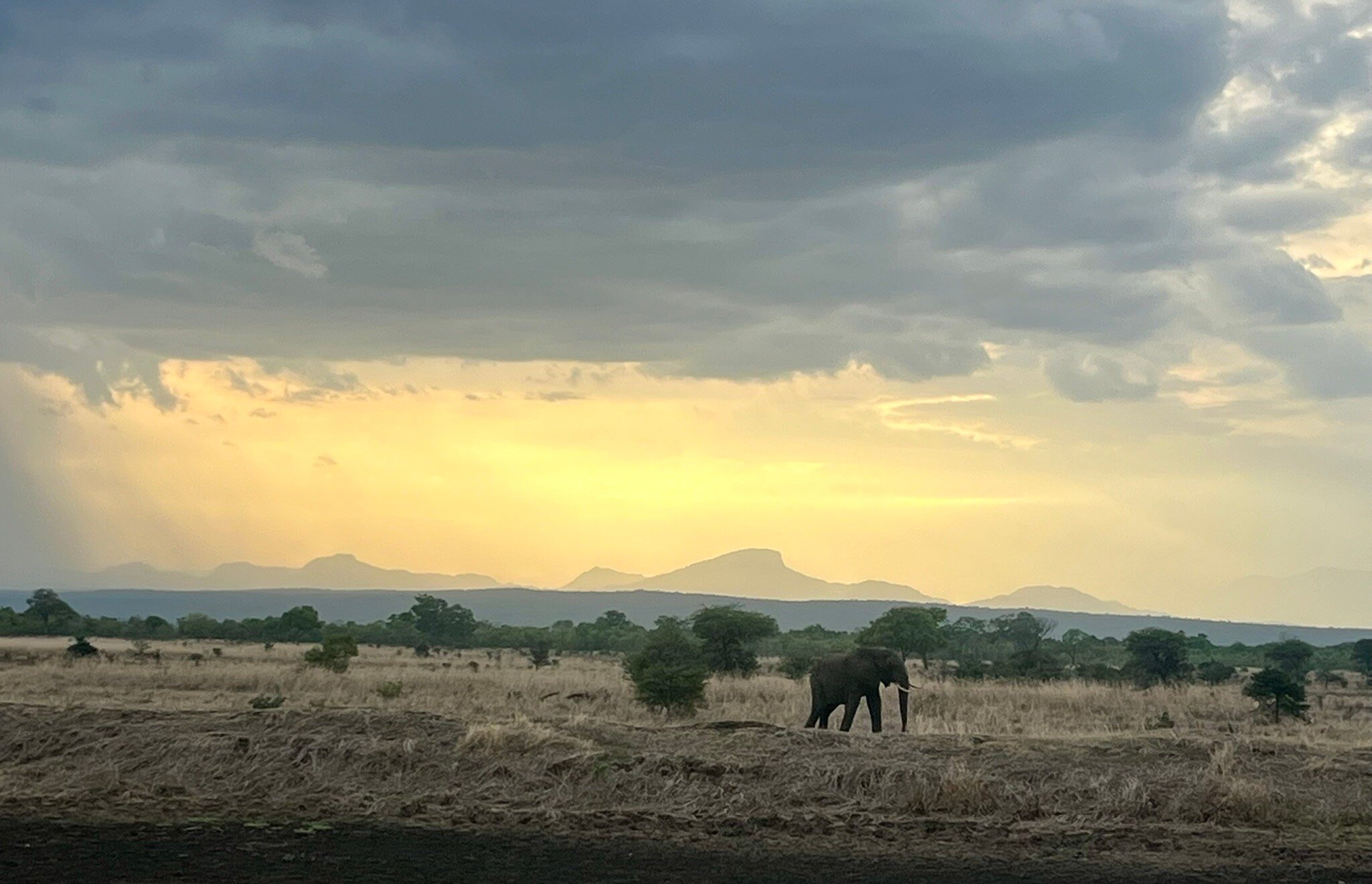
Why Night Game Drives Are Possible in Mikumi
Most Tanzanian national parks do not allow driving after dark. TANAPA permits night game drives in a short list that includes Mikumi, Ruaha, Katavi, Tarangire, Lake Manyara and Nyerere, and the Serengeti is not on it.
That makes the activity one of Mikumi’s genuine points of difference, alongside guided walking safaris and the hippo pools viewing area. For anyone who has already done the northern circuit, it is something new rather than a repeat.
The rules are strict because the risk is real. An armed ranger must accompany every drive, the vehicle must be set up for the purpose with a proper spotlight mount and approved layout, and the guide needs TANAPA approval.
Not every lodge has a suitable vehicle, which is why night drives cannot be arranged on the spot.
Book the night drive when you book the trip, not on arrival. The limiting factor is usually the vehicle rather than the ranger, and camps without a properly fitted car simply cannot run one no matter how much you want it.
What Happens on a Mikumi Night Game Drive
The drive does not run straight on from an afternoon game drive. Park gates close at six, so there is a break, dinner at camp, and then departure around eight.
An armed ranger joins the vehicle. A spotter works the light from the back, sweeping the grass and the treeline in slow arcs looking for eyeshine, and the guide drives slowly, often at little more than walking pace.
Distance covered is short. A three hour night drive might travel a fraction of what a morning drive covers, because the technique is about scanning carefully rather than getting anywhere.
Expect long stretches of nothing followed by sudden activity. The rhythm is completely different from a daylight drive and takes some adjusting to.
What You Can See on a Night Safari in Mikumi
The species list is the reason to go, because almost none of it overlaps with the day.
Genet and civet are the two most commonly reported, both small carnivores that are strictly nocturnal and all but unseen in daylight. Bushbaby give themselves away by eyeshine high in the trees and by that unmistakable call.
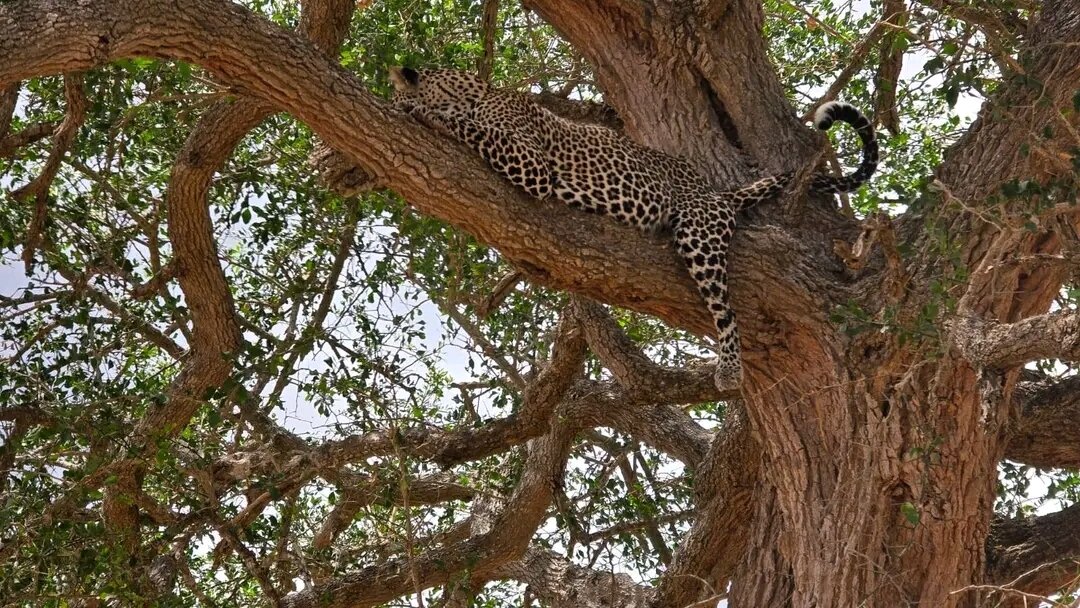
Leopard are the prize. They are described as rare in Mikumi, hunting at night and lying up through the heat in acacia and sausage trees along the Mkata River. A night drive is the most realistic route to one in this park, which is not the same as a likely one.
Spotted hyena move after dark. Elephant and buffalo are seen on the tracks. Nightjars sit on the warm surface of the roads and lift away in front of the vehicle, and owls call from the woodland edge.
Spotlighting Technique on a Mikumi Night Drive
The spotter is doing something specific and it helps to understand it. Eyeshine is the reflection off a layer at the back of many nocturnal animals’ eyes, and different species show different colours and heights.
Low, wide-set and greenish usually means an antelope. High in a tree and orange is often a bushbaby. Close together and moving low through grass could be a genet.
Red filters are used on the light to reduce disturbance to the animals, and rangers keep the beam off animals’ faces once identified. If you have a torch, do not use it. A visitor waving a white light around undoes what the spotter is doing.
Keep noise down. Sound carries much further at night and a quiet vehicle sees more.
A night drive is not a game drive with the lights on. It is a slower, stranger three hours where most of what you see is a pair of eyes at forty metres, and the good moments are worth all the empty ones.
Night Drive Costs and Booking in Mikumi
The activity carries its own charge on top of park entry. Published figures for Mikumi put the night game drive at around US$50 per adult non-resident, with children around US$25, and East African citizens paying a lower rate in shillings. A separate vehicle charge of roughly US$50 applies if you use your own car rather than a lodge vehicle.
Other sources cite a figure closer to US$59 per person, which is the rate quoted across the group of parks where TANAPA permits night drives. Confirm the current figure with your operator, since tariffs are reviewed annually.
Booking has to be made in advance rather than at the gate, and payment for park charges is by card or through the TANAPA portal rather than cash.
Against the cost of getting to Mikumi in the first place, it is one of the cheaper meaningful additions to a trip.
Photography on a Night Game Drive in Mikumi
Be realistic. Night drive photography is hard, and a spotlight is a difficult light source: harsh, directional and moving.
Push the ISO much further than feels comfortable and accept noise. A fast lens helps considerably. Autofocus will hunt, so be ready to work manually on a lit subject.
Do not use flash without asking. Some parks and rangers permit it, others do not, and firing a flash at a hunting predator is unhelpful to the animal and to everyone else in the vehicle.
The honest advice is to treat a night drive as an experience rather than a photographic opportunity, and to keep the camera down for most of it.
What to Wear and Bring on a Night Safari
Warm layers. Temperatures drop after dark, particularly in the dry season from June to October when nights are coolest, and a moving open vehicle at ten in the evening is cold.
Insect repellent with DEET, since mosquitoes are active after dark and Mikumi is a malaria area. Long sleeves and trousers do more than any spray.
Leave the torch in your bag unless a ranger asks for it. Bring binoculars if you like, though they are less useful than in daylight.
Eat properly at dinner beforehand. Three hours in a cold vehicle on an empty stomach is a long time.
What a night drive adds: genet, civet, bushbaby, nightjars, owls and the most realistic chance of leopard in a park where they are otherwise rare.
What it costs: around US$50 per adult non-resident on top of park entry, plus roughly US$50 vehicle charge if using your own car. Advance booking required.
What it demands: a late night from eight until eleven, a cold three hours, and patience through long quiet stretches between sightings.
Best Time of Year for a Night Game Drive in Mikumi
The dry season from June to October works best, mainly because tracks hold up. Night driving on wet black cotton soil is a poor idea and some camps suspend the activity when conditions deteriorate.
Nights are also coolest and clearest in these months, and with grass short after August, spotlighting reaches further across the plain.
From November to May, tall grass absorbs the light and reduces how far a spotter can in practice scan. March and April bring the worst conditions of the year.
Moon phase matters more than people expect. A bright full moon makes eyeshine harder to pick out; darker nights around the new moon tend to produce better spotlighting.
Fitting a Night Drive Into a Mikumi Itinerary
A night drive works on any night of a stay, but it costs you the following morning. Getting back to camp near midnight and up again before first light is a hard combination, and the morning drive is the most productive of the day.
On a two night stay, take the night drive on the first evening rather than the second, so the sleep debt lands on your departure day.
Camps inside the park run them where they have a suitable vehicle. Vuma Hills, Stanley’s Kopje and Mikumi Wildlife Camp all sit inside the boundary, though Stanley’s Kopje closes through the wettest months.
The main gate is roughly 283 to 300 kilometres from Dar es Salaam, four to five hours by road via Morogoro.
Questions About Night Game Drives in Mikumi
How much does a night game drive in Mikumi cost?
Published figures put it at around US$50 per adult non-resident and about US$25 for children, with lower rates in shillings for East African citizens. Some sources quote closer to US$59 per person, the rate cited across the parks where TANAPA permits night drives. A separate vehicle charge of roughly US$50 applies if you use your own car. All of this sits on top of park entry.
What time do night drives run in Mikumi?
Roughly eight until eleven in the evening, after dinner. They do not run on from an afternoon drive, since park gates close at six. Every drive carries an armed ranger and must use a vehicle set up for the purpose with a spotlight.
What will I see on a night drive in Mikumi?
Genet, civet and bushbaby are the most commonly reported, along with nightjars on the tracks and owls at the woodland edge. Spotted hyena, elephant and buffalo are seen. Leopard are the prize and remain rare, though a night drive is the most realistic chance of one in this park.
Can I book a night drive on arrival in Mikumi?
No. Both the armed ranger and the specially equipped vehicle need arranging in advance, and not every lodge has a suitable car. Book it when you book the trip rather than hoping to add it later.
Are night game drives safe in Mikumi?
They run with an armed ranger as a legal requirement and use approved vehicles. Stay seated, keep noise down and do not use your own torch, which interferes with the spotter’s work and disturbs animals. The drives move slowly, often at little more than walking pace.
Is a night drive worth doing in Mikumi?
For most people, yes, particularly on a second or third night. It shows a set of species the day never produces and is one of the things Mikumi offers that the Serengeti does not. Expect long quiet stretches, difficult photography and a cold three hours, and it holds up well on those terms.
Booking Your Mikumi Trip
The safari companies and tour operators listed on this website put trips like this together for a living and know which camps, guides and routes actually deliver. We are an independent guide to Mikumi; we do not book or sell tours ourselves.
When you are ready, arrange your safari, tour or holiday with one of the recognised operators listed here. Tell them your dates and what matters most, and a real person, not a form, will handle the itinerary, park bookings and logistics for you.