Mkata Floodplain Drives in Mikumi National Park
Mkata Floodplain drives are the core of every Mikumi safari, run on a graded circuit of roughly 60 kilometres northeast of the Tanzam highway across open grassland, acacia woodland and a chain of waterholes. Loops branch and rejoin, so a morning and an afternoon drive can cover entirely different ground. The plain is where the park’s zebra, wildebeest, buffalo, eland and lion concentrate. Mikumi covers 3,230 square kilometres in Tanzania’s Morogoro region, four to five hours from Dar es Salaam.
Below is how the circuit is laid out, how to drive it well, and what each section produces.
How the Mkata Floodplain Circuit Is Laid Out
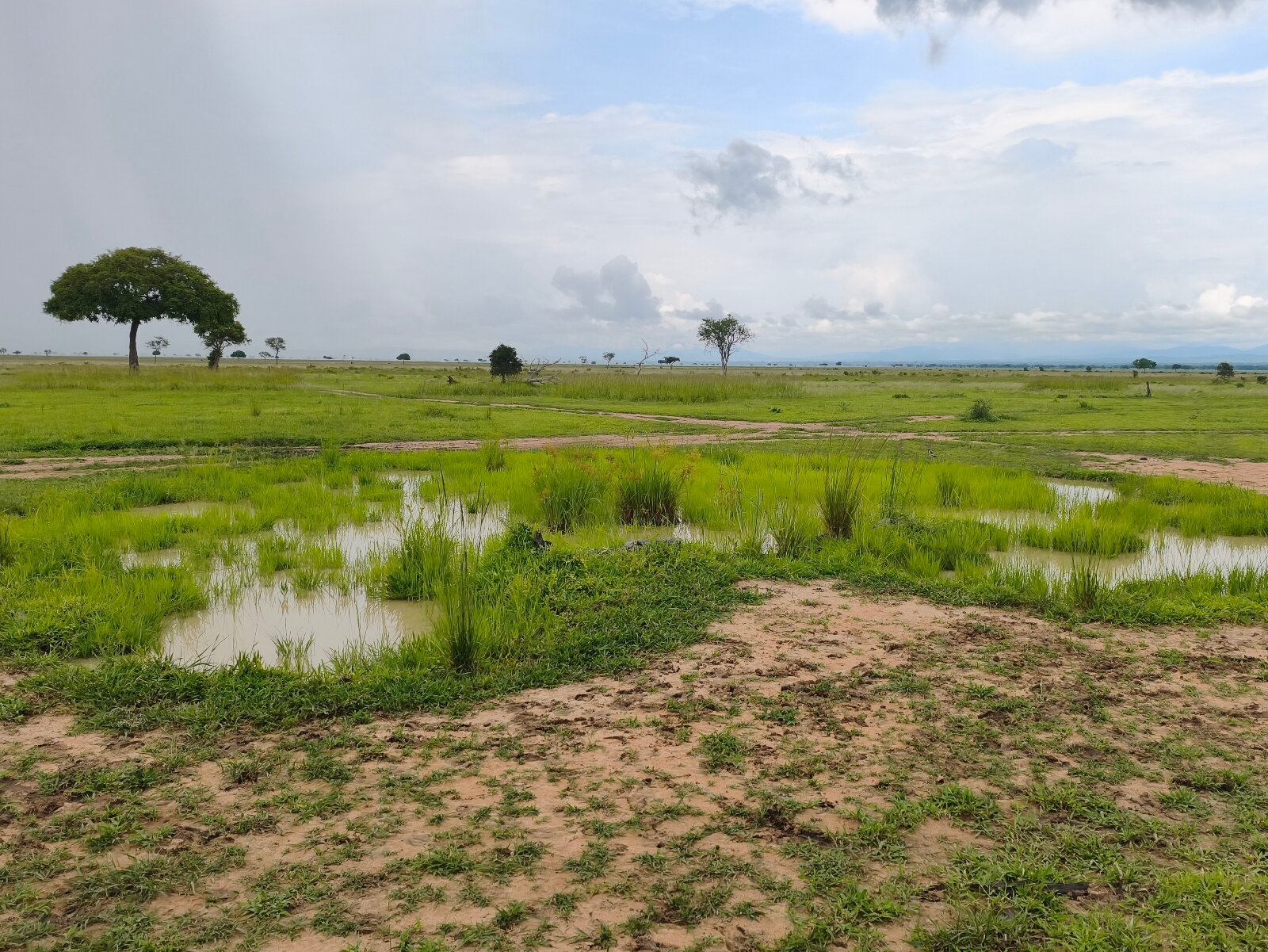
The circuit sits entirely on the northeastern side of the highway, on the alluvial plain built by the seasonal Mkata River. Around 80 per cent of Mikumi lies south of the road and is largely undeveloped, so the plain is in practice the whole visitable park.
Sixty kilometres sounds small and drives large. Tracks are graded rather than tarmac, speeds stay low, and the loops that branch off and rejoin mean the same circuit can be worked several different ways across a stay.
Terrain is open grassland interspersed with acacia woodland, patches of borassus palm, black hardwood and the odd baobab. Ebony grows here in quantity. Termite mounds break the surface at intervals and matter more than they look.
The main gate sits at the northern end, with the hippo pools about five kilometres in and park headquarters at Kikoboga nearby.
There is no prize for completing the circuit. Sixty kilometres driven fast produces less than thirty driven slowly with three proper stops, and guides who cover ground rather than sitting at water are usually working to a schedule rather than to the animals.
Driving the Northern Loops and the Hippo Pools
The northern section is the busiest because it is closest to the gate, and it carries the two features every itinerary includes.
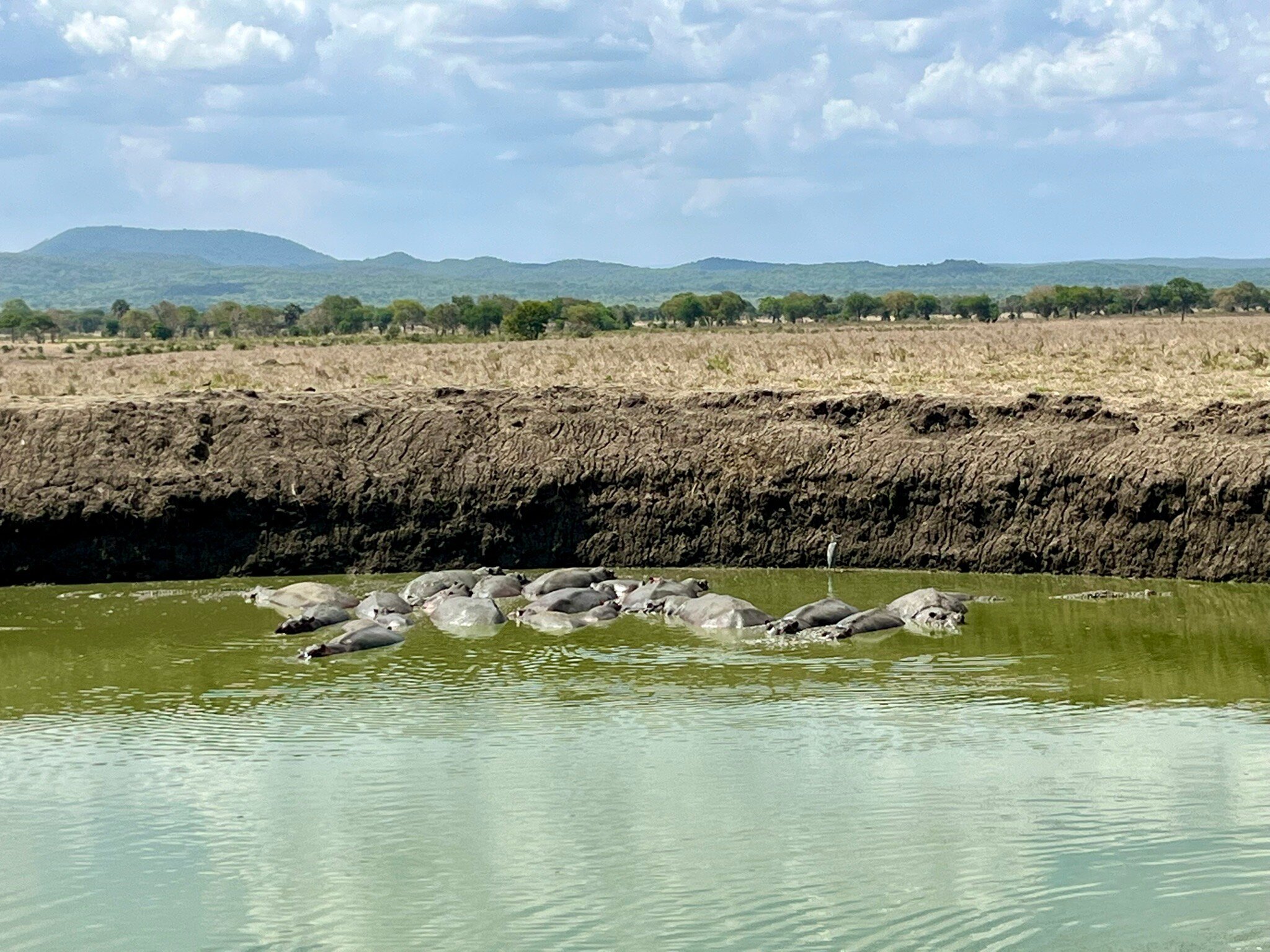
The hippo pools sit around five kilometres north of the entrance, holding hundreds of hippo and Nile crocodile in permanent water, with a designated viewing area where visitors may leave the vehicle. Toilets and a picnic spot make it the natural break in a long morning.
Beyond it, the loops open onto the wider plain. The Mkata and Chamgore waterholes are the two named stops, and both reward parking and waiting rather than passing through.
Research on the plain found several large mammals keep clear of the highway corridor, with zebra avoiding ground within 200 metres of the road and eland, reedbuck, jackal, elephant and wildebeest avoiding out to 600 metres. That is why the productive driving starts once you are properly away from the tarmac.
The Kisingura Circuit and Western Loops
Kisingura is named alongside the hippo pools and Vuma Hill as one of the most rewarding drives in Mikumi, and it covers different country from the central loops.
It runs closer to the treeline, which shortens sightlines and changes the species mix. Itineraries that mention the Mkata plain, the Kisingura area and the hippo dams together are describing a full working day in the park.
Because it sees less traffic than the loops nearest the gate, it suits anyone wanting the plain to themselves, which in Mikumi is most of the time anyway.
Ask your guide whether it is holding game before committing a morning, since conditions shift across the season and there is no point driving to empty ground.
Working the Waterholes on a Mkata Floodplain Drive
Water dictates everything on this plain, because the Mkata River is seasonal and its channels retreat sharply once the rains stop.
Between June and October the drinking options collapse to a handful of pools and everything has to come to them. Elephant drink mid-morning, roughly between nine and eleven, then throw mud across their backs. Buffalo arrive in tight groups, sometimes several hundred strong, drink and leave. Zebra, wildebeest, impala and waterbuck cycle through all day.
Mwanamboga sits below the rocky kopje where Stanley’s Kopje camp is built, in ground guides consistently rate as the strongest in the park.
Thirty to forty minutes with the engine off is the working minimum. Animals that faded away when you arrived return once the noise stops, and the interesting behaviour usually starts after the first ten minutes.
The floodplain circuit is short enough that you can drive all of it in a morning and see very little, or a third of it and see a great deal. The difference is entirely how often the engine is off.
What the Mkata Floodplain Produces
The plain is the reason Mikumi is called the mini Serengeti, and the species list is what earns it.
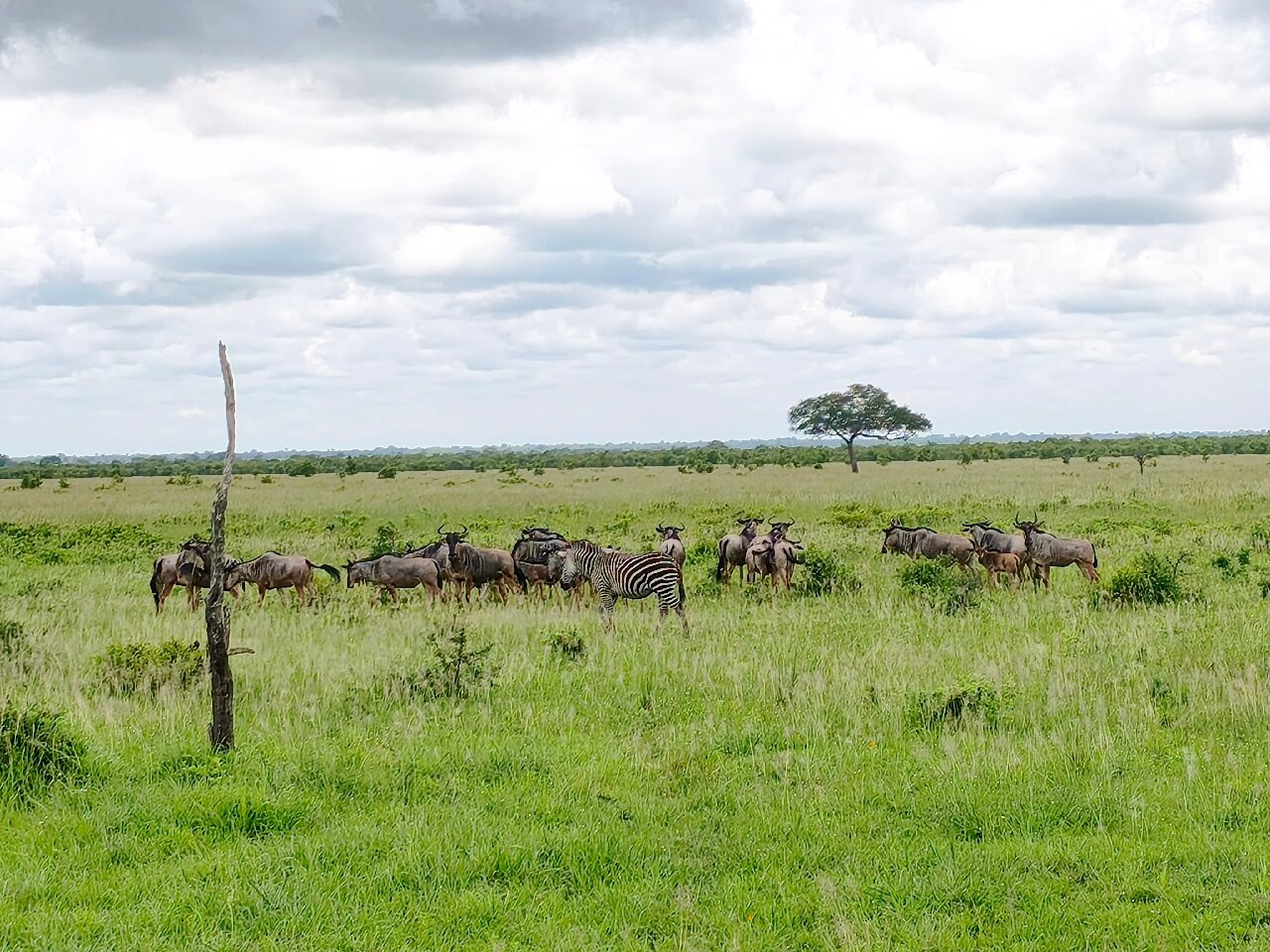
Burchell’s zebra and blue wildebeest move in sizeable herds, often mixed with impala. Buffalo gather hard in the dry season. Giraffe browse the isolated acacia stands fringing the river, and Mikumi’s population is considered transitional between the Masai and reticulated forms.
Eland are the distinction. The Mkata Floodplain is widely rated the most reliable place in Tanzania to see the largest antelope in the world. Lichtenstein’s hartebeest works the open ground and the woodland edge, and bohor reedbuck occur on the plain.
Lion use the flattened tops of termite mounds as lookouts over the herds, which is the behaviour the park is best known for. Sightings are regular rather than daily.
Terrain, Vehicles and Track Conditions
Black cotton soil underlies the plain, and it behaves in two completely different ways depending on the month.
In the dry season it sets hard and much of the circuit is drivable in a two wheel drive vehicle with decent ground clearance. After rain it turns to a heavy greasy paste, four wheel drive becomes necessary, and in March and April parts of the circuit are impassable.
A pop top Land Cruiser is the standard and the right choice, giving standing room, shade at midday and dust protection on graded tracks. Minibuses are marginal in the dry and inadequate in the wet.
There is no recovery service inside the park. Gates close at six in the evening.
Timing a Mkata Floodplain Drive Through the Day
The first two hours after the gates open at first light are the most productive of the day. Predators are still moving, the air is cool and low light picks out shapes on the termite mounds.
Mid-morning belongs to the waterholes, when elephant and buffalo drink. The middle of the day is flat on an open plain with no shade, and is best spent at the hippo pools where the animals are actually most active, or in the riverine acacia stands where elephant and giraffe shelter.
From about four the plain wakes again as temperatures drop, and the last hour carries the best light of the day toward the Rubeho mountains in the west.
Gates close at six, which caps the evening earlier than the animals’ schedule would.
Seasonal Changes on the Mkata Floodplain
The dry season from June to October is when the circuit performs, and September and October are the peak, with the shortest grass of the year and the tightest concentration at the remaining water.
From November the rains green the plain and the grass rises past a metre. Animals disperse because water lies everywhere, calving accelerates, and migrant birds arrive from Europe and North Africa to join more than 400 recorded resident species.
March and April bring the heaviest rain, flooding parts of the plain and closing some tracks. Stanley’s Kopje out on the floodplain shuts for the season, while Vuma Hills in the hills stays open year round.
June to October: firm tracks, short grass, herds concentrated at the waterholes. The circuit at its best, peaking in September and October.
November to February: green plain, dispersed game, rising grass and migrant birds. Better for birding than for big game.
March to May: flooded ground, grass over a metre and some loops impassable. Four wheel drive required throughout.
Getting to the Mkata Floodplain
The main gate sits on the Tanzam highway roughly 283 to 300 kilometres from Dar es Salaam, four to five hours by road via Morogoro. The circuit begins within minutes of paying fees.
Staying inside the park means being on the plain at gate opening, since park entry runs 24 hours from when you clear the gate. Lodges outside the boundary near Mikumi town mean a drive to the gate and a fresh entry fee each morning.
Kikoboga airstrip inside the park handles light aircraft from Dar es Salaam, Zanzibar, Nyerere and Ruaha, with camp vehicles meeting arranged arrivals.
Questions About Mkata Floodplain Drives
How long is the Mkata Floodplain circuit?
About 60 kilometres of graded track, with loops branching and rejoining. Driven slowly with proper stops at two or three waterholes it fills a half day comfortably, and most people split it across a morning and an afternoon drive rather than attempting it in one run.
What does it cost to drive the Mkata Floodplain?
Standard park entry covers it, currently around US$30 per adult foreign non-resident per day and about US$10 for children aged 5 to 15, with lower rates for Tanzanian residents and East African citizens. A six to twelve seat safari vehicle adds roughly US$40 per day and a private car around US$10.
Do I need four wheel drive on the floodplain circuit?
In the dry season from June to October, a high clearance two wheel drive handles much of it. From November onwards the black cotton soil turns and four wheel drive becomes necessary, with some loops impassable in March and April. There is no recovery service inside the park.
Which part of the circuit has the best game viewing?
The ground around the Mwanamboga waterhole is consistently rated the strongest by guides and camp operators. The hippo pools near the gate and the Chamgore and Mkata waterholes are the other reliable stops, and the Kisingura circuit runs through different country closer to the treeline.
Can I drive the floodplain circuit myself?
Yes, self driving is permitted and the road in from Dar es Salaam is surfaced the whole way. Carry water and fuel up in Morogoro, about 118 kilometres short of the park, since there is nowhere inside to buy anything. Park fees are paid by card at the gate rather than in cash, and gates close at six.
How much of Mikumi does the floodplain circuit cover?
A small fraction of the park’s 3,230 square kilometres, but virtually all of the part set up for visitors. Roughly four fifths of Mikumi lies south of the highway with minimal roads and no facilities, described as country for well equipped expeditions rather than ordinary game drives.
Booking Your Mikumi Trip
The safari companies and tour operators listed on this website put trips like this together for a living and know which camps, guides and routes actually deliver. We are an independent guide to Mikumi; we do not book or sell tours ourselves.
When you are ready, arrange your safari, tour or holiday with one of the recognised operators listed here. Tell them your dates and what matters most, and a real person, not a form, will handle the itinerary, park bookings and logistics for you.