What Are the Main Habitats in Mikumi?
Mikumi National Park holds five main habitats: the open grassland of the Mkata Floodplain, acacia and baobab savanna, riverine woodland along the Mkata River, miombo woodland on the rising foothills, and seasonal swamp around the waterholes. Which habitat you drive determines what you see on a Mikumi safari, since sable antelope and greater kudu live in the woodland while eland, zebra and buffalo hold the plains. The park covers 3,230 square kilometres in Tanzania’s Morogoro region.
Below is what each habitat looks like, what lives in it, and how to build a trip that covers more than one.
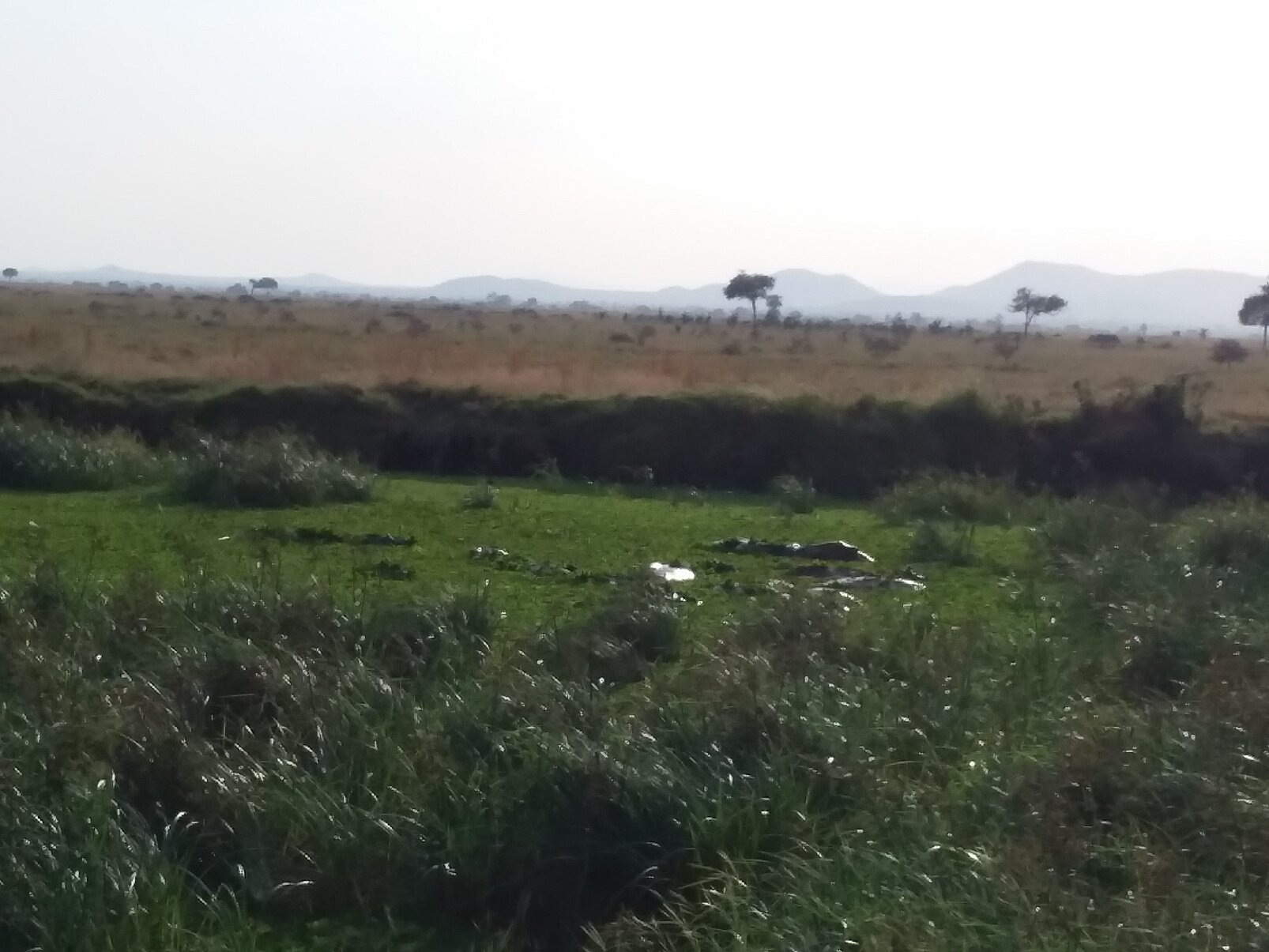
The Mkata Floodplain Grassland at the Core of a Mikumi Safari
The floodplain is the habitat everybody comes for. It is an alluvial plain built by the seasonal Mkata River in the northwestern part of the park, filled with open grassland running to a mountain horizon.
Black cotton soil underlies it, which is why the ground sets hard as concrete in the dry season and turns to heavy paste after rain. Termite mounds break the surface at intervals, and those mounds matter more than they look, since lion use their flattened tops as lookouts over the herds.
This is where the plains game concentrates: Burchell’s zebra, blue wildebeest, impala, buffalo, warthog and eland. Mikumi is widely rated the most reliable park in Tanzania for eland, the largest antelope in the world.
The main tourist circuit of about 60 kilometres crosses this ground, and virtually all commercial game viewing happens on it.
The single biggest gap in a short Mikumi itinerary is habitat, not time. Trips that stay on the floodplain circuit miss sable antelope and greater kudu entirely, because those species live in the woodland and never come out onto the open grass.
Acacia Woodland and Baobab Savanna on the Mikumi Plains
The grassland is not uniform. Open ground is interspersed with acacia woodland, patches of borassus palm, black hardwood and the occasional baobab, and that mosaic is what gives Mikumi its species range.
Borassus palms give the area its name, since Mikumi village on the western boundary takes its name from those palms. Baobabs stand scattered across the savanna, with one in the south of the park considered the largest in the area.
Ebony trees, the black hardwood used to make clarinets and other woodwind instruments, grow here in quantity. Tamarind is the other tree worth knowing, since its fruit draws elephant and giraffe that will spend hours feeding beneath a single tree.
Acacia stands give shade in country that otherwise offers none, which makes them the place to look through the middle of the day.
Riverine Woodland Along the Mkata River
Where the Mkata River runs, the vegetation thickens into a narrow band of riverine woodland, and this strip punches well above its size.
Acacia and tamarind fringe the channels, forming islands of shade that elephant favour and that giraffe browse constantly. Leopard use this cover, lying up in acacia and sausage trees through the heat, which is where the park’s rare leopard sightings tend to come from.
Open-billed storks fish the shallows and African fish eagle call from the taller trees. Denser vegetation here supports smaller mammals and a different bird community from the open plain.
Guided walking safaris in Mikumi usually run along this corridor or around the hippo pools rather than out on the grass, because there is more small detail to read: tracks, feeding sign, plant use.
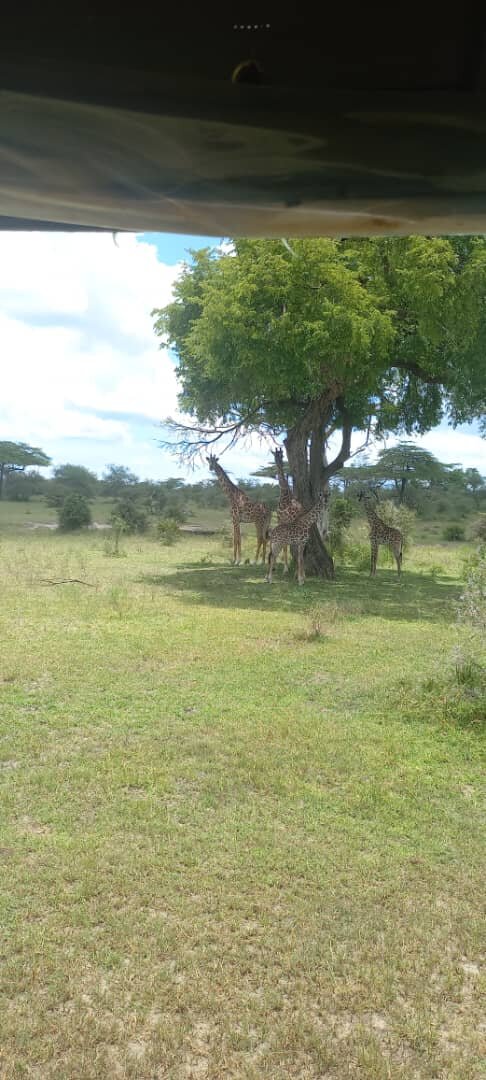
Miombo Woodland in the Mikumi Foothills
Where the plain lifts toward the mountains, grassland gives way to miombo woodland dominated by brachystegia, and this is a genuinely different world. Canopy closes overhead in places, the floor is leaf litter rather than turf, and sightlines shorten sharply.
Fewer animals live here per square kilometre and the ones that do are harder to spot. What the miombo holds is the species the floodplain does not. Greater kudu and sable antelope favour these wooded slopes, particularly in the southeastern and southwestern foothills near the Vuma Hills. Lichtenstein’s hartebeest works the woodland edge.
Miombo also carries its own bird community: Boehm’s bee-eater, Dickinson’s kestrel, hornbills and mixed feeding parties moving through the canopy.
The trees change colour with the season, flushing red and copper in the weeks before the rains, and the light through a brachystegia canopy is worth the drive on its own.
Mkata Floodplain grassland: zebra, wildebeest, impala, buffalo, eland, warthog and lion on termite mounds. The main circuit and the bulk of all game drives.
Miombo woodland foothills: sable antelope, greater kudu, Lichtenstein’s hartebeest and woodland birds. Reached toward the Vuma Hills in the southwest.
Water and riverine woodland: hippo, crocodile, monitor lizards, elephant and giraffe in the shade, and the densest concentration of birdlife in the park.
Seasonal Swamps and Waterholes as Habitat
Mikumi’s vegetation is often summarised as woodland, swamp and grassland, and the swamp element is easy to miss because it disappears for half the year.
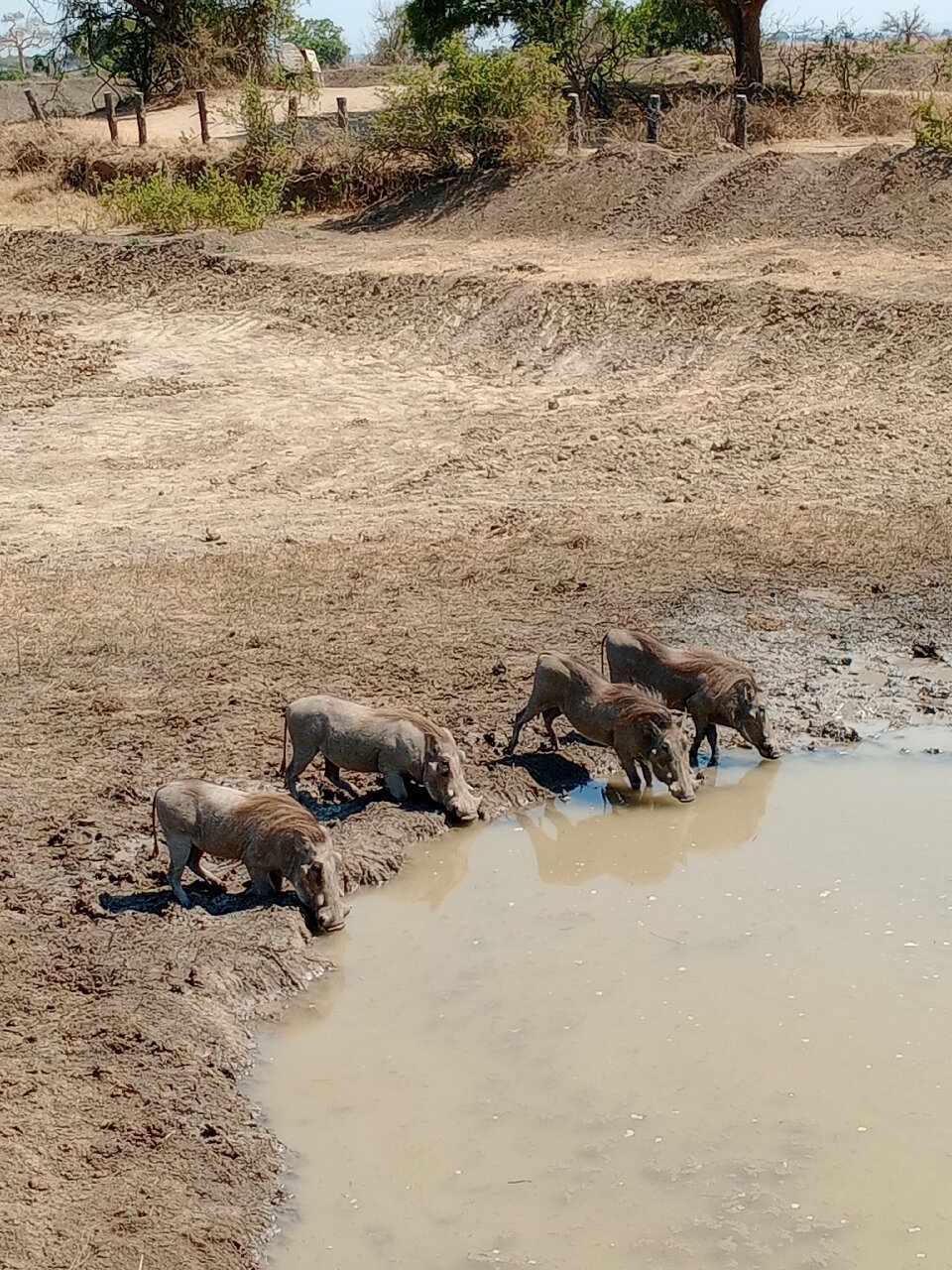
Through the rains, shallow pans hold water across large parts of the plain. As the dry season advances they shrink back to a handful of permanent sources: the two hippo pools about five kilometres north of the main gate, the Mkata and Chamgore waterholes on the circuit, and Mwanamboga below Stanley’s Kopje.
Those pools are habitat in their own right. Hundreds of hippo occupy them, Nile crocodile share the water, water monitors hunt the muddy edges and pythons are recorded in the surrounding vegetation. Saddle-billed stork, hamerkop, malachite kingfisher, herons and egrets work the margins.
Through June to October the pools become the busiest habitat in the park by a wide margin, because everything else has dried.
Rocky Kopjes and Outcrops on a Mikumi Game Drive
Rocky outcrops break the floodplain in places, and they hold their own small communities: hyrax, lizards, agama basking on the warm stone, and raptors using them as perches.
The best known is the kopje on which Stanley’s Kopje camp is built, rising above the Mkata Floodplain with 360 degree views over the plain and the Mwanamboga waterhole below.
Lions, giraffe, zebra, impala and buffalo herds live across the open grass, the woodlands and these rocky outcrops, moving between all three. The outcrops themselves are worth a slow pass rather than a photograph from a distance.
Habitat, not luck, explains most of what people do and do not see in Mikumi. A sable antelope will never walk out onto the floodplain to meet you.
Mountain Foothills and the Eastern Arc Edge
Mikumi sits in a basin partly ringed by the Eastern Arc mountains. The Uluguru range rises northeast to about 2,630 metres, the Rubeho plateau lies west and reaches 2,286 metres, and the Lumango hills sit southeast, with the Udzungwas beyond to the southwest.
Those ranges are outside the park, protected separately through forest reserves, but the connection is real. Elephant and buffalo are recorded using Ukwiva Forest Reserve on the Rubeho massif, and researchers suggest some animals move seasonally between the mountain forests and Mikumi.
The foothills within the park are transition ground where miombo meets grassland, and that edge is often the most productive strip of all for raptors and for browsing antelope.
The mountains also drive the park’s rainfall, intercepting moisture from the Indian Ocean and leaving the plain below to run dry for months.
How the Seasons Change Mikumi’s Habitats
From June to October the grassland browns and thins, the swamps disappear, the miombo drops leaves and everything concentrates on the remaining water. Visibility across all habitats is at its best.
From November the rains green the plain, grass grows past a metre, the pans refill and the miombo comes into full leaf. Animals disperse because water is everywhere, and the tall grass hides what remains.
March and April bring the heaviest rain, flooding parts of the floodplain and making some circuit tracks impassable. Miombo tracks in the hills deteriorate faster than the graded plain.
June to October: short grass, thinned woodland, dry swamps and concentrated game. The most productive months in every habitat.
November to February: green grassland, full miombo canopy, refilled pans, migrant birds. Harder mammal viewing, much better birding.
March to May: flooded floodplain, grass over a metre, poor access on both plain and hill tracks. Fewest visitors of the year.
Getting to Mikumi’s Different Habitats
The main gate sits on the Tanzam highway around 283 to 300 kilometres from Dar es Salaam, four to five hours by road via Morogoro. The floodplain circuit begins within minutes of it and the hippo pools are five kilometres north.
Reaching the miombo woodland means driving toward the Vuma Hills in the southwest, which takes a half day out of an itinerary and is the main reason short trips skip it. Vuma Hills Tented Camp sits up there and puts the woodland on your doorstep.
Roughly four fifths of the park lies south of the highway with minimal roads and no facilities. That country is for well equipped expeditions rather than ordinary drives.
Questions About Mikumi’s Habitats
What is miombo woodland?
Woodland dominated by brachystegia trees, common across central and southern Africa, with a closed canopy in places and a floor of leaf litter. In Mikumi it covers the foothills where the plain rises toward the mountains, and it holds sable antelope, greater kudu and a distinct bird community not found on the open grass.
Which habitat has the best game viewing in Mikumi?
The Mkata Floodplain grassland, by volume, particularly in the dry season when animals concentrate at the remaining waterholes. The miombo foothills hold fewer animals but different ones. The pools and riverine woodland hold hippo, crocodile and the densest birdlife. A good trip uses at least two of the three.
Does visiting different habitats cost extra in Mikumi?
No. Park entry covers the whole park, currently around US$30 per adult foreign non-resident per day and about US$10 for children aged 5 to 15, with lower rates for Tanzanian residents and East African citizens. A safari vehicle adds roughly US$40 per day. What reaching the woodland costs you is time rather than money.
Where do I see sable antelope and greater kudu?
In the miombo-covered foothills rather than on the floodplain, particularly toward the Vuma Hills in the southwest of the park. Both species are shy and more likely early in the morning, and sightings are regular rather than certain. Itineraries that stay on the main circuit will not produce either.
Can I walk in Mikumi’s habitats?
Guided walking safaris run with an armed ranger, usually along the Mkata River corridor or near the hippo pools where there is more detail to read on foot. Walks last three to four hours, need booking in advance, and cost around US$20 for one to four hours or US$25 for longer, on top of park entry.
What trees will I see in Mikumi?
Acacia, baobab, tamarind, borassus palm and black hardwood on the floodplain and savanna, with brachystegia dominating the miombo woodland on the foothills. Ebony grows in quantity, and a baobab in the south of the park is considered the largest in the area. Tamarind fruit draws both elephant and giraffe.
Booking Your Mikumi Trip
The safari companies and tour operators listed on this website put trips like this together for a living and know which camps, guides and routes actually deliver. We are an independent guide to Mikumi; we do not book or sell tours ourselves.
When you are ready, arrange your safari, tour or holiday with one of the recognised operators listed here. Tell them your dates and what matters most, and a real person, not a form, will handle the itinerary, park bookings and logistics for you.