Uluguru Mountains Backdrop
The Uluguru Mountains form the wall of high ground rising northeast of Mikumi National Park, and they are the reason photographs from a Mikumi safari look different from those taken on the Serengeti. The range climbs to about 2,630 metres, belongs to the Eastern Arc chain, and sits roughly 200 kilometres inland from the Indian Ocean above the town of Morogoro. On a clear morning on the Mkata Floodplain the ridge stands over the grass in a single unbroken line.
Below is what the Ulugurus are, how they shape conditions inside Mikumi, and how to make use of them on a game drive.
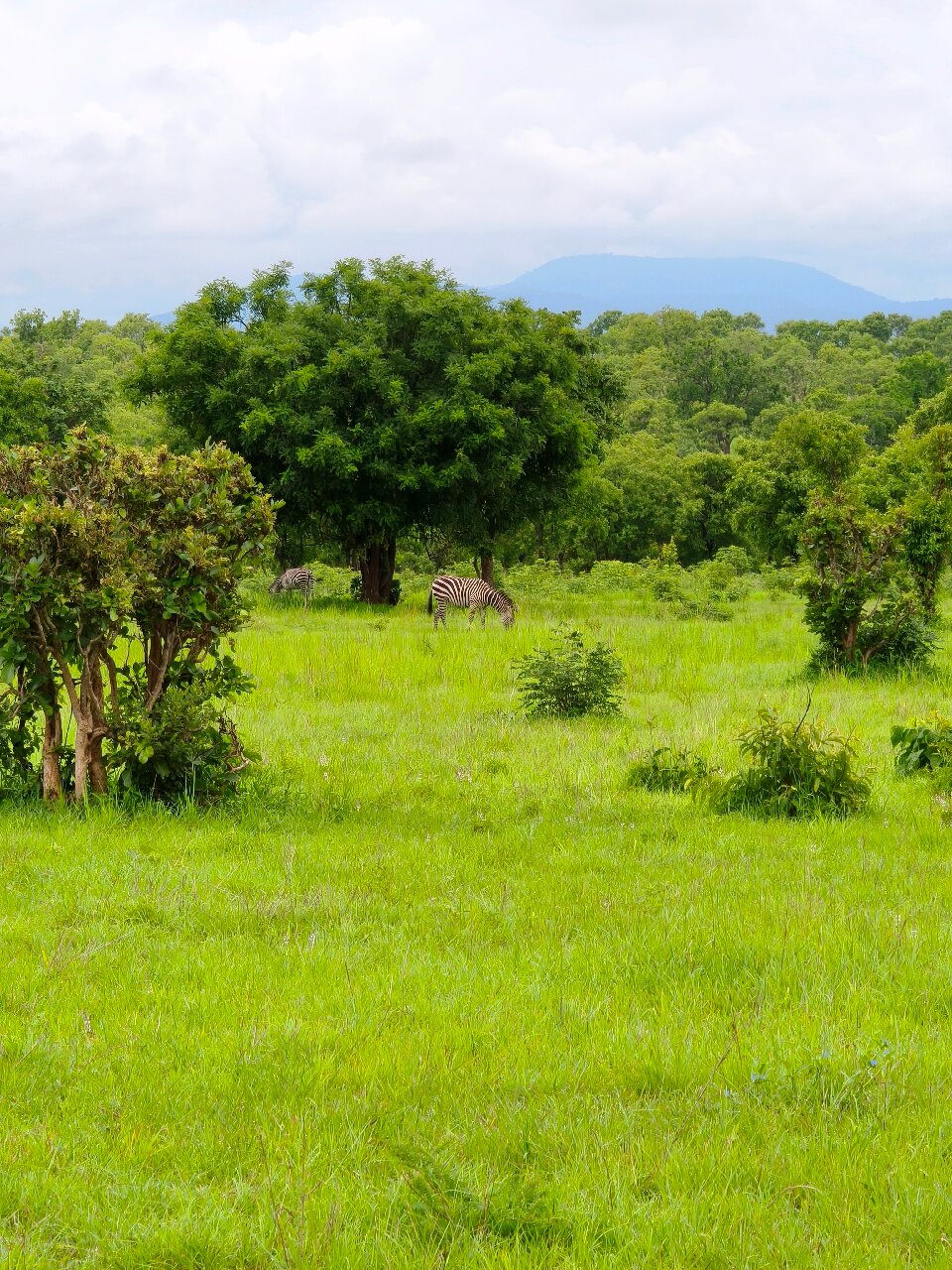
Where the Uluguru Mountains Rise Behind a Mikumi Safari
Mikumi sits in a basin partly ringed by mountains. The Ulugurus close it off to the northeast, the Rubeho range does the same to the west, and the Udzungwas lie away to the southwest. That basin geography is why the park photographs the way it does.
The main Uluguru ridge runs roughly north to south, rising steeply from the plain rather than building up through foothills, which is what gives it such a hard silhouette from the floodplain. Lupanga and Kimhandu are the peaks most often named, and the Lukwangule Plateau sits high on the range as open upland grassland with swampy ground and peat deposits.
Morogoro town lies at the foot of the mountains, on the road every visitor takes between Dar es Salaam and Mikumi. Most people drive past without registering that the wall of green on their left is one of the older forest systems on the continent.
You will get the cleanest view of the Ulugurus from the Mkata Floodplain in the first two hours after sunrise, before haze builds. By midday in the dry season the ridge often flattens into a grey band and loses all its definition.
The Eastern Arc Setting Behind Mikumi National Park
The Ulugurus are one link in the Eastern Arc Mountains, a chain running through eastern Tanzania and southern Kenya that also takes in the Taita Hills, the Pare and Usambara ranges, the Nguru, Ukaguru, Rubeho, Udzungwa and Mahenge mountains. These are old, isolated blocks rather than volcanic peaks, built largely of Precambrian rock including granulite, gneiss and migmatite, raised through cycles of uplift and long stretches of erosion.
Their age and isolation matter. Because the forest on these mountains has persisted while the surrounding country changed around it, the Eastern Arc holds an unusual concentration of species found nowhere else. The Uluguru Nature Forest Reserve covers around 24,115 hectares in the Morogoro and Mvomero districts and is counted among the world’s biodiversity hotspots.
Recorded endemics on the Ulugurus include more than a hundred plant species, two birds, two mammals, four reptiles and six amphibians that exist on this range alone.
None of that is visible from a vehicle on the Mkata plain. It is worth knowing anyway, because the ridge you are photographing is not just scenery.
How the Uluguru Mountains Shape Weather and Water at Mikumi
The Ulugurus intercept moisture moving inland from the Indian Ocean, which is why the mountain forest is wet while the plain below runs dry for months at a time. Rain that falls on the ridge feeds streams that gather into the Ruvu River, and the Ruvu supplies water to Dar es Salaam, a city of several million people.
The same pattern governs Mikumi. The plain sits in the drier ground below the catchment, dependent on seasonal channels of the Mkata River and a handful of pools. When those retreat between June and October, the game concentrates, and that concentration is what makes the dry season the best time for a Mikumi game drive.
Temperatures shift with height as well. Mornings in the foothills are noticeably cooler than out on the grass, and a light fleece is worth having in June and July if your drive takes you toward higher ground.
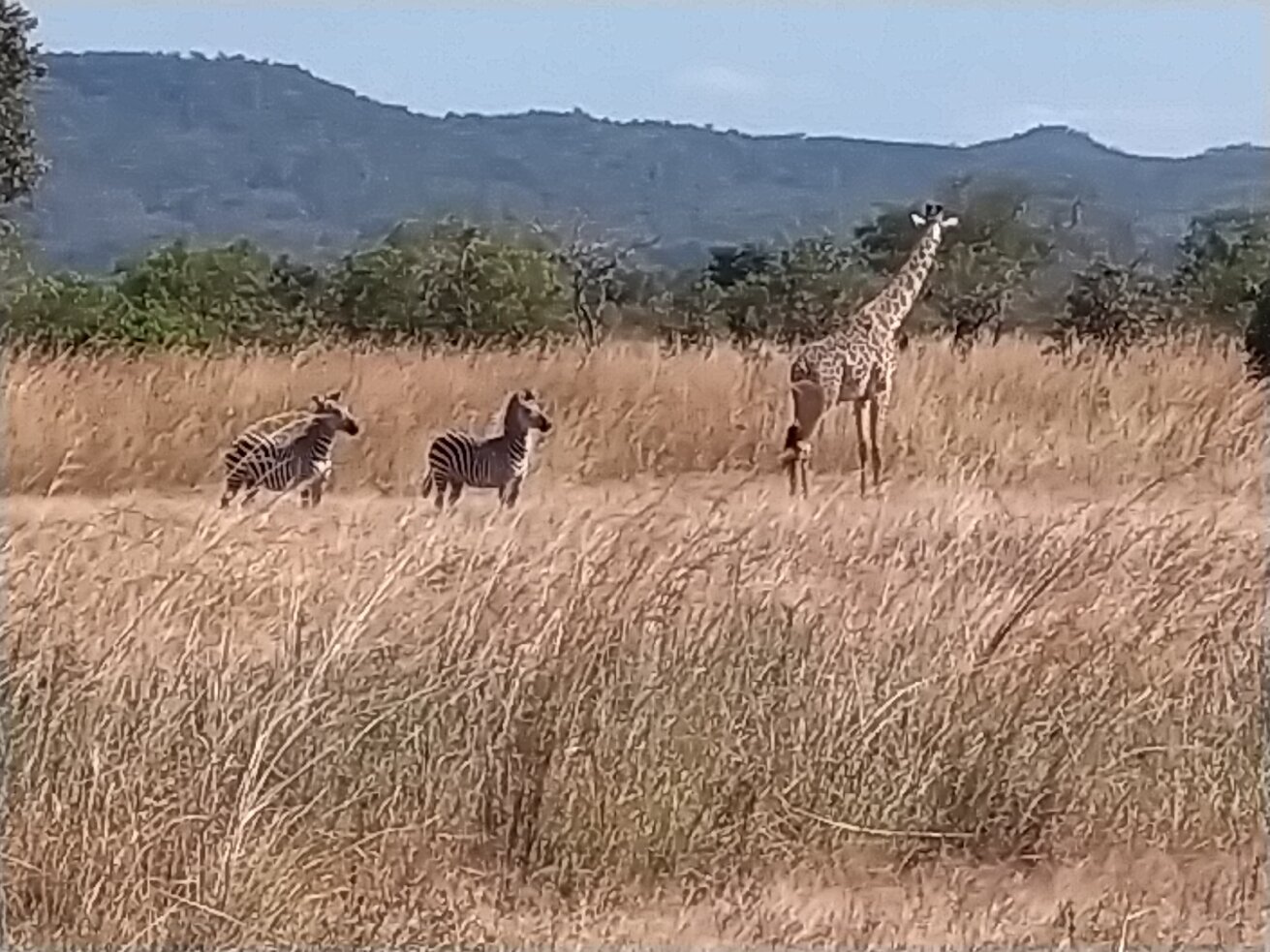
Photographing the Uluguru Backdrop on a Mikumi Game Drive
The mountains change the composition of almost every wide shot in Mikumi. On flat open plains a photographer is usually working with sky and grass alone. Here you get a third element, and it saves pictures that would otherwise be empty.
Shoot early. Low sun rakes across the plain and picks out relief on the ridge, while the haze that flattens everything by ten in the morning has not built yet. Late afternoon works too, with the last light catching the upper slopes while the grass below goes grey.
A wider lens earns its place in Mikumi more than it would in a forest park. Placing a giraffe or a line of buffalo small in the frame against the ridge tells more about where you are than a tight portrait does.
Most people arrive in Mikumi expecting to point long lenses at animals. The mountains behind the plain are the thing they end up photographing, and the pictures they keep are usually the wide ones.
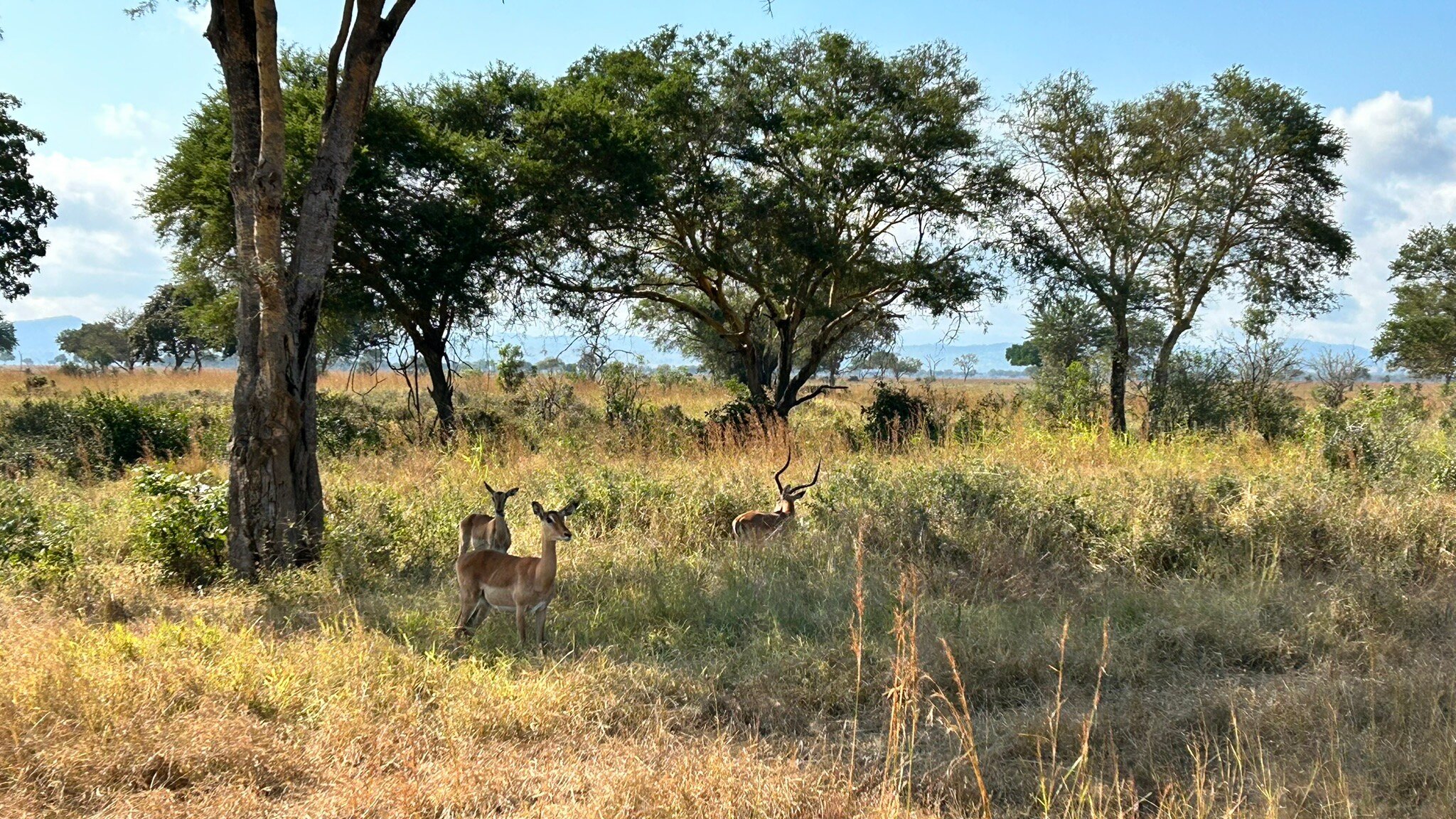
Wildlife Between the Mikumi Plains and the Uluguru Foothills
The transition from open grassland to miombo woodland on the rising ground changes the species you find, and the mountain foothills that border the park hold animals the plain does not.
Greater kudu and sable antelope favour miombo-covered slopes and are seldom seen out on open grass. Buffalo and zebra move between the plain and the wooded ground near the Uluguru side. Elephant use the woodland edge, particularly in the heat of the day.
Across the Eastern Arc more broadly, elephant and buffalo are known to use forest reserves on these mountains, and some animals move seasonally between the mountain forest and the protected plains below. That connectivity is part of why the wider ecosystem matters as a unit rather than as separate parks.
Sightings of sable and kudu are regular rather than reliable. Both are shyer than plains game and both are more likely early in the morning.
Morogoro and Uluguru Hiking Tours En Route to Mikumi
Morogoro sits at the base of the range, on the highway between Dar es Salaam and Mikumi, and it is the practical launching point for anyone who wants to walk in the Ulugurus rather than just look at them.
Guided hiking tours run from town into the forest reserve, ranging from half day walks to multi-day routes toward the Lukwangule Plateau. Waterfalls at Kibwe, Fizigo, Choma and Hululu are among the targets. Local guiding associations arrange these, and permits are handled through the forest reserve rather than TANAPA, so it works differently from a national park visit.
Around fifty villages touch the forest boundary and more than 151,000 people live within the mountain area, farming right up to the reserve edge in places. Any walk here goes through cultivated land before it reaches forest, which is part of the interest.
Adding a night in Morogoro on the way to or from Mikumi is the easiest way to fit this in without disrupting a safari itinerary.
Best Time to See the Uluguru Mountains From Mikumi
The dry season from June to October gives the clearest and most consistent views. Air is drier, dust settles overnight, and the mountains hold their outline through much of the morning. These are also the coolest months of the year in the park.
The wet months bring cloud that sits on the ridge for days, which hides the summit but produces its own results when it breaks. After rain the air is washed clean and the range can look closer than it is. March and April carry the heaviest rainfall.
June to October, dry: clearest and most reliable mountain views, best game concentration on the plain below, coolest temperatures. Some haze builds late in the season from dust.
November to February, short rains: green plains and dramatic cloud over the ridge, hot and humid, migrant birds present. Views come and go.
March to May, long rains: heaviest rainfall on the mountains, cloud often down on the slopes for long stretches, and the poorest track conditions in the park.
Getting to Mikumi and the Uluguru Foothills from Dar es Salaam
Mikumi’s main gate sits on the Tanzam highway roughly 280 to 300 kilometres from Dar es Salaam, four to five hours by road. The route runs through Morogoro at the foot of the Ulugurus, so the mountains are in view for a good part of the drive in.
The standard gauge railway now covers Dar es Salaam to Morogoro in a fraction of the road time, and some operators use it for the first leg before continuing by vehicle. Kikoboga airstrip inside Mikumi handles light aircraft from Dar es Salaam, Zanzibar, Nyerere and Ruaha.
Park gates close at six in the evening, so plan the last leg with room to spare.
Questions About the Uluguru Mountains and Mikumi
How high are the Uluguru Mountains?
The main ridge rises to about 2,630 metres at its highest point. It runs roughly north to south and forms part of the Eastern Arc chain, which also includes the Rubeho, Ukaguru, Nguru, Udzungwa, Usambara and Pare ranges along with the Taita Hills.
Can you hike in the Uluguru Mountains from Mikumi?
Not from inside the park. Walks in the Ulugurus start from Morogoro town at the foot of the range, about two hours back toward Dar es Salaam from Mikumi’s gate. Routes run from half day walks to multi-day trips toward the Lukwangule Plateau, arranged through local guides with forest reserve permits rather than TANAPA.
What does it cost to visit Mikumi and see the Uluguru backdrop?
Park entry is the only charge for the view itself. Adult foreign non-residents currently pay around US$30 per person per day, children aged 5 to 15 about US$10, with lower rates for Tanzanian residents and East African citizens. Vehicle fees run roughly US$40 per day for a six to twelve seat safari vehicle and around US$10 for a private car. Uluguru hiking permits are charged separately by the forest reserve.
Which side of Mikumi has the best mountain views?
The Mkata Floodplain gives the widest open views toward the Uluguru ridge to the northeast. For an elevated view over the plain with mountains beyond in both directions, the Vuma Hills in the southwest of the park are the place, which is why sundowners tend to be taken up there.
Are the Uluguru Mountains part of Mikumi National Park?
No. The mountains lie outside the park boundary and are protected separately, principally through the Uluguru Nature Forest Reserve of around 24,115 hectares. Mikumi borders the range but does not include it. The two form part of a much larger connected ecosystem alongside Nyerere National Park and the Udzungwa Mountains.
What wildlife lives in the Uluguru Mountains?
The forest holds species found nowhere else, including endemic plants, birds, mammals, reptiles and amphibians. Elephant and buffalo use forest reserves across the Eastern Arc, and some animals move between mountain forest and the plains below. Mountain forest wildlife is hard to see and mostly of interest to birders and specialists rather than general safari visitors.
Booking Your Mikumi Trip
The safari companies and tour operators listed on this website put trips like this together for a living and know which camps, guides and routes actually deliver. We are an independent guide to Mikumi; we do not book or sell tours ourselves.
When you are ready, arrange your safari, tour or holiday with one of the recognised operators listed here. Tell them your dates and what matters most, and a real person, not a form, will handle the itinerary, park bookings and logistics for you.