Where Can You See Elephants in Mikumi?
The best places to see elephants on a Mikumi safari are the acacia and tamarind stands fringing the Mkata River, the hippo pools about five kilometres north of the main gate, and the named waterholes on the floodplain circuit, particularly through the dry season from June to October. Elephant come to water mid-morning and shelter in riverine shade through the heat. Mikumi covers 3,230 square kilometres in Tanzania’s Morogoro region and forms part of a connected ecosystem with Nyerere National Park.
Below is where to look, when to be there, and how elephant movement in and out of the park affects your odds.
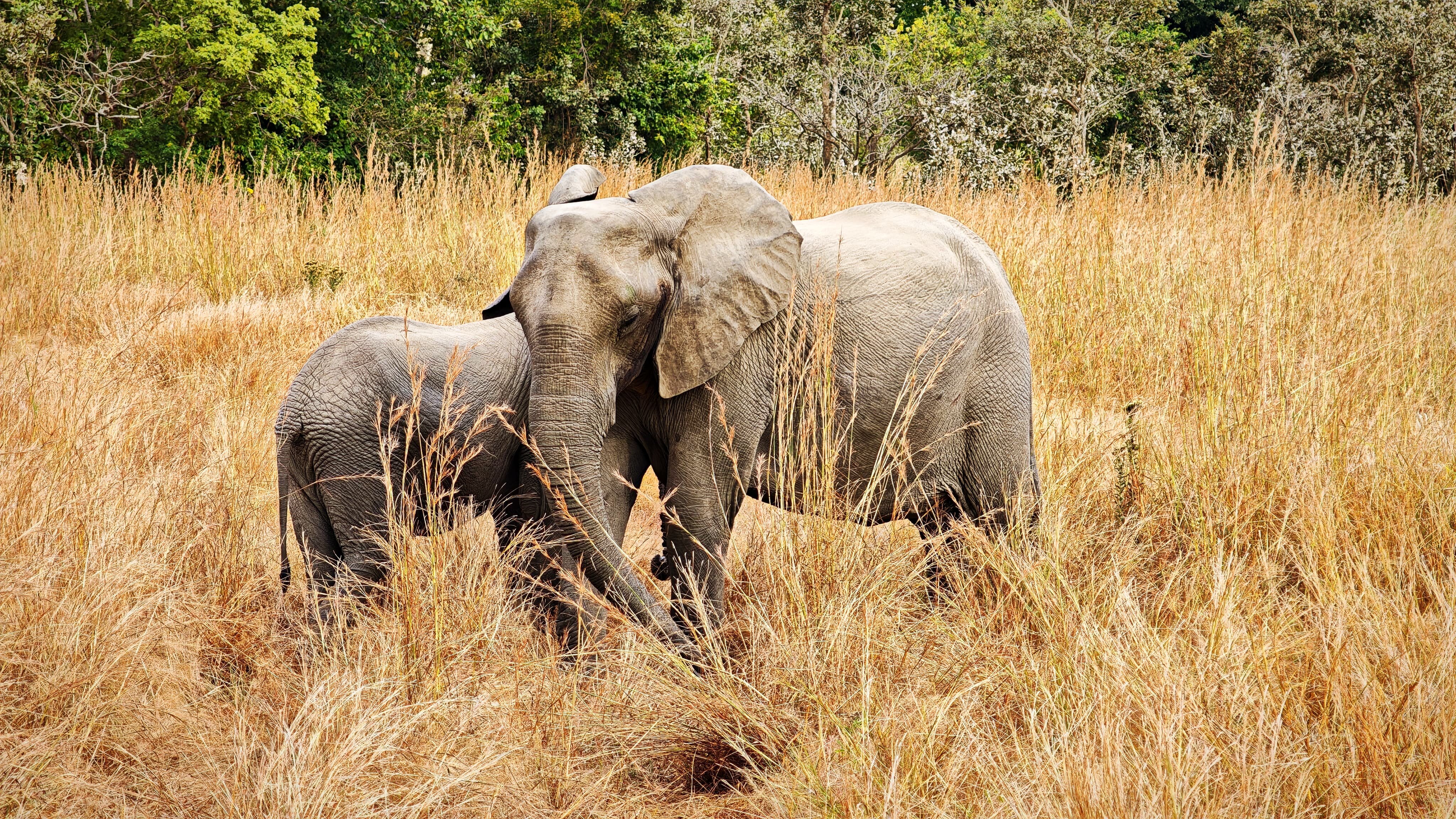
Where Elephants Gather on a Mikumi Safari
Elephant are commonly seen in Mikumi and they are not evenly spread. Two things pull them: water and shade, and in this park those two things sit close together.
The Mkata Floodplain northeast of the Tanzam highway carries the graded tourist circuit of about 60 kilometres, and virtually every elephant sighting on a normal itinerary happens on it. Within that circuit, the riverine strip and the permanent pools are where to concentrate your time.
Numbers are not fixed. Elephant move between the park and forest reserves on the Rubeho massif to the west, and Mikumi connects to Nyerere National Park to the south, so a herd on the plain last month may be somewhere else this one.
Guides track recent movements, which is far more useful than any general claim about the park.
Elephant are the one large species in Mikumi with a fairly predictable daily routine. If you plan a slow circuit that reaches water around nine or ten in the morning rather than rushing there at dawn, you improve your odds considerably.
Elephant Sightings in the Mkata River Acacia and Tamarind Stands
The isolated acacia stands fringing the Mkata River are described repeatedly as islands of shade favoured by Mikumi’s elephants, and that is the single most reliable habitat description for the species here.
Tamarind trees are the other draw. When the fruit is on, elephant and giraffe will spend hours feeding beneath a single tree, which turns a slow pass through a stand into a long sighting rather than a glimpse.
The riverine strip is narrow, which works in your favour. Rather than scanning open grass across kilometres, you are checking a defined band of trees along the channel, and a herd standing in shade is easier to find once you know to look at the treeline rather than the plain.
Giraffe browse the upper leaves of the same stands, so a group of giraffe often marks a spot worth checking properly.
Elephants at the Hippo Pools and Waterholes
The two hippo pools north of the main gate hold water year round in a park where nearly everything else is seasonal, and they pull elephant in accordingly through the dry months.
The Mkata and Chamgore waterholes on the circuit do the same work. Elephant tend to arrive mid-morning, drink at length, then throw mud and dust across their backs before moving into shade. That mud bath is the behaviour most visitors hope to photograph, and it happens at water rather than on the open plain.
Mwanamboga, below the rock outcrop where Stanley’s Kopje camp is built, sits in what guides frequently call the best game viewing ground in the park.
The tactic at any of them is the same: park, switch off, wait thirty or forty minutes. Elephant coming in to a waterhole take their time, and a vehicle that arrives and leaves within ten minutes often misses them by a margin of nothing.
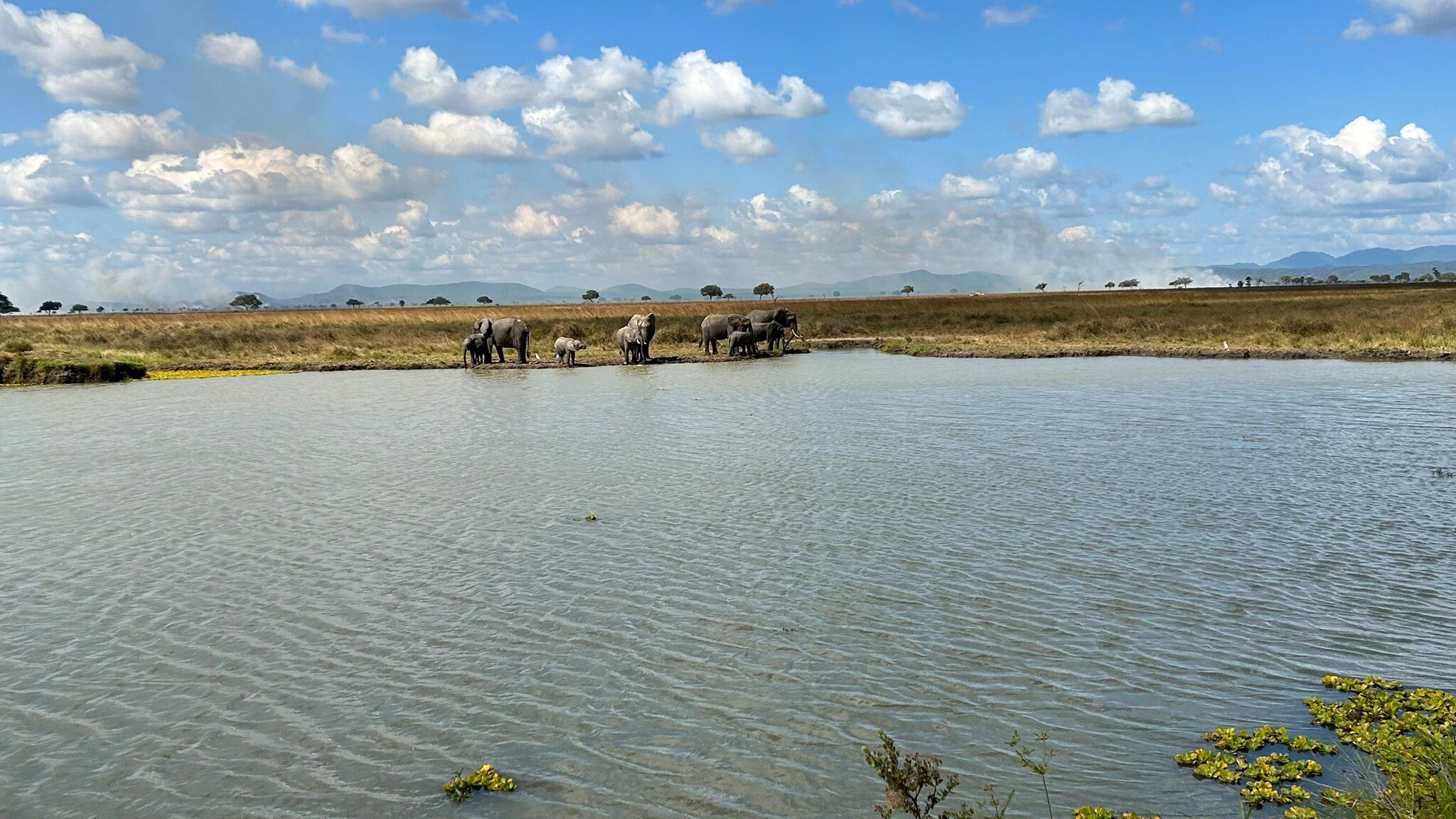
The Kikoboga Camp Waterhole for Elephant Watching
Mikumi Wildlife Camp, sometimes called Kikoboga Lodge, sits near park headquarters overlooking its own waterhole, and that pool gets busy through the dry season with elephant, buffalo and impala as regular visitors.
What makes it useful is that you watch it without driving anywhere. Guests sit at camp and let the animals come, which suits the middle of the day when a game drive would be flat and hot anyway.
The camp is central, close to the main gate and the airstrip, so this works even on a short trip. Game viewing in the immediate vicinity is often described as underrated, with elephant, lion, buffalo and giraffe all seen close to camp.
Stanley’s Kopje offers a similar arrangement over Mwanamboga, from an elevated position on the kopje, though it closes through the wettest months.
Look at the treeline, not the grass. A hundred elephant standing under acacia in the middle of the day are almost invisible from two hundred metres away, and almost impossible to miss from twenty.
Elephants in the Miombo Woodland Toward the Vuma Hills
Elephant also use the miombo woodland where the plain rises toward the foothills, particularly through the heat of the day and particularly toward the Vuma Hills in the southwest.
Sightings there are harder. Canopy closes overhead in places, sightlines shorten and an animal thirty metres off the track can be genuinely hidden. What the woodland offers instead is a different picture: elephant among brachystegia rather than out on open grass.
Vuma Hills Tented Camp sits up in this country and puts the woodland on your doorstep. The camp is unfenced, so wildlife moves through.
Anyone whose itinerary never leaves the floodplain is unlikely to see elephant in this setting, which is one of several reasons a third night in Mikumi pays for itself.
Best Time of Day to See Elephants in Mikumi
Mid-morning is the elephant window. Gates open at first light and the first two hours are the best of the day for predators, but elephant most often come to drink between about nine and eleven.
Through the middle of the day they move into shade, which is when the riverine acacia and tamarind stands are worth working slowly. Late afternoon brings a second flush of movement as temperatures drop, and gates close at six.
Night game drives are permitted in Mikumi with an armed ranger, running roughly eight until eleven in the evening, and elephant are among the animals seen moving after dark.
A day that hits water mid-morning and treelines at midday covers elephant better than one built purely around dawn.
Best Months for Elephant Viewing on a Mikumi Safari
June to October is the dry season and the strongest window. As seasonal channels of the Mkata River retreat and grass thins, elephant are pushed toward the permanent pools and become far more predictable.
September and October are the peak weeks, when water is scarcest. Grass is at its shortest then too, which makes spotting easier across the whole plain.
From November to May the rains spread water across the floodplain and elephant no longer need to visit any particular place. Grass grows past a metre, and sightings become a matter of working the treelines rather than the water. March and April also bring poor track conditions.
June to October: elephant concentrated at the hippo pools, Chamgore, Mkata and the camp waterholes. The most reliable elephant viewing of the year, peaking in September and October.
November to February: water available across the plain, elephant dispersed, grass rising. Sightings come from working the riverine woodland rather than the pools.
March to May: tall grass, flooded ground and difficult tracks. Elephant are still present but considerably harder to locate.
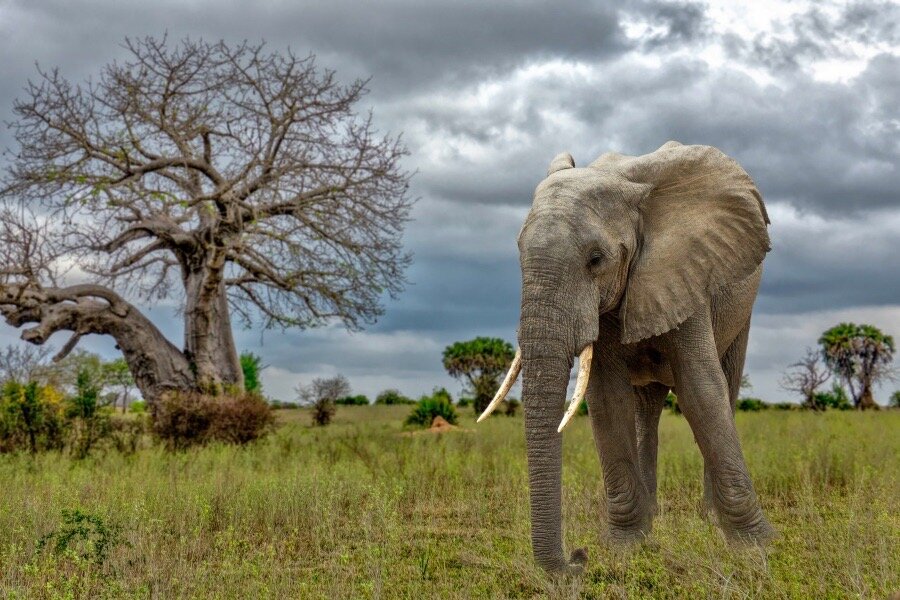
Elephant Movement Between Mikumi and the Rubeho Forests
Mikumi’s elephant do not stay put, and knowing that explains a lot about variable sightings.
Elephant and buffalo are recorded using Ukwiva Forest Reserve on the Rubeho massif west of the park, and researchers have suggested that at least some of these animals move on an annual basis between the mountain forests and Mikumi. The eastern edge of that reserve is described as humid and largely undisturbed except by elephant.
To the south, Mikumi borders Nyerere National Park and the two function as one ecosystem. Taken together with the Udzungwas and the Ulugurus, the connected area spans more than 75,000 square kilometres.
So Mikumi’s elephant population is a moving share of something much larger. That is good for the animals and it is why nobody can promise you a herd on a given morning.
Elephants and the Highway Through Mikumi
Mikumi is the only protected area in Tanzania crossed by a national trunk road, and elephant feature in the consequences.
Between 1973 and 1988, 456 large mammals were recorded killed on the corridor, including 17 elephant. Research on the floodplain also found that in tall grassland, elephant used ground within 600 metres of the highway far less often than expected, which means the road pushes an avoidance zone out into the park on both sides.
Practically, that means the productive elephant ground sits further north on the circuit rather than near the tarmac, which is where guides take you anyway.
Eleven speed bumps slow traffic through the park section. Anyone driving the corridor should hold a low speed throughout, particularly at dawn, dusk and after dark.
Watching Elephants Safely in Mikumi
Stay in the vehicle unless you are at the designated viewing area at the hippo pools or on a formal walking safari with an armed ranger. Keep the engine running quietly if a herd is close and you have any doubt about the exit.
Give cows with calves plenty of room. Never position the vehicle between a herd and water, since that is the route they intend to take and they will take it regardless.
Watch the ears and the trunk. A relaxed feeding elephant looks entirely different from one that has noticed you and wants space. Guides read this constantly and will move without being asked.
Questions About Seeing Elephants in Mikumi
Are elephants easy to see in Mikumi?
They are commonly seen, particularly in the dry season between June and October when they concentrate at the permanent pools. Sightings are good rather than guaranteed. Numbers fluctuate because elephant move between Mikumi, the Rubeho forest reserves to the west and Nyerere National Park to the south.
What does it cost to visit Mikumi to see elephants?
Park entry currently runs around US$30 per adult foreign non-resident per day and about US$10 for children aged 5 to 15, with lower rates for Tanzanian residents and East African citizens. A six to twelve seat safari vehicle adds roughly US$40 per day and a private car around US$10. There is no separate charge for any particular area of the park.
Where exactly should I look for elephants in Mikumi?
The acacia and tamarind stands fringing the Mkata River, the two hippo pools five kilometres north of the main gate, and the Mkata and Chamgore waterholes on the circuit. The camp waterholes at Mikumi Wildlife Camp and below Stanley’s Kopje also draw elephant through the dry months.
What time of day are elephants most active in Mikumi?
They most often come to drink mid-morning, roughly between nine and eleven, then move into riverine shade through the heat. Late afternoon from about four brings renewed movement. Night game drives, permitted here with an armed ranger for around US$50 per adult non-resident, also turn up elephant moving after dark.
Can I walk near elephants in Mikumi?
Guided walking safaris run with an armed ranger, usually along the Mkata River corridor or near the hippo pools, and cost about US$20 for one to four hours or US$25 for longer. Walks focus on tracks, feeding sign and smaller detail rather than moving in on large animals. Rangers keep a wide margin from elephant deliberately.
How many elephants are there in Mikumi?
No fixed figure applies, because the population is not closed. Elephant move seasonally between the park, the Ukwiva Forest Reserve in the Rubeho mountains and the wider Selous ecosystem to the south. What matters for a visitor is where they are this month, which is a question for your guide rather than a statistic.
Booking Your Mikumi Trip
The safari companies and tour operators listed on this website put trips like this together for a living and know which camps, guides and routes actually deliver. We are an independent guide to Mikumi; we do not book or sell tours ourselves.
When you are ready, arrange your safari, tour or holiday with one of the recognised operators listed here. Tell them your dates and what matters most, and a real person, not a form, will handle the itinerary, park bookings and logistics for you.