Ikoya Waterholes
The Ikoya waterholes belong to the chain of seasonal and permanent water sources scattered across Mikumi National Park’s Mkata Floodplain, the cluster of pools that turns an ordinary Mikumi game drive into a productive one once the dry season bites. Guides work these waterholes as a set rather than individually, linking them with the Mkata and Chamgore pools and the hippo pools on a circuit of roughly 60 kilometres. Mikumi sits in Tanzania’s Morogoro region, about four hours inland from Dar es Salaam on the Tanzam highway.
What follows explains how Mikumi’s waterhole system works, what comes to drink and when, and how to plan a morning around it.
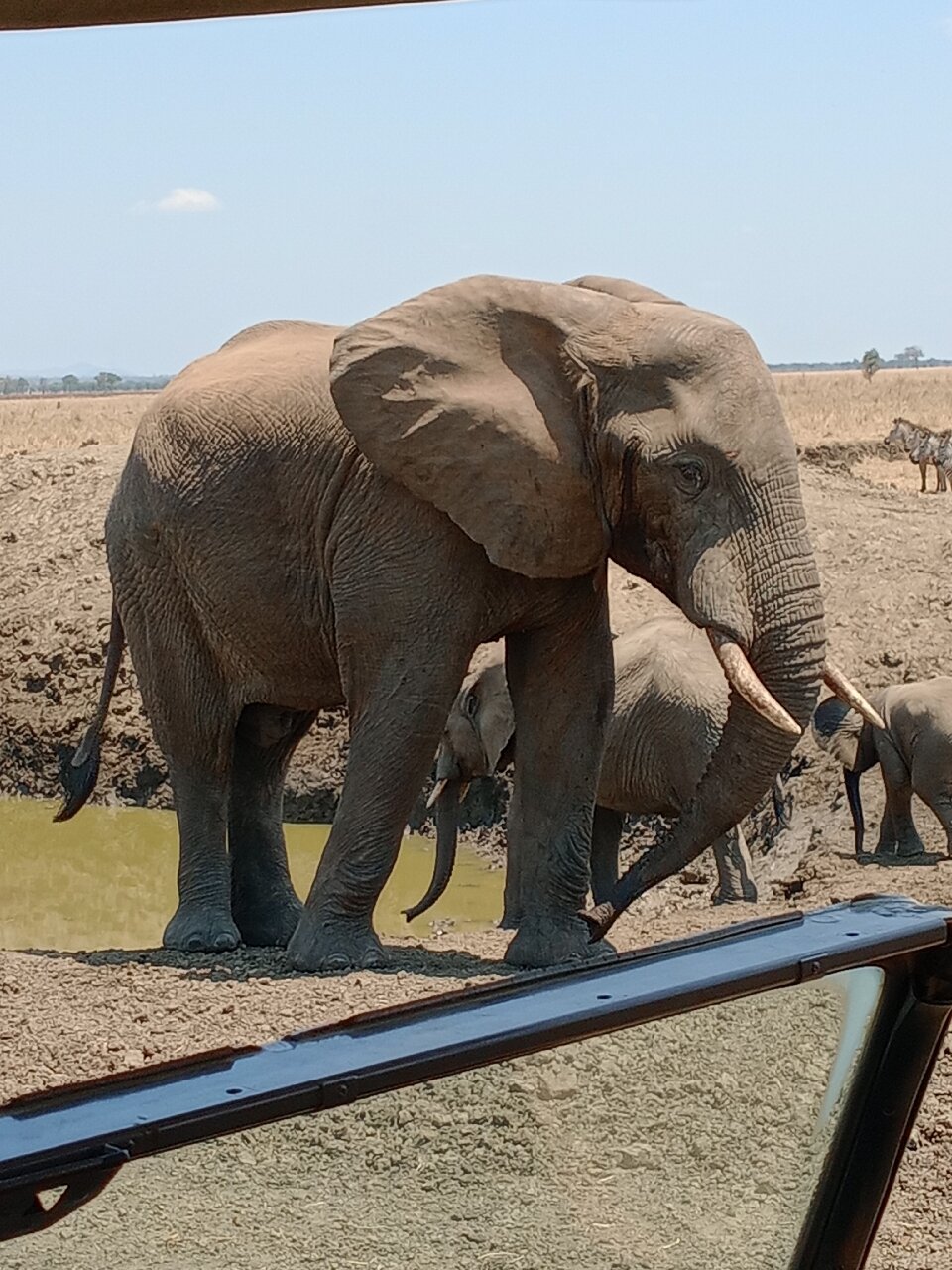
Where the Ikoya Waterholes Sit on the Mikumi Safari Circuit
Mikumi’s game viewing happens almost entirely north and east of the highway, on the Mkata Floodplain. The tourist road network there runs about 60 kilometres of graded track through open grassland, seasonal swamp, acacia stands and patches of borassus palm, and the waterholes are strung along it.
A note on names is worth making early, because it saves confusion at the gate. Mikumi’s water sources carry a mix of official and local names, and different guides use different ones for the same pool. Mkata and Chamgore appear in most itineraries. Mwanamboga sits below the rock outcrop where Stanley’s Kopje is built. The hippo pools, about five kilometres north of the main gate, are the only ones every operator names identically. If a name on your itinerary does not match your guide’s, ask him to point it out on the park map rather than assuming it is somewhere else.
The practical point stands regardless of naming: this is a park where the water dictates everything, and a waterhole safari in Mikumi means moving between pools rather than quartering the grass.
Waterholes reward sitting. Park, switch the engine off, and give a pool thirty or forty minutes. Animals that faded away when you arrived come back once the noise stops, and the best behaviour usually starts after the first ten minutes rather than during them.
Wildlife at Mikumi’s Waterholes on a Dry Season Safari
The arithmetic is simple. Between June and October the seasonal channels of the Mkata River retreat, the grass browns off and standing water becomes scarce. Anything that needs a daily drink has to come to what remains.
Elephant tend to arrive mid-morning, drink at length and then throw mud across their backs before moving into shade. Buffalo come in tight groups and can gather in herds of several hundred at the height of the dry season. Zebra, wildebeest, impala and waterbuck cycle through in smaller numbers all day. Warthog run in, drink fast, and go.
Eland use the surrounding grassland, and Mikumi is widely rated the most reliable park in Tanzania for seeing the world’s largest antelope. Giraffe browse the acacia stands that fringe the river, the same shade the elephant favour. Lichtenstein’s hartebeest turn up on the open ground.
Sightings are commonly good through the dry months and thin considerably once the rains spread water across the whole plain.
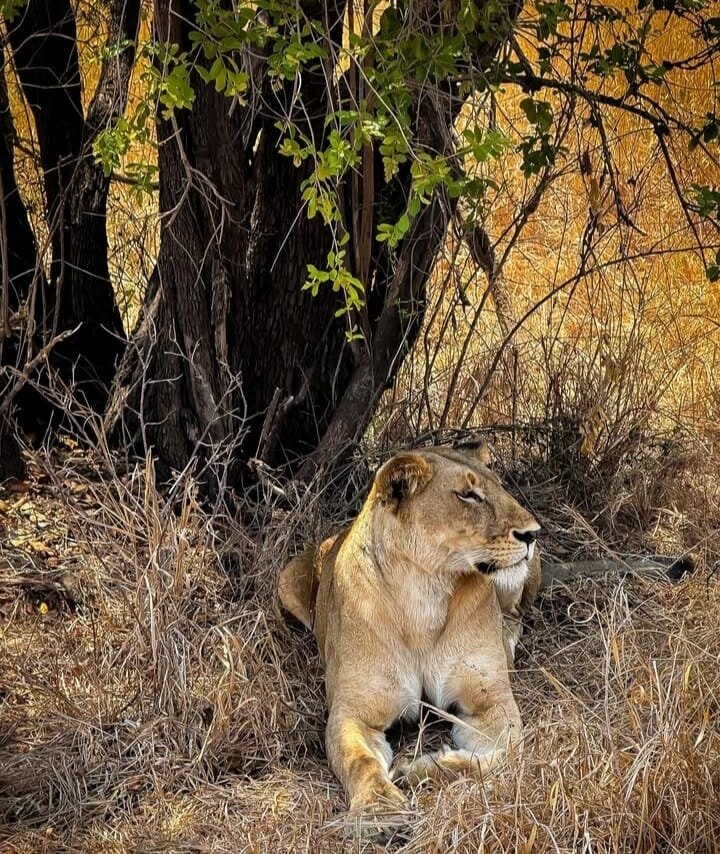
Lion and Predator Tracking Near the Waterholes
Predators use waterholes for the obvious reason. Lion on the Mkata Floodplain are commonly seen through the dry season, frequently perched on the flattened tops of termite mounds, which give a lioness the extra metre of height she needs to see over grass that would otherwise hide the herds.
During the rains, when the grass grows past a metre, lion in Mikumi have been recorded resting in trees. It happens often enough here to be talked about, though it is luck rather than something to book around.
Spotted hyena appear on early drives, often on the move back to a den. Leopard are present, favouring the acacia and sausage trees along the river, and are genuinely rare to see. African wild dog range across the wider Selous ecosystem to the south and pass through occasionally. Nobody should plan a trip expecting either.
Watch the termite mounds, not just the grass. On the Mkata Floodplain a shape on top of a mound at first light is a lion far more often than it is a rock.
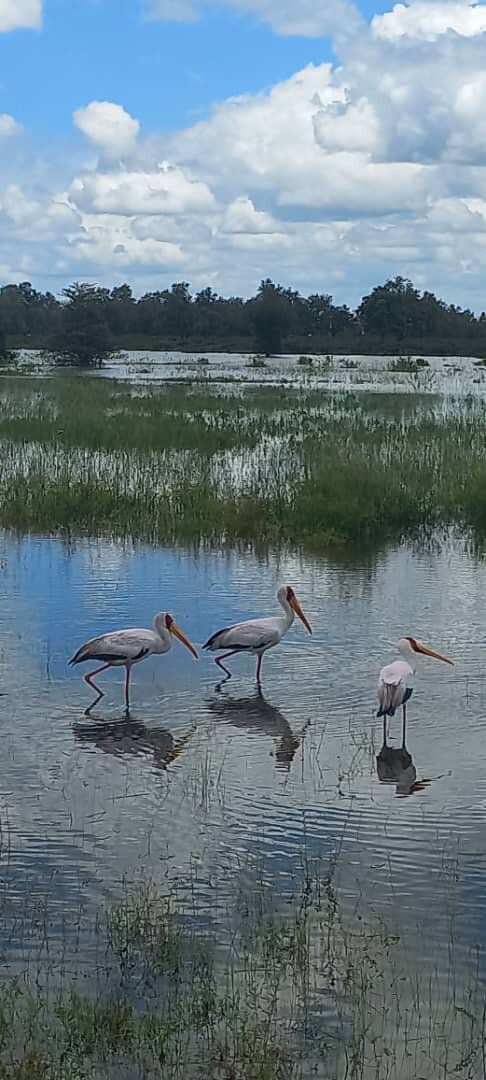
Birdwatching Safaris at the Mikumi Waterholes
Permanent water in country that dries out for half the year concentrates birds, and Mikumi’s pools are the best places in the park to build a list quickly. More than 400 species have been recorded across the park’s habitats.
At the water, look for saddle-billed stork working the shallows, hamerkop patrolling the margins, open-billed and yellow-billed stork, herons, egrets and various waders. Malachite kingfisher hunt from reed stems. African fish eagle call from the taller trees.
On the surrounding grass the cast changes: yellow-throated longclaw, black-bellied bustard, secretary bird stalking through the stems, guineafowl running ahead of the vehicle, and the lilac-breasted roller that ends up in almost everybody’s photographs. Bateleur and martial eagle work the airspace above.
From November through April, European and North African migrants arrive and push the numbers up sharply. A Mikumi birdwatching safari is often at its best in the months when mammal viewing is at its weakest.
Reptiles and Smaller Life Around the Pools
Water monitors work the muddy fringes, hunting eggs, frogs and anything small enough to swallow. They are large lizards, often over a metre, and once you learn the shape you find them regularly.
Pythons are recorded in the reeds and vegetation around Mikumi’s pools. Sightings are down to chance and most visitors never see one. Nile crocodile inhabit the river systems and wetlands, and are far more reliably seen at the hippo pools than at the smaller waterholes.
Terrapins bask on exposed mud when levels drop. Frog chorus starts up in the evening.
Best Time of Day and Year for a Mikumi Waterhole Safari
Early morning is the strongest window overall. Gates open at first light, the air is cool, predators are still moving from the night, and the light across the grass is at its best. Mid-morning is when elephant and buffalo most often drink, so a slow circuit that reaches the water around nine or ten frequently beats one that rushes there at dawn.
Late afternoon brings a second flush of movement as temperatures drop. Gates close at six, which caps how long you can wait.
Across the year, September and October are the peak weeks, when water is scarcest and the concentration effect is at its strongest. The dry season runs June to October more broadly.
June to October, dry: waterholes at their most productive, with elephant, buffalo and antelope pushed onto the last remaining sources. Firm tracks and open sightlines.
November to February, short rains: green plains, migrant birds in numbers, mammals dispersed because water lies everywhere. The best birding months of the year.
March to May, long rains: highest water, tallest grass and the poorest track conditions. Black cotton soil turns parts of the circuit impassable and a few in-park camps close.
Photography at a Mikumi Waterhole
Shoot as low as the vehicle allows. Waterhole pictures improve a great deal when the camera drops toward the animal’s eye line rather than looking down from a raised seat, so use the lowest window and rest the lens on a bean bag.
A polariser cuts glare off the surface and brings back reflections and detail in the shallows. For small birds sitting further out than they look, something long is needed. Dust is the practical enemy on the tracks, so change lenses as little as you can.
Wait for behaviour rather than portraits. Elephant spraying mud, buffalo shouldering in at the edge, a stork striking. Midday light on open water is flat and harsh, which is another argument for early and late.
Combining the Waterholes With the Rest of Mikumi
A sensible day links water with everything else. The hippo pools sit five kilometres north of the main gate, hold hippo and crocodile year round, and have a viewing area where you can leave the vehicle. The Kisingura circuit runs through different country to the west. South and west of the highway, the miombo woodland of the Vuma Hills holds sable antelope and greater kudu, species you will not find out on the open plain.
Roughly four fifths of Mikumi lies south of the highway and is largely undeveloped for tourism, suited to well-equipped expeditions rather than ordinary game drives.
Getting to Mikumi’s Waterholes from Dar es Salaam
The main gate sits on the Tanzam highway roughly 280 to 300 kilometres from Dar es Salaam, four to five hours by road via Morogoro on tarmac. The floodplain circuit and its waterholes begin a few kilometres inside the gate.
Day trips from the coast work, though they mean leaving around five in the morning for a few hours of park time. One night inside or beside the park buys the dawn start, which is when the water is at its best. Kikoboga airstrip inside the park takes light aircraft from Dar es Salaam, Zanzibar, Nyerere and Ruaha.
Questions About Mikumi’s Waterholes
Is there an extra charge to visit the waterholes in Mikumi?
No. They sit on the standard game drive circuit and are covered by park entry. Adult foreign non-residents currently pay around US$30 per person per day, children aged 5 to 15 about US$10, with lower rates for Tanzanian residents and East African citizens. A six to twelve seat safari vehicle adds roughly US$40 per day and a private car around US$10.
How many waterholes are there in Mikumi?
The park has a mix of permanent and seasonal water. Mkata and Chamgore are the two most often named on itineraries, the hippo pools north of the main gate are permanent, and Mwanamboga sits below Stanley’s Kopje. Smaller seasonal pans come and go with the rains. Names vary between guides and operators, so check against the park map if something on your itinerary looks unfamiliar.
What is the best month to visit Mikumi’s waterholes?
September and October, at the tail of the long dry season, when water is scarcest and the concentration of animals at the remaining pools peaks. The dry season runs June to October more broadly. November to February suits birders better than mammal watchers.
Can I get out of the vehicle at a waterhole?
Only at designated areas, principally the viewing area at the hippo pools and the marked picnic sites. Elsewhere on the circuit you stay in the car unless you are on a formal walking safari with an armed ranger.
How long should I spend at each waterhole?
Thirty to forty minutes with the engine off is a fair minimum. Doing three water stops properly fills a morning and is a better use of the day than covering maximum distance. The circuit is only about 60 kilometres and there is no prize for finishing early.
Can I do a walking safari near the waterholes?
Guided walks run in Mikumi with an armed ranger, usually along the Mkata River corridor or near the hippo pools rather than at the open pools. They last around three to four hours, need booking in advance, and cost roughly US$20 to US$40 for a small group on top of park entry.
Booking Your Mikumi Trip
The safari companies and tour operators listed on this website put trips like this together for a living and know which camps, guides and routes actually deliver. We are an independent guide to Mikumi; we do not book or sell tours ourselves.
When you are ready, arrange your safari, tour or holiday with one of the recognised operators listed here. Tell them your dates and what matters most, and a real person, not a form, will handle the itinerary, park bookings and logistics for you.