Afternoon Game Drive in Mikumi National Park
An afternoon game drive safari in Mikumi National Park usually departs around four, once the worst of the heat has passed, and runs until the gates close at six. It is the drive most people take on their arrival day, since a road transfer from Dar es Salaam lands you at the park in early afternoon. Late light works toward the Rubeho mountains in the west, which makes this the better of the two daily drives for wide photography. Mikumi covers 3,230 square kilometres in Tanzania’s Morogoro region.
Below is how an afternoon drive works here, what it produces, and how it differs from the morning.
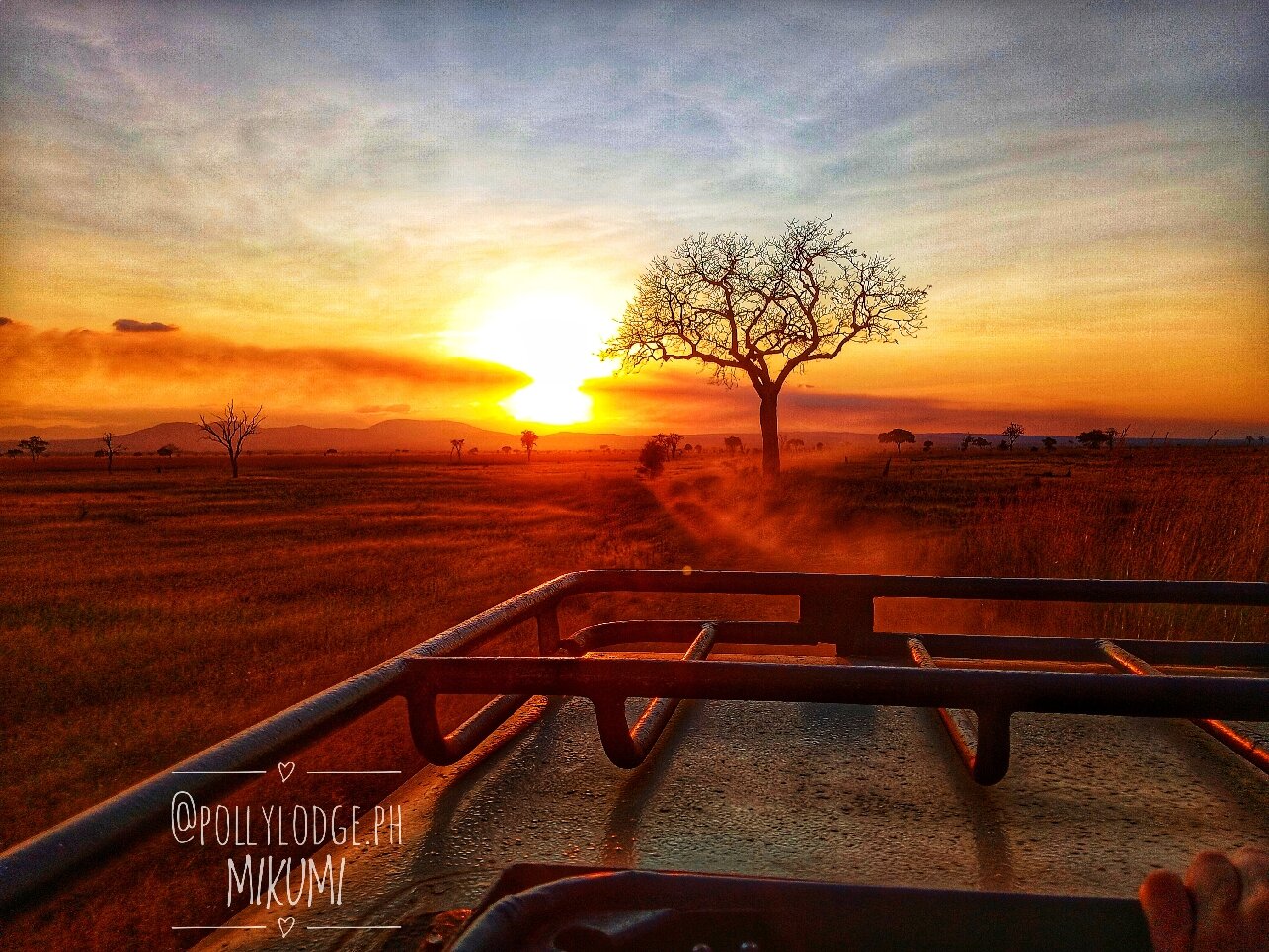
What an Afternoon Game Drive Safari in Mikumi Involves
The usual shape is a departure from camp between three thirty and four, two to three hours on the Mkata Floodplain circuit, and a return before the gates shut at six.
It is shorter than a morning drive for a simple reason: the closing time is fixed and the useful hours do not begin until the temperature drops. There is no equivalent of the long open-ended morning.
Vehicles are typically extended Land Cruisers with a pop top roof, which matters more in the afternoon than the morning because there is still real sun in the first hour. The graded circuit of roughly 60 kilometres has loops that branch and rejoin, so an afternoon drive can cover completely different ground from the morning without repeating.
Staying outside the boundary near Mikumi town means adding a drive to the gate and paying entry again if your morning ticket has expired.
Ask your guide to take a different loop from the morning. Mikumi’s circuit is small enough that a lazy afternoon drive can simply retrace the earlier route, and the whole point of two drives a day is covering two sets of ground.
Timing an Afternoon Game Drive Around the Heat
Midday on the open floodplain is unforgiving. There is no shade anywhere on the plain, and the park sits close enough to the equator that the sun is direct in every month.
Animals respond by doing very little. Predators lie up, herbivores move into whatever cover exists, and a drive between eleven and three produces mostly empty grass. That is why lodges break the day and why the afternoon slot starts when it does.
From about four the temperature falls and movement resumes. Herds start heading toward water, predators begin stirring, and birds become vocal again.
In the wet season, from November to May, afternoons carry a different risk. Rain in the short season tends to arrive as sharp afternoon showers, so a light waterproof is worth having in the vehicle between November and December.
Evening Activity on the Mkata Floodplain
The plain wakes up in the last two hours of daylight, and there is a specific pattern worth watching for.
Grazers that spent the heat scattered begin drifting toward water. Zebra, wildebeest, impala and buffalo move with more purpose than they do at midday. Elephant come out of the riverine acacia and tamarind stands where they have been sheltering.
Lion begin stirring from around four, and their termite mound behaviour resumes as the light drops. A mound gives a lioness roughly a metre of extra height over the grass, and the low sun makes those silhouettes far easier to pick out than at midday.
Spotted hyena appear toward dusk. Giraffe browse the acacia stands in the softening light, which is one of the more photogenic sights in the park.
Sundowners and the Rubeho Mountain Backdrop
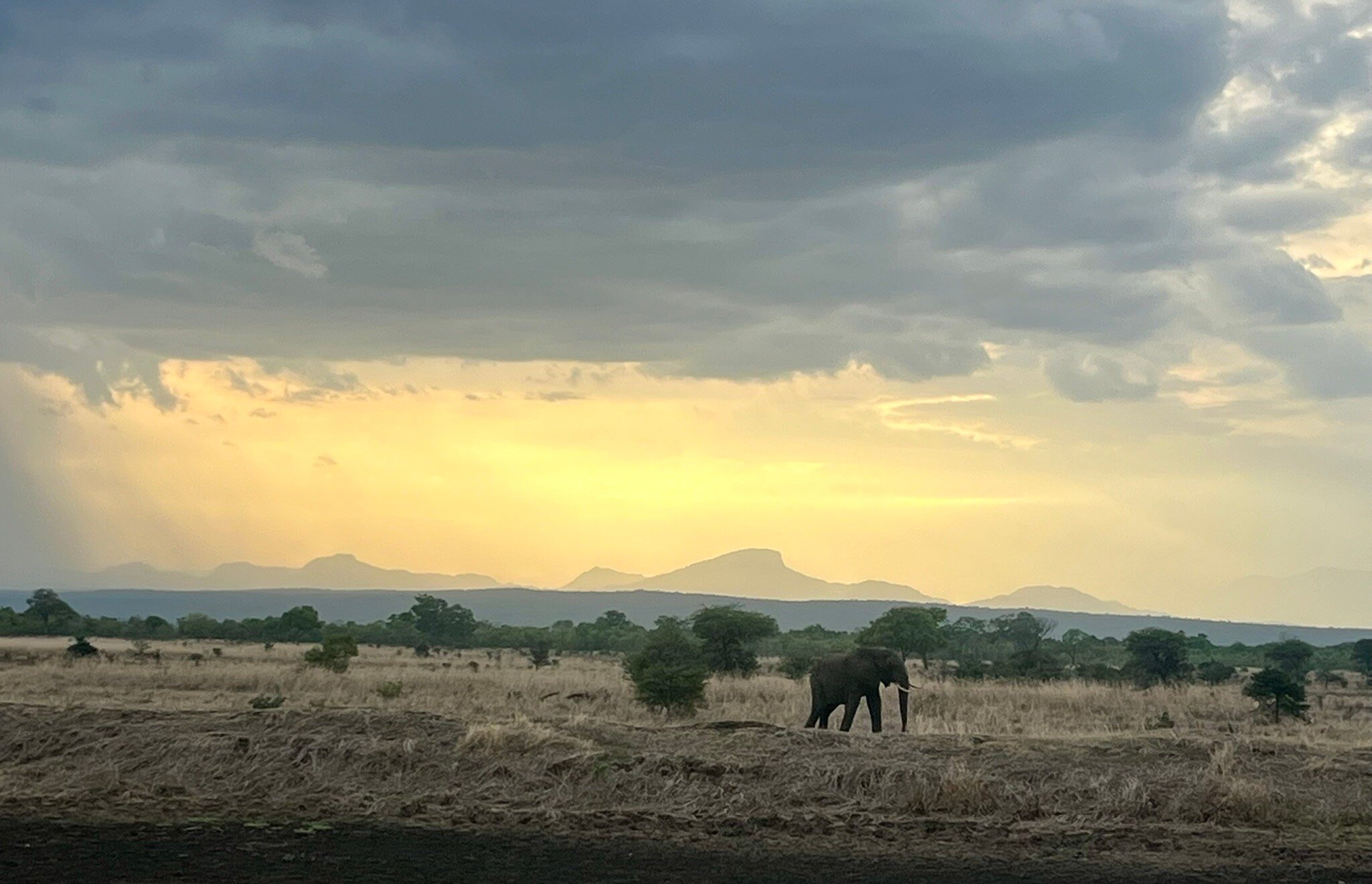
The Rubeho plateau lies west of Mikumi, rising to 2,286 metres at Mangalisa, and the sun goes down behind it. That geography makes the last hour of an afternoon drive the best of the day for wide photography.
You get animals lit from the front against a darkening plateau, with silhouette work available in the final twenty minutes. Morning light does the opposite job toward the Uluguru range in the northeast.
Sundowners are commonly taken up in the Vuma Hills in the southwest, where the elevation gives a view over the whole floodplain with mountains beyond in both directions. Camps up there set that up as a matter of routine.
Gates close at six, which caps how late a drive inside the park can run. Sundowners at a camp are not bound by that.
Afternoons in Mikumi are worth the second half. The first hour is hot and often quiet, and people who judge the drive on that hour miss what the last forty minutes deliver.
Waterholes on an Afternoon Mikumi Safari
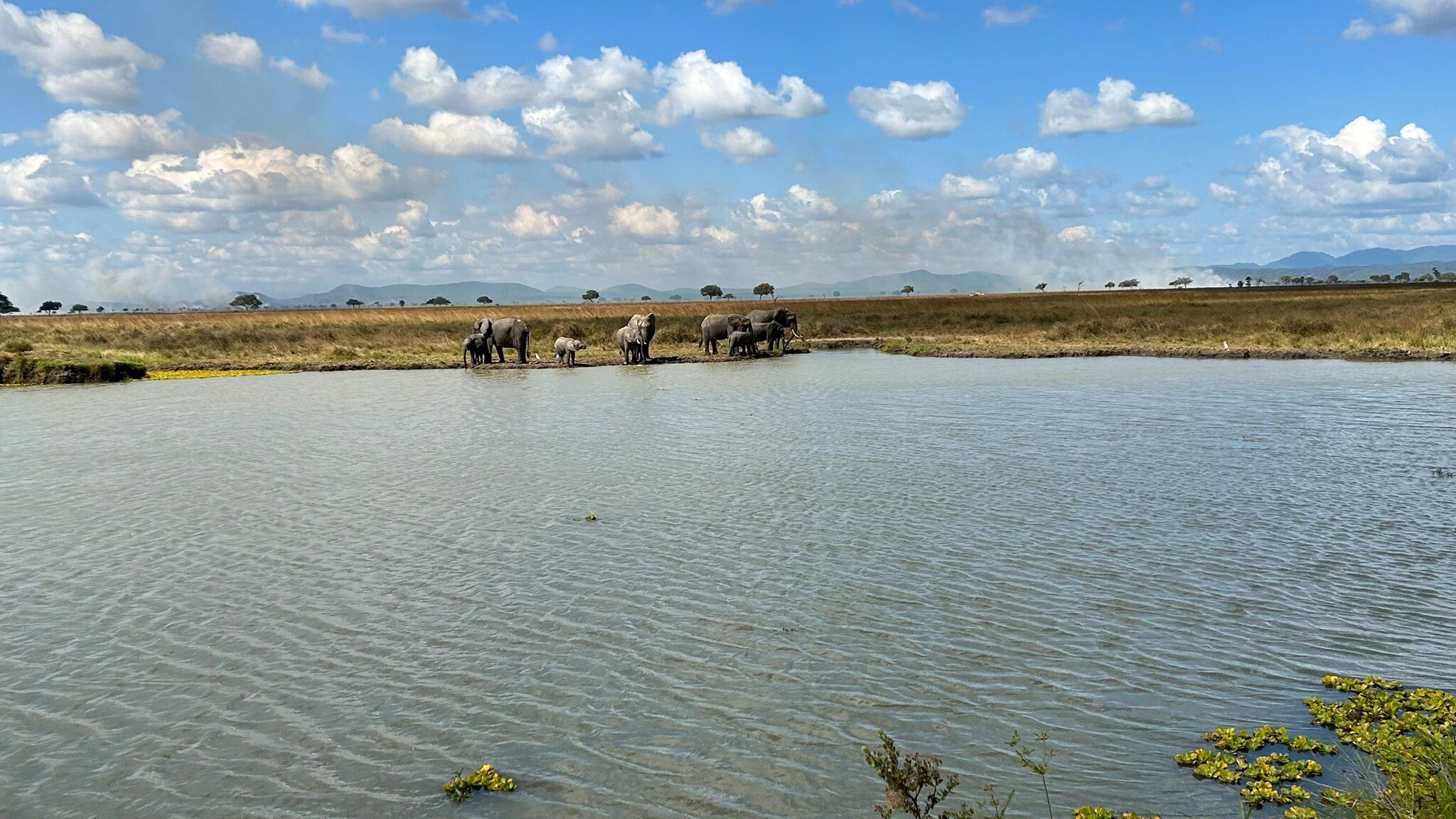
Water works differently in the afternoon. The mid morning drinking rush is over, but movement toward the pools builds again as the day cools, which makes late afternoon a second good window.
The Mkata and Chamgore waterholes are the two named stops on the circuit. Mwanamboga sits below the rocky kopje where Stanley’s Kopje camp is built, in ground guides consistently rate as the park’s strongest.
The hippo pools are a different proposition in the afternoon. Hippo have been in the water through the middle of the day and start becoming restless toward evening, since they leave after dark to graze. Late afternoon is when you see them shifting position, yawning and calling rather than lying still.
Park and wait rather than passing through. Thirty minutes at one pool beats twenty kilometres of driving.
Photography on a Late Afternoon Game Drive
The last two hours before the gates close carry the warmest light of the day, and unlike the morning it improves as the drive goes on rather than fading.
Work westward toward the Rubehos for backlighting and silhouettes, or eastward with the sun behind you for frontal light on animals with the Uluguru range as backdrop. A wide lens earns its place in both directions, since Mikumi’s basin geography gives almost every frame a third element.
Rest the lens on a bean bag, shoot from the lowest window you can, and ask the driver to cut the engine at sightings. Dust hangs longer in still evening air, so keep bodies bagged between stops.
Push your ISO earlier than feels comfortable. Light drops fast in the final half hour and a sharp noisy frame beats a clean blurred one.
Afternoon Drives Versus Morning Drives in Mikumi
Mornings are stronger for predators, since the first two hours after the gates open catch lion and hyena still moving from the night. Mornings are also longer and cooler.
Afternoons are better for light, particularly the last hour, and better for anyone who dislikes a pre-dawn alarm. They are also the drive most people get on arrival day, since a four to five hour transfer from Dar es Salaam lands in early afternoon.
The honest answer is that a two night stay gives you three drives and you should take all of them. Skipping the afternoon to rest at camp is common and usually regretted.
Morning drive: three to four hours from first light. Best for predators and for animals at water mid morning. Cold in the dry season and the longer of the two.
Afternoon drive: two to three hours from around four until gates close at six. Best light of the day, renewed animal movement, and the drive that fits an arrival day.
Night drive: roughly eight until eleven with an armed ranger, booked in advance. Genet, civet, bushbaby and the best chance at leopard. Around US$50 per adult non-resident.
Extending an Afternoon Drive Into a Night Game Drive
Mikumi is one of a short list of Tanzanian parks where night game drives are permitted, alongside Ruaha, Katavi, Tarangire, Lake Manyara and Nyerere.
They do not run straight on from an afternoon drive. The park closes at six, and night drives start later, running roughly eight until eleven in the evening after dinner. They require an armed ranger and a vehicle set up for the purpose with a proper spotlight, which is why not every lodge offers them.
What they add is a set of species the day never shows: genet, civet, bushbaby, nightjars on the tracks, and occasionally a hunting leopard. For a park where leopard are otherwise rare, this is the realistic route to one.
Booking must be made in advance rather than arranged at the gate.
What to Bring on an Afternoon Game Drive in Mikumi
Sun protection first. The opening hour of an afternoon drive still carries strong sun and the floodplain has no shade at all. Wide brimmed hat, sunglasses, high factor sunscreen.
Then something warm for the end. Temperatures drop quickly once the sun goes behind the Rubehos, and a moving open vehicle at dusk in the dry season is cool enough to want a layer.
Neutral colours as always. Dark blue and black draw tsetse fly in the woodland areas, and camouflage patterns are restricted in Tanzania.
Water, binoculars, insect repellent for the last half hour when mosquitoes appear, and a light waterproof between November and May.
Best Months and Booking an Afternoon Game Drive
June to October is the strongest period, with September and October the peak, when water is scarcest and grass shortest. Afternoons in October are hot at the start and rewarding at the end.
From November to May the plain greens, animals disperse and afternoon showers become likely. Birding improves considerably from November to April as migrants arrive.
Afternoon drives are included in most safari packages rather than sold separately. Camps inside the park run them, and lodges outside the boundary near Mikumi town arrange them with varying quality, so confirm before booking that a vehicle is actually available.
Questions About Afternoon Game Drives in Mikumi
What time does an afternoon game drive start in Mikumi?
Usually between three thirty and four, once the worst of the midday heat has passed. Drives run two to three hours and must be back before the park gates close at six in the evening. That closing time is enforced.
How much does an afternoon game drive cost in Mikumi?
It is normally included in a safari package rather than charged separately. The underlying costs are park entry at around US$30 per adult foreign non-resident per day and about US$10 for children aged 5 to 15, plus a vehicle fee near US$40 per day. Entry runs 24 hours from when you enter, so an afternoon and the following morning can fall inside one ticket if you sleep in the park.
Is an afternoon drive worth it if I did a morning drive?
Yes. The circuit has enough loops that an afternoon can cover different ground entirely, animals become active again from around four, and the last hour carries the best light of the day toward the Rubeho mountains. Skipping it to rest at camp is common and usually regretted.
Can an afternoon drive continue after dark?
No. Park gates close at six and drives must be back by then. Night game drives are a separate activity, running roughly eight until eleven in the evening with an armed ranger and a suitably equipped vehicle, booked in advance at around US$50 per adult non-resident.
What will I see on an afternoon game drive in Mikumi?
Zebra, impala, warthog, giraffe and baboon are near certain. Elephant emerge from the riverine acacia stands as the heat drops, and herds move toward water. Lion begin stirring from around four and are seen regularly rather than daily, often on termite mounds. Hippo become restless at the pools as evening comes on.
Do I need a jacket for an afternoon drive?
Worth having for the last half hour, particularly in the dry season from June to October when temperatures fall quickly after sunset. The first hour of the drive is hot, so bring a layer that packs away rather than wearing one from the start.
Booking Your Mikumi Trip
The safari companies and tour operators listed on this website put trips like this together for a living and know which camps, guides and routes actually deliver. We are an independent guide to Mikumi; we do not book or sell tours ourselves.
When you are ready, arrange your safari, tour or holiday with one of the recognised operators listed here. Tell them your dates and what matters most, and a real person, not a form, will handle the itinerary, park bookings and logistics for you.