Birdwatching in Mikumi National Park
A birdwatching safari in Mikumi National Park is run as a game drive with different priorities: slower, with longer stops at the waterholes and a deliberate push into the miombo woodland where the specialists live. More than 400 species have been recorded across grassland, seasonal swamp, riverine woodland and miombo, and the birding peaks between November and April when migrants arrive. Mikumi covers 3,230 square kilometres in Tanzania’s Morogoro region, four to five hours inland from Dar es Salaam.
Below is how to run a birding trip here properly, rather than a list of what flies past.
How a Birdwatching Safari Works in Mikumi
There is no separate birding permit or dedicated bird hide network. What you book is a normal safari with a guide told in advance that birds are the point, and that single instruction changes the day more than anything else.
A birding drive covers less ground and stops more often. Instead of working toward the next mammal sighting, you sit at water, pull up for a call, and give a mixed feeding party in the canopy the ten minutes it deserves.
Ask when booking whether the guide knows birds. Every guide in Mikumi can find a lion; far fewer can separate a yellow-throated longclaw from a rosy-breasted one by call, and that gap decides what your list looks like at the end.
Private hire matters more for birding than for general game viewing, because you control how long the vehicle sits still.
Say the word birding at the point of enquiry, not on arrival. Guide allocation happens before you get there, and a driver assigned on the assumption you want big game will spend the morning driving between mammal sightings.
Birding the Waterholes on a Mikumi Safari
Permanent water in country that dries out for half the year concentrates birds, and the pools are where a list builds fastest.
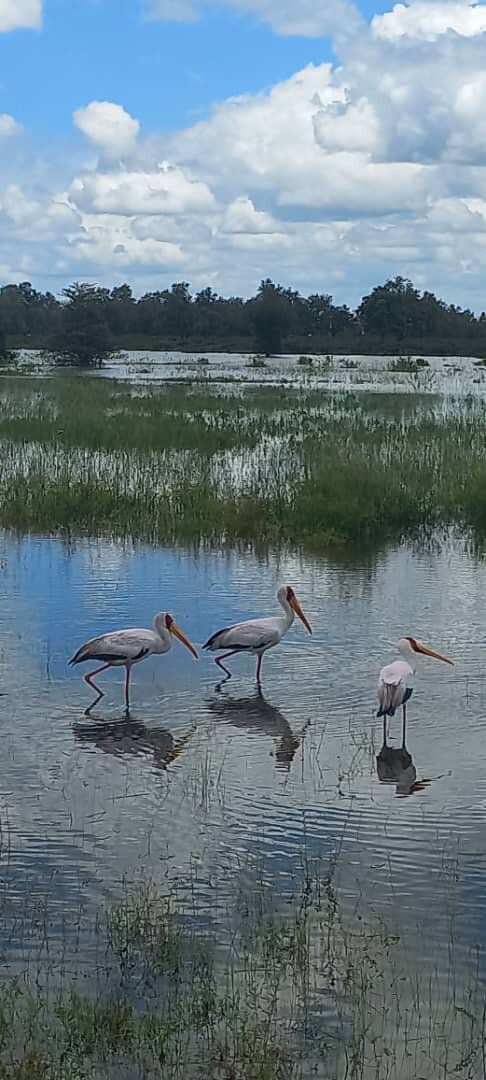
The hippo pools five kilometres north of the main gate are the single best stop. Open-billed storks gather around the hippo in flocks, working the mud the animals churn up, and you can watch from the designated viewing area on foot rather than through a window. That is unusual in Tanzania and it is worth the stop on its own.
Chamgore is the other name to know, associated repeatedly with saddle-billed stork, hamerkop and malachite kingfisher. Mkata is the third named pool on the circuit.
The technique is simple and most visitors skip it. Park, cut the engine, and stay half an hour. Birds settle back within minutes of the noise stopping, and the species that were there when you arrived reappear.
Birding the Miombo Woodland Toward the Vuma Hills
This is where a serious Mikumi list separates from an ordinary one, and it is the part most itineraries never reach.
Where the plain rises toward the foothills, grassland gives way to miombo dominated by brachystegia, and the bird community changes completely. Boehm’s bee-eater is the species birders come for, alongside Dickinson’s kestrel. Hornbills work the canopy with ground hornbill on the fringe.
Mixed feeding parties are the miombo signature. Several species move through the trees together, and when you find one it is worth switching off and letting it come past rather than chasing it.
Sources note that game viewing concentrates in the northwest while the southwest is better for birding, which is a useful division when planning. Vuma Hills Tented Camp sits in this country and stays open year round.
Walking Safaris for Birdwatching in Mikumi
Walking is a better way to bird than driving, and Mikumi is one of the few southern circuit parks where it is permitted.
Walks go out with an armed ranger, last three to four hours in the early morning and usually run near the Mkata River corridor or around the hippo pools. On foot you hear calls that engine noise masks entirely, and you can stand still in a way a vehicle cannot.
The riverine strip supports more small birds than anywhere else in the park. Warblers, kingfishers and bee-eaters use the thicker cover, and African fish eagle call from the taller trees above.
Walks need booking in advance and cost around US$20 for one to four hours or US$25 for longer, on top of park entry. They occupy the same early slot as a morning drive, so choose rather than trying to fit both.
An hour on foot along the river corridor will add more to a list than three hours of driving, and it is the only way to hear most of what is there.
Grassland and Raptor Birding on the Mkata Floodplain
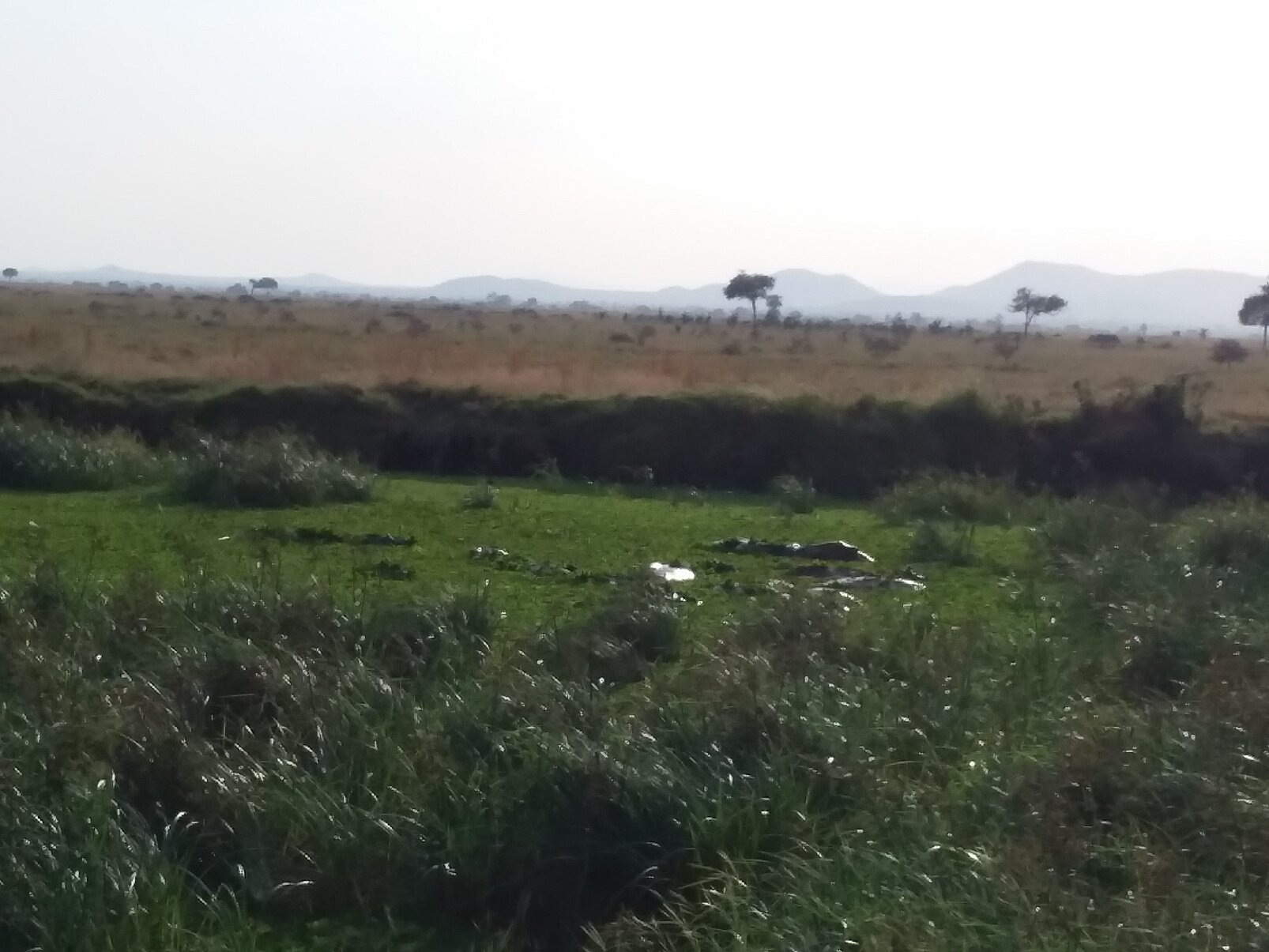
The open plain gives up its birds easily, which makes it good ground for anyone building a first East African list.
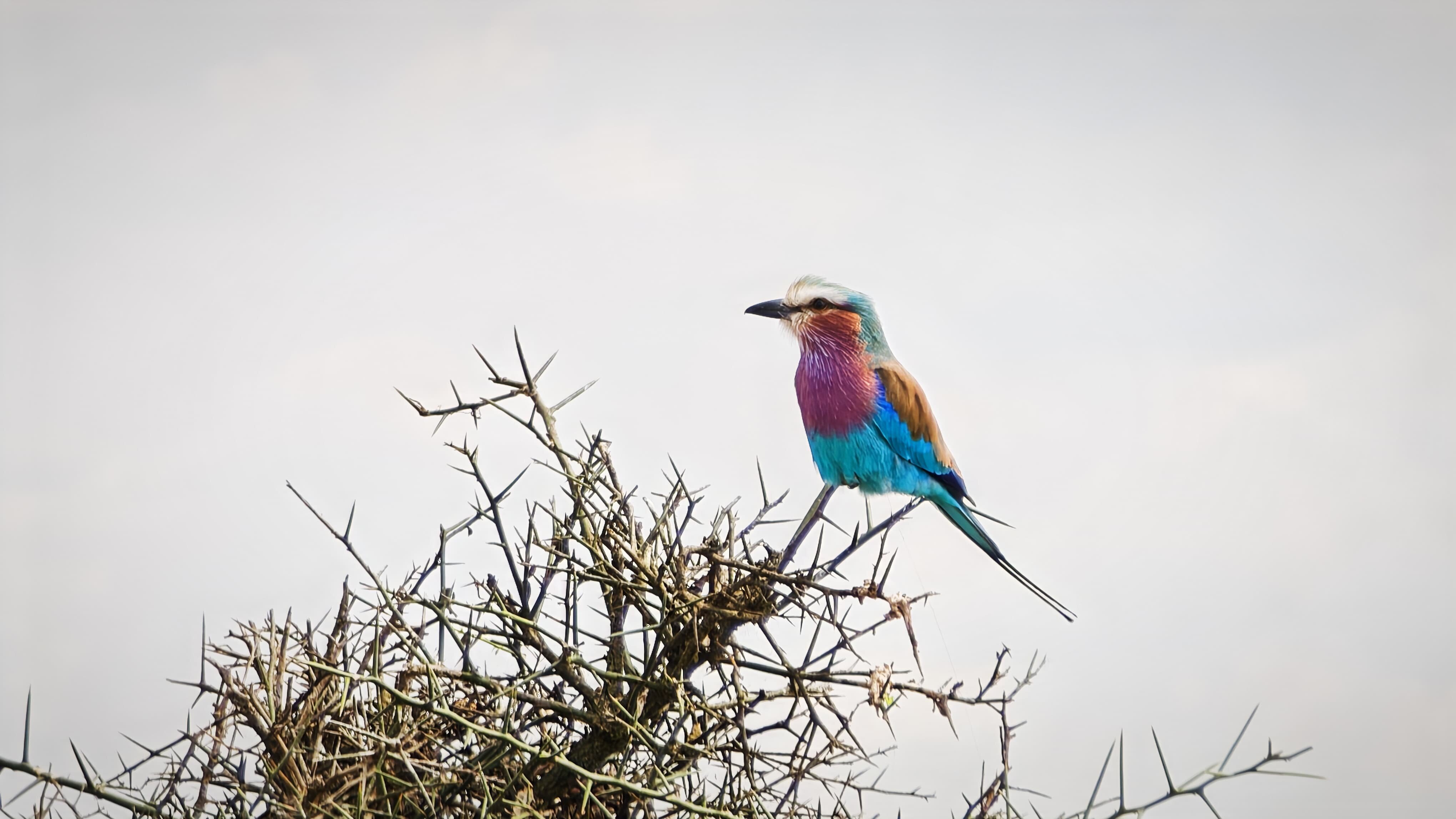
Lilac-breasted roller perch on low acacia along the tracks. Yellow-throated longclaw works the grass. Black-bellied bustard stands upright in the stems, easy to miss until it moves. Secretary bird stalk through hunting snakes and lizards. Guineafowl run ahead of the vehicle in noisy groups.
Raptors do well here because open grass, woodland edge and water sit close together. Bateleur quarter overhead on that tailless silhouette, martial eagle hunt the same ground, and vultures gather at carcasses.
The transition strip where miombo meets grassland is often the most productive of all for birds of prey, and it is worth driving slowly along that boundary rather than crossing it.
Night Birding on a Mikumi Safari
Mikumi permits night game drives, which is unusual in Tanzania and opens a part of the list most visitors never reach.
Nightjars sit on the warm surface of the tracks after dark and lift away in front of the vehicle. Owls call from the woodland edge, and a spotlight sweeping for eyeshine picks up birds as often as mammals.
Drives run roughly eight until eleven in the evening with an armed ranger and a vehicle fitted with a spotlight, and need booking in advance. Charges run around US$50 per adult non-resident.
It is a small addition to a list and a genuinely different couple of hours in the park.
Best Season for a Mikumi Birdwatching Safari
Birding runs the opposite calendar to mammal viewing here, which is useful for anyone whose dates fall in the green season.
From November through April, European and North African migrants arrive and push the numbers up sharply. Blacksmith plovers, cattle egrets, herons and fish eagles all feature in wet season accounts alongside the residents. Resident species are in breeding plumage, nesting and in full song.
December through February is the sweet spot, combining full migrant numbers with better access than March and April, when heavy rain makes some tracks impassable.
May is worth noting too. Residents finish breeding and migrants gather before heading north, with access improving as the rains ease.
November to April: peak birding. Migrants present, residents breeding and vocal, green cover that hides mammals but not birds. December to February combines the numbers with usable tracks.
June to October: residents only, concentrated at the shrinking water. Easier driving and stronger mammal viewing, with the pools carrying most of the birdlife.
May: transitional and quiet. Breeding season ending, migrants gathering to fly north, and improving access as the rain eases.
Equipment and Preparation for Birding in Mikumi
Bring your own binoculars, one pair per person rather than one per couple. Eight or ten by forty two suits open country like this, and sharing wastes the sighting.
A field guide to East African birds earns its weight if you care about names, since the park spans four habitats with genuinely different communities. A notebook beats a phone app, which drains a battery you may need for photographs.
For photography, something long is needed for malachite kingfisher and the smaller waterbirds, which sit further out than they look. A bean bag rests the lens better than any tripod in a vehicle.
Several camps run on solar power with limited charging, so arrive with batteries full and bring a portable pack.
Where to Base a Birding Trip in Mikumi
For waterbirds, base near the pools. Mikumi Wildlife Camp sits by park headquarters minutes from the hippo pools and has its own waterhole in front of it.
For woodland species, Vuma Hills in the southwest puts you in the miombo without a long drive first, and it stays open all year, which matters when the best birding falls in the wet season.
Stanley’s Kopje overlooks the Mwanamboga waterhole from a rocky kopje, giving an elevated view over water, though it closes through the wettest months.
Lodges outside the boundary near Mikumi town operate year round and cost less, at the price of a fresh park entry each morning and a drive to the gate before the day starts.
Questions About Birdwatching in Mikumi
Do I need a special permit for birdwatching in Mikumi?
No. Standard park entry covers it, currently around US$30 per adult foreign non-resident per day and about US$10 for children aged 5 to 15, with lower rates for Tanzanian residents and East African citizens. A safari vehicle adds roughly US$40 per day. A guided walking safari costs about US$20 for one to four hours or US$25 for longer.
How many species can I expect to see in Mikumi?
More than 400 have been recorded across the park’s habitats. A dedicated birder working the waterholes, the river corridor and the miombo over two or three days in the wet season can build a substantial list. Casual birding from a game drive will produce far fewer, since the woodland specialists need a deliberate visit.
When is the best time for birding in Mikumi?
November through April, when European and North African migrants arrive and residents are breeding. December to February is the sweet spot, combining full migrant numbers with better access than March and April, when heavy rain makes some tracks impassable.
Can I bird on foot in Mikumi?
Yes, on a guided walking safari with an armed ranger, usually along the Mkata River corridor or near the hippo pools. Walks last three to four hours in the early morning and need advance booking. Walking beats driving for birding, since engine noise masks most calls.
Which part of Mikumi is best for birds?
The hippo pools and the Chamgore and Mkata waterholes for waterbirds, the Mkata River corridor for riverine species, and the miombo woodland toward the Vuma Hills for specialists such as Boehm’s bee-eater and Dickinson’s kestrel. Game viewing concentrates in the northwest while the southwest is better for birding.
Will my safari guide know birds?
It varies, so ask when booking. Guides in Mikumi are competent on mammals as a matter of course, but bird identification by call is a specialist skill. Say at the point of enquiry that birding is the purpose of the trip, since guide allocation happens before you arrive.
Booking Your Mikumi Trip
The safari companies and tour operators listed on this website put trips like this together for a living and know which camps, guides and routes actually deliver. We are an independent guide to Mikumi; we do not book or sell tours ourselves.
When you are ready, arrange your safari, tour or holiday with one of the recognised operators listed here. Tell them your dates and what matters most, and a real person, not a form, will handle the itinerary, park bookings and logistics for you.