Mkata Floodplain (the Mini-Serengeti)
The Mkata Floodplain is the open grassland at the heart of Mikumi National Park and the reason the park is nicknamed the mini Serengeti. Nearly every Mikumi game drive runs on its road circuit of roughly 60 kilometres, which crosses black cotton flats, acacia stands and a chain of waterholes. The floodplain lies northeast of the Tanzam highway in Tanzania’s Morogoro region, fed by the seasonal Mkata River, and it holds the park’s biggest concentrations of zebra, buffalo, eland and elephant.
What follows covers the floodplain itself: how it works, what lives on it, where the productive corners sit, and how the two seasons change what a safari there looks like.
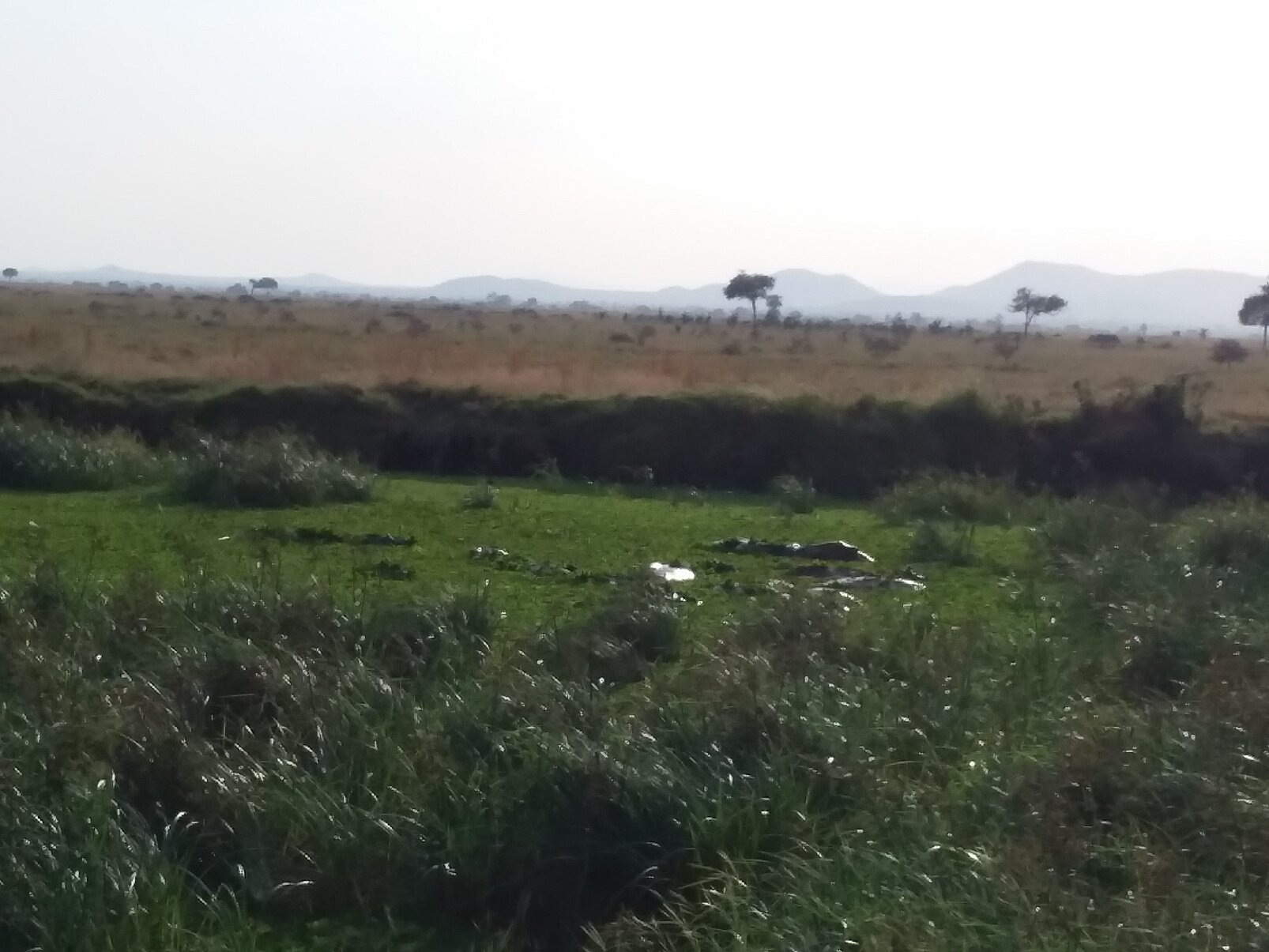
Why the Mkata Floodplain Safari Draws the Serengeti Comparison
The nickname is not marketing invention. Stand on the Mkata Floodplain in September and the visual grammar is the same as the southern Serengeti: flat grass running to a horizon, scattered flat-topped acacias, termite mounds breaking the surface, dust hanging behind a herd. Add borassus palms, black hardwood and the odd baobab and the resemblance holds.
The comparison breaks down in one useful way, though, and it is worth knowing before you go. Game on a Mkata Floodplain safari is more varied than the Serengeti but less densely packed. You will not see wildebeest in six figures. What you get instead is a wider species list across a much smaller area, seen from a vehicle you rarely have to share a sighting with.
The plain sits in a basin ringed by mountains, which gives every photograph a backdrop the Serengeti mostly lacks. The Uluguru range rises to the northeast, the Rubeho to the west.
The Mkata Floodplain Driving Circuit and Its Waterholes
The main tourist circuit on the Mkata Floodplain covers around 60 kilometres of graded track north of the highway, and it is well laid out. Loops branch off and rejoin, so a morning drive and an afternoon drive can cover completely different ground without repeating anything.
Two named waterholes anchor the northern end, Mkata and Chamgore, and both reward the unfashionable tactic of switching the engine off and waiting. Guides who have worked the park for years will tell you the same thing: the floodplain gives up more to people who park than to people who drive. Elephant come in mid-morning. Buffalo drink and leave. Monitor lizards work the edges, and pythons are occasionally seen in the reeds.
The hippo pools sit about five kilometres north of the main gate and are a standard stop on almost every circuit. Further west, the Kisingura circuit runs closer to the treeline and turns up different species.
Roughly four fifths of Mikumi lies south of the Tanzam highway, and almost none of it is developed for tourism. If someone tells you they covered the whole park in a day, they covered the Mkata Floodplain. That is not a complaint. The floodplain is where the game is.
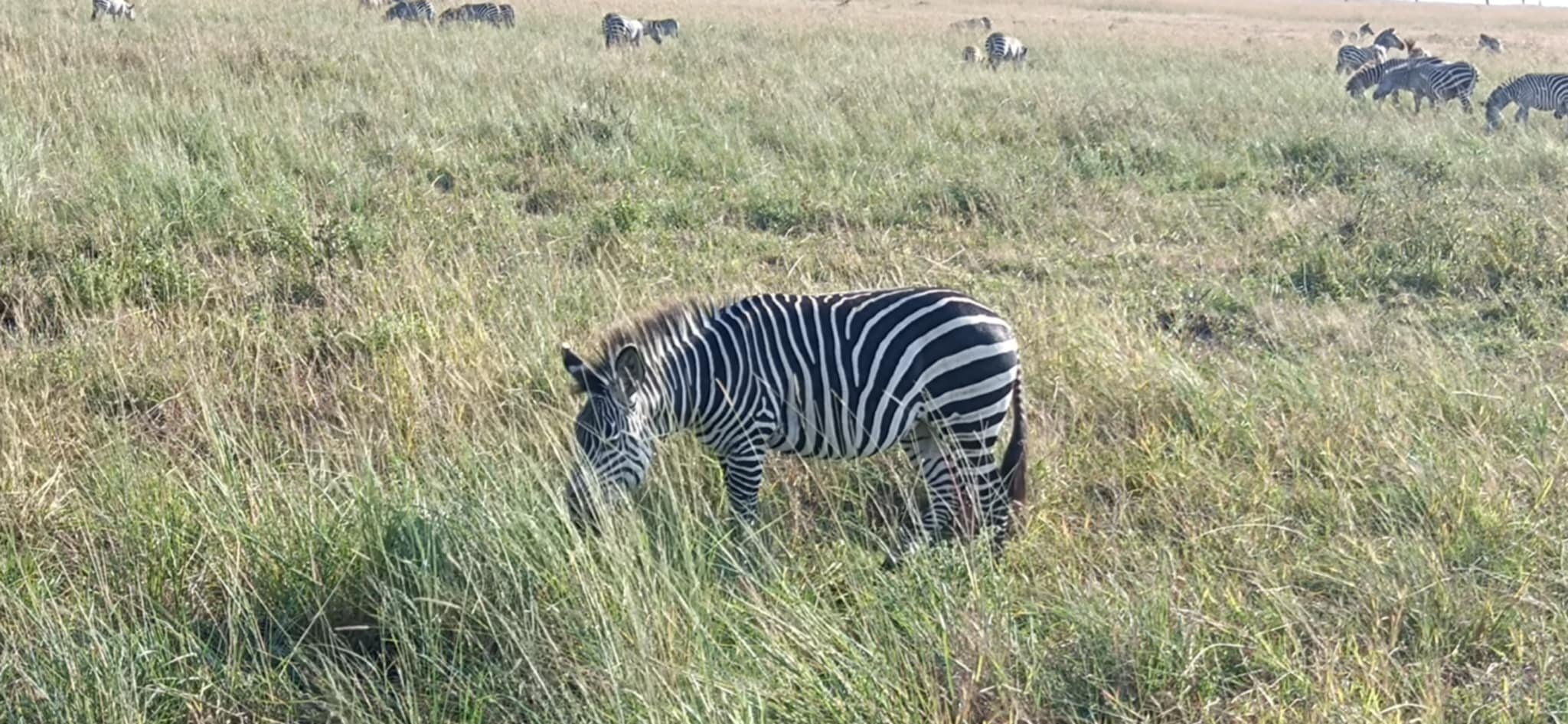
Eland, Zebra and Buffalo Herds on a Mkata Floodplain Safari
Mikumi’s floodplain is widely rated the most reliable place in Tanzania to see eland, the largest antelope in the world. Bulls carry a heavy dewlap and a spiralled horn and can weigh close to a tonne, and on the Mkata they are seen with a consistency that surprises people who have hunted for them elsewhere.
Burchell’s zebra and blue wildebeest move across the grass in sizeable herds, often mixed with impala. In the dry months buffalo gather in numbers that can reach several hundred at a single waterhole. Elephant favour the acacia and tamarind stands that fringe the Mkata River, where the shade is, and the same stands draw giraffe, which browse the upper leaves for hours.
Mikumi’s giraffe are worth a second look. Biologists treat the population as transitional between the Masai and reticulated forms, so the patterning sits somewhere between the two.
Lichtenstein’s hartebeest, a species many visitors have never heard of, is regularly seen out on the open ground. Warthog, waterbuck and bushbuck fill in the rest.
Lion Tracking Safaris on the Mkata Floodplain
Lion on the Mkata Floodplain use the termite mounds as viewing platforms, which is the single most photographed behaviour in Mikumi. A flattened mound gives a lioness a metre of extra height over grass that would otherwise hide the herds, and prides use them habitually through the dry season.
During the rains, when the grass grows past a metre, lion here have been recorded resting in trees. It happens often enough in Mikumi to be talked about, though it remains a matter of luck rather than something to plan a trip around.
Sightings are regular rather than daily. Ask your guide what the pride movements have been over the past week, since that is far more useful than any general claim about the park. Leopard are present, mostly in the riverine acacia and sausage trees, and are genuinely rare to see. Spotted hyena turn up on early drives. African wild dog range across the wider Selous ecosystem and pass through the floodplain occasionally, which is exactly the sort of sighting nobody should count on.
Termite mounds are the floodplain’s only high ground. Watch them, not just the grass. A shape on top of a mound at first light is a lion far more often than it is a rock.
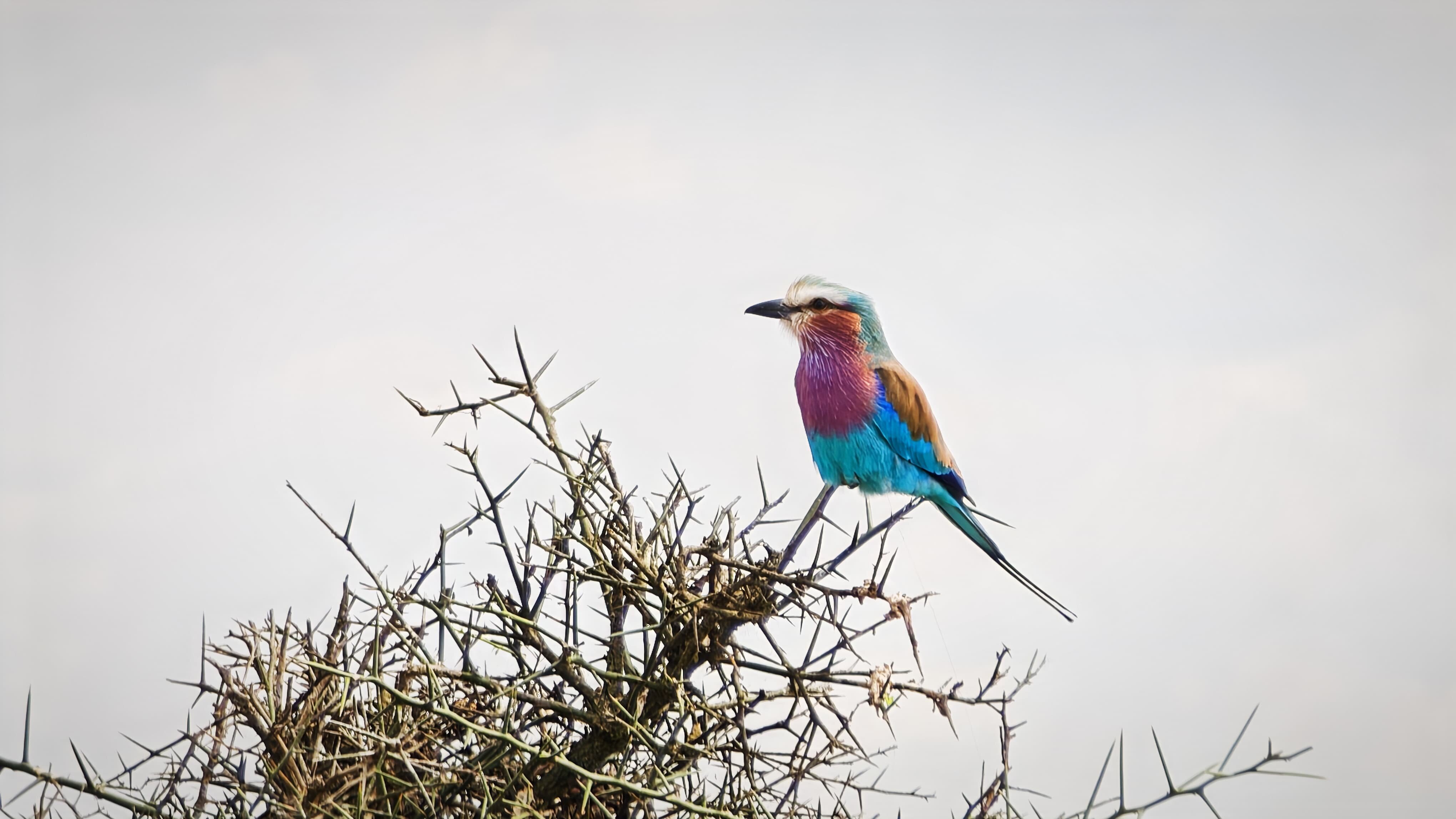
Birdwatching Safaris Along the Mkata River Corridor
More than 400 bird species have been recorded in Mikumi, and the Mkata Floodplain and its river corridor hold most of the accessible ones. Open-billed storks fish the shallows in numbers. Yellow-billed stork, marabou, herons and various waterbirds work the same edges, and African fish eagle call from the riverine trees.
On the open grass, look for yellow-throated longclaw, black-bellied bustard, secretary bird stalking through the stems and guineafowl running ahead of the vehicle. Bateleur and martial eagle quarter overhead. The lilac-breasted roller is the one everybody photographs, and it perches obligingly on low acacia branches along the track.
Boehm’s bee-eater, Dickinson’s kestrel, straw-tailed whydah and superb starling round out a floodplain list that a dedicated birder can build quickly in a single morning. From November through April, European and North African migrants arrive and push the numbers higher.
How the Seasons Change a Mkata Floodplain Game Drive
The floodplain runs on water. In the dry season, from June to October, the grass thins and browns, the seasonal channels shrink back and the remaining pools pull everything in. Late June onwards is when a Mikumi safari starts to deliver properly, and September and October are the strongest weeks of the year for numbers at water.
The wet season turns the same ground green and tall. Grazing spreads out across the whole plain rather than concentrating, so animals are harder to find while there are just as many of them. Calving accelerates. Black cotton soil on parts of the circuit becomes slick, and after heavy rain in March and April some tracks are impassable.
June to October, dry: short grass, open sightlines, heavy concentration at waterholes. Best months for game drives, and the coolest of the year. Big buffalo and elephant gatherings from September.
November to February, short rains and green: migrant birds arrive, the plain greens up, calves appear. Hot and humid late in the year. Good birding, harder mammal viewing.
March to May, long rains: the wettest stretch, grass over a metre in places, some circuit tracks unusable and one or two in-park camps closed. Fewest visitors of the year.
Photography Tours on the Mkata Floodplain
The floodplain photographs best in the first hour after sunrise and the last before the gates close, when low light rakes across the grass and the mountains behind pick up colour. Midday on an open plain is flat and hard, which is why most lodges break the day in two.
Shoot from the vehicle with a bean bag rather than a tripod. Something in the 100 to 400 range covers most of what the floodplain offers, since animals here are often at middle distance rather than close. A wider lens earns its place more than it would in a forest park, because the mountain backdrop is half the picture.
Dust is the practical problem. Change lenses as little as possible on the tracks.
Getting to the Mkata Floodplain and Where to Stay Nearby
Mikumi’s main gate sits on the Tanzam highway roughly 280 to 300 kilometres from Dar es Salaam, a drive of four to five hours through Morogoro on tarmac. The floodplain circuit begins a few kilometres past the gate, so you can be on it within minutes of paying your fees.
Stanley’s Kopje sits directly on the floodplain, on a rock outcrop overlooking the Mwanamboga waterhole, though it closes during the wettest months. Vuma Hills Tented Camp is up in the hills to the southwest, further from the grass but open all year. Mikumi Wildlife Camp sits near park headquarters with its own waterhole. Cheaper lodges cluster in Mikumi town outside the boundary, which costs you a fresh park entry each morning but very little else.
Questions About Visiting the Mkata Floodplain
How much does it cost to do a game drive on the Mkata Floodplain?
You pay Mikumi park entry rather than a separate floodplain charge. Adult foreign non-residents currently pay around US$30 per person per day, children aged 5 to 15 about US$10, with lower rates for Tanzanian residents and East African citizens. A six to twelve seat safari vehicle adds roughly US$40 per day, a private car around US$10. Entry is valid 24 hours from the moment you clear the gate.
How long does the Mkata Floodplain circuit take to drive?
The main circuit runs about 60 kilometres. Driven slowly with stops, which is the only sensible way, it fills a half day comfortably. Most people split it into a morning drive of three to four hours and an afternoon drive of similar length rather than attempting the whole thing in one go.
What animals am I most likely to see on the Mkata Floodplain?
Zebra, impala, buffalo, giraffe, warthog, wildebeest and eland are commonly seen through the dry season, along with elephant in the riverine acacia stands. Lion are regular but not guaranteed. Hippo and crocodile are reliable at the pools. Leopard and wild dog are rare enough that nobody should book expecting them.
When is the best time for a Mkata Floodplain safari?
Late June to October, with September and October the peak for animals gathering at the last water. November to February suits birders better, when migrants arrive and the plain is green. March and April bring the heaviest rain and the poorest access.
Can I walk on the Mkata Floodplain?
Guided walking safaris are permitted in Mikumi with an armed ranger, and they usually run near the Mkata River corridor or around the hippo pools rather than out on the open plain. Walks last around three to four hours, are booked in advance, and carry a charge of roughly US$20 to US$40 for a small group on top of park entry.
Is the floodplain accessible in a normal car?
In the dry season much of the main circuit is drivable in a two wheel drive vehicle with decent clearance. After rain, the black cotton soil is a different proposition and four wheel drive becomes necessary. Park gates close at six in the evening and there is no recovery service waiting for you.
Booking Your Mikumi Trip
The safari companies and tour operators listed on this website put trips like this together for a living and know which camps, guides and routes actually deliver. We are an independent guide to Mikumi; we do not book or sell tours ourselves.
When you are ready, arrange your safari, tour or holiday with one of the recognised operators listed here. Tell them your dates and what matters most, and a real person, not a form, will handle the itinerary, park bookings and logistics for you.