What Makes Mikumi National Park Famous?
Mikumi National Park is best known for the Mkata Floodplain, an open grassland so similar to the southern Serengeti that the park is widely called the mini Serengeti, and for being the most accessible national park in Tanzania. A Mikumi safari is also known for reliable eland sightings, lion that perch on termite mounds, permanent hippo pools near the main gate, and a trunk road running straight through the middle of it. The park covers 3,230 square kilometres in the Morogoro region, four hours inland from Dar es Salaam.
Here is what each of those reputations rests on, and how much of it holds up on the ground.
The Mkata Floodplain and Mikumi’s Mini Serengeti Reputation
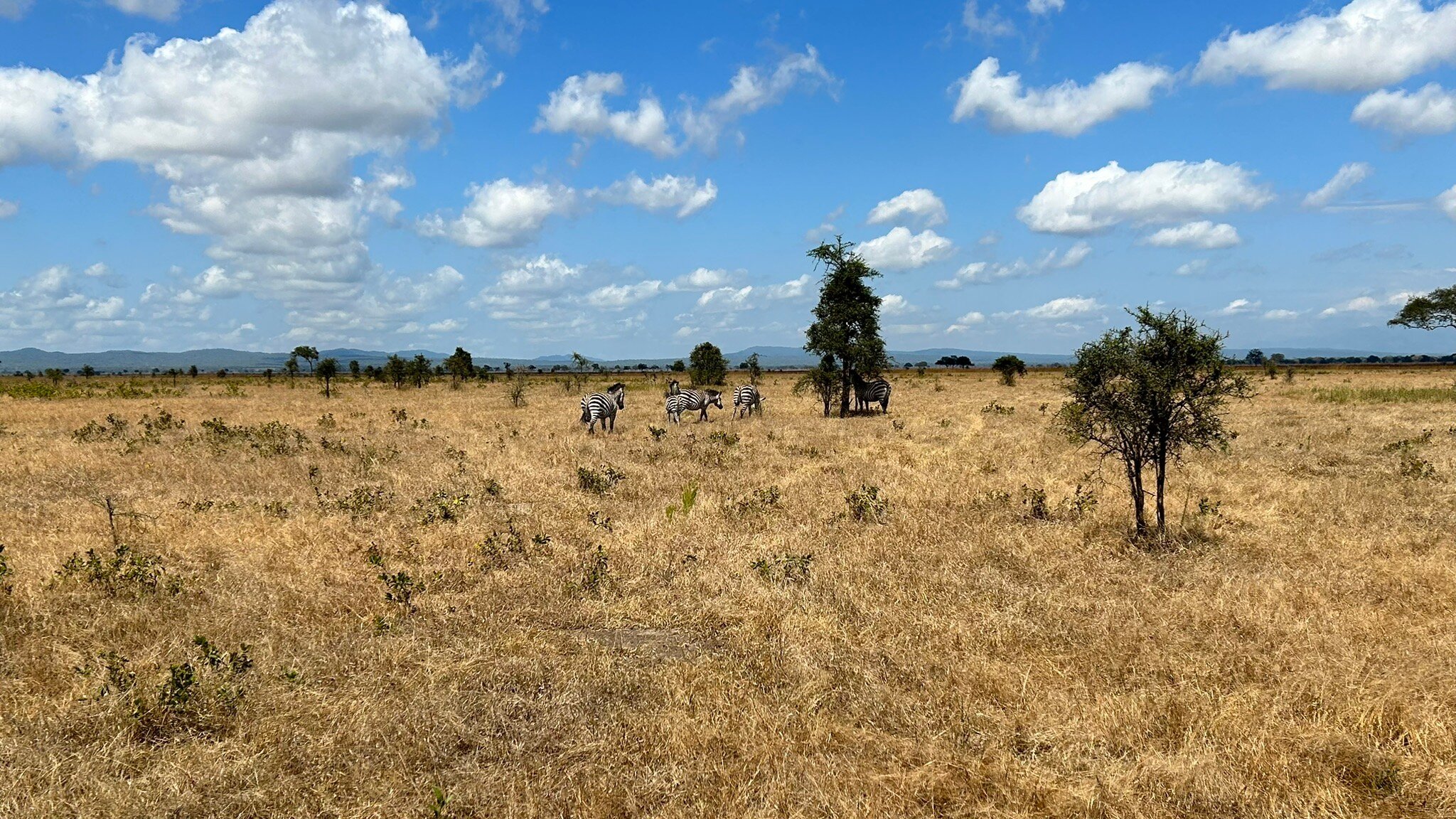
The nickname is the first thing anyone hears about this park, and it comes from the Mkata Floodplain, the open alluvial plain that fills the northwestern part of Mikumi.
Visually the comparison holds. Flat grass running to a horizon, scattered flat-topped acacia, termite mounds breaking the surface, herds moving in the distance. Add borassus palms, baobab, tamarind and black hardwood and the resemblance to the southern Serengeti plains is genuinely close.
Where it parts company is density. Game in Mikumi is more varied than the Serengeti but less densely packed, and there is nothing here on the scale of a wildebeest migration. What you get instead is a wide species list in a compact area, seen without sharing the sighting with other vehicles.
The plain also has something the Serengeti lacks: mountains on both sides. Mikumi sits in a basin, with the Uluguru range to the northeast and the Rubeho plateau west, which gives almost every wide photograph a backdrop.
The mini Serengeti tag sets an expectation of volume that Mikumi does not meet, and people who arrive expecting migration numbers leave disappointed. Arrive expecting variety in a small area with almost no crowds and the park comfortably beats its billing.
Mikumi Safaris as Tanzania’s Most Accessible National Park
The second reason Mikumi is famous is straightforward geography. It sits 283 to 300 kilometres from Dar es Salaam on a surfaced highway, four to five hours by road, which makes it the only Tanzanian national park a person can realistically visit and return from in a single day.
Nothing else on the mainland comes close. The northern circuit parks require a flight or a multi day drive. Ruaha is six hours further along the same road. Mikumi is a morning’s drive from a city of several million people.
That accessibility built the park’s visitor base: weekend trips from Dar es Salaam, short two and three day safaris, business travellers with a spare 48 hours, and overnight stops for anyone heading deeper into the southern circuit.
It also keeps costs down. Park entry sits well below the Serengeti and Nyerere tariff, and transport costs a fraction of a fly-in trip, which is why budget-sensitive travellers are steered here.
Reliable Eland Sightings on a Mikumi Safari
Among people who actually track what they have seen, Mikumi’s real claim to fame is eland. The Mkata Floodplain is widely described as the most reliable place in Tanzania to see the world’s largest antelope.
Eland are big animals that behave like they know it. A mature bull can weigh close to a tonne, carries a heavy dewlap and spiralled horns, and moves at a walk that covers ground. In many parks they are shy and scattered. Here they are commonly seen out on the open grass, particularly through the dry season.
Alongside them, Mikumi holds a run of antelope that are hard to find elsewhere. Greater kudu and sable antelope hold to the miombo foothills near the Vuma Hills rather than the plain. Lichtenstein’s hartebeest, a species most visitors have never heard of, is regularly seen on open ground.
The giraffe are worth noticing too. Biologists treat Mikumi’s population as transitional between the Masai and reticulated forms.
Tree Climbing Lion and Predator Watching in Mikumi
Lion on the Mkata Floodplain use the flattened tops of termite mounds as lookouts, which is the most photographed behaviour in the park. A mound gives a lioness the extra metre of height she needs to see over grass that would otherwise hide the herds, and prides use them habitually through the dry season.
During the rains, when grass grows past a metre, lion here have been recorded resting in trees. Mikumi is one of a handful of places in Tanzania where this comes up often enough to be talked about, though it remains a matter of luck rather than something to book a trip around.
Lion sightings overall are regular rather than daily. Leopard are present, favouring acacia and sausage trees along the river, and are genuinely rare to see. Spotted hyena turn up on early drives.
Watch the termite mounds, not just the grass. On the Mkata Floodplain a shape on top of a mound at first light is a lion far more often than it is a rock.
The Hippo Pools That Anchor Every Mikumi Safari
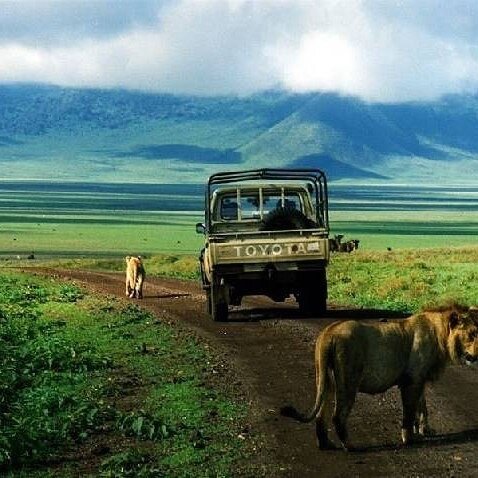
Two permanent pools about five kilometres north of the main gate hold hundreds of hippo and appear on virtually every Mikumi itinerary. They are the park’s most visited single feature.
What makes them unusual is that visitors can leave the vehicle at a designated viewing area, which is uncommon in Tanzanian parks. Nile crocodile share the water, monitor lizards work the muddy edges and pythons are recorded in the surrounding vegetation.
The pools also hold birds. Open-billed storks gather around the hippo in flocks, working the mud the animals churn up, alongside yellow-billed stork, herons, hamerkop and malachite kingfisher.
Because the water is permanent in a park where nearly everything else is seasonal, the pools pull in elephant, buffalo and antelope through the dry months. Hippo themselves are in the water through the middle of the day and out grazing at night, which flips the usual safari timing.
Birdwatching Fame and More Than 400 Species in Mikumi
Mikumi has more than 400 recorded bird species, which puts it among Tanzania’s better birding parks and accounts for a good share of its reputation among visitors who care about lists.
The mix of grassland, seasonal swamp, riverine woodland and miombo does the work. Lilac-breasted roller, yellow-throated longclaw, black-bellied bustard, secretary bird, guineafowl and marabou stork are on the open ground. Bateleur, martial eagle and African fish eagle work the air above. Boehm’s bee-eater, Dickinson’s kestrel, straw-tailed whydah and superb starling fill in around them.
From November through April, European and North African migrants arrive and push numbers up sharply. That is why a Mikumi birdwatching safari is often at its best in exactly the months when mammal viewing is at its hardest.
The Highway Through the Park and Mikumi’s Conservation Notoriety
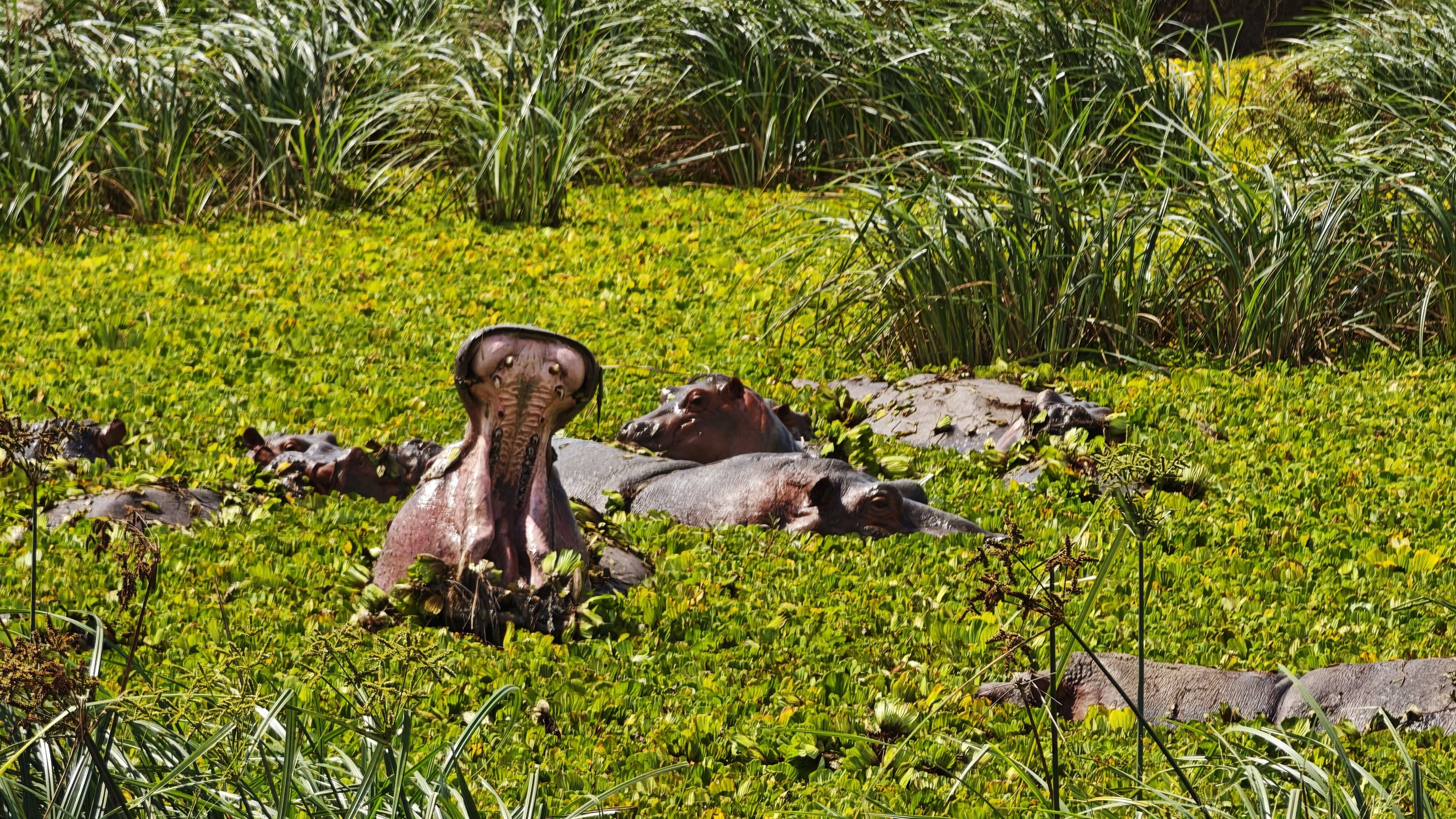
Mikumi is also known for something less flattering. It is the only protected area in Tanzania crossed by a national trunk road, the A7 Tanzania to Zambia highway, and that has made it a reference case in African conservation debate.
The road was paved between 1973 and 1974 and upgraded to full tarmac in 1989 and 1990. Wildlife mortality has been recorded since. Between 1973 and 1988, 456 large mammals were killed, including 135 buffalo, 17 elephant, 17 giraffe and three hippo. The recorded figure between 1992 and 2008 reached 2,241 animals, and current estimates put mortality above 360 animals a year.
Research on the floodplain also found that several species keep away from the corridor. In tall grassland, eland, bohor reedbuck, black-backed jackal, elephant and wildebeest used ground within 600 metres of the highway far less often than expected.
Eleven speed bumps now slow traffic through the park. When road upgrades are proposed elsewhere in Tanzania, Mikumi is the example that gets raised.
Rare Antelope and African Wild Dog on a Mikumi Safari
Mikumi is one of the few parks in East Africa where African wild dog turn up at all. Packs range across the wider Selous ecosystem to the south and pass through, and while sightings are genuinely rare, they are possible here in a way they are not on the northern circuit.
Sable antelope carry similar weight. A mature bull, black-flanked with backswept horns close to a metre long, is one of the most striking animals in Africa, and the miombo foothills of Mikumi are a dependable part of its range.
Four of the Big Five are present. Rhino were lost to poaching in the 1990s and park authorities have signalled long-term intentions to reintroduce them. Anyone claiming Mikumi has the full five is either mistaken or repeating an old itinerary.
Where Mikumi Sits and How to Reach It
The park lies in south-central Tanzania in the Morogoro region, gazetted in 1964 and covering 3,230 square kilometres, which makes it the country’s fourth largest. It borders Nyerere National Park to the south, and together with the Udzungwas and the Uluguru range forms part of a system spanning more than 75,000 square kilometres.
From Dar es Salaam it is four to five hours by road through Morogoro on tarmac. Kikoboga airstrip inside the park handles light aircraft, with Safari Air Link connecting to Dar es Salaam, Zanzibar, Nyerere and Ruaha. Park gates close at six in the evening.
Questions About What Mikumi Is Known For
Why is Mikumi called the mini Serengeti?
Because the Mkata Floodplain, the open grassland at the centre of the park, closely resembles the southern Serengeti plains in appearance and holds similar plains game. The comparison is visual and about species mix rather than sheer numbers, since Mikumi’s wildlife is more varied but less densely concentrated.
Does Mikumi have the Big Five?
Four of them. Lion, leopard, elephant and buffalo are all present, though leopard are rare to see. Rhino were lost to poaching in the 1990s and are currently absent, with park authorities having signalled long-term plans for reintroduction.
What does it cost to visit Mikumi National Park?
Adult foreign non-residents currently pay around US$30 per person per day and children aged 5 to 15 about US$10. Tanzanian resident adults pay roughly US$15 and children US$5, with lower rates for East African citizens. Vehicle fees are separate at around US$40 per day for a six to twelve seat safari vehicle and US$10 for a private car. That sits well below Serengeti and Nyerere, which are near US$70 for non-East African adults.
Is Mikumi worth visiting compared with the Serengeti?
They serve different purposes. Serengeti delivers scale and the migration and costs considerably more to reach and enter. Mikumi delivers variety, mountain scenery and near total absence of crowds, four hours from Dar es Salaam at a fraction of the price. For a short trip or a first taste of a Tanzanian safari, Mikumi is hard to beat on value.
What animal is Mikumi most famous for?
Eland, if you ask people who track sightings. The Mkata Floodplain is widely rated the most reliable place in Tanzania to see the world’s largest antelope. Hippo at the pools and lion on termite mounds are what most visitors photograph.
Is the highway through Mikumi a problem for visitors?
It affects the sense of wilderness rather than the game viewing. The circuit sits northeast of the road on the Mkata Floodplain, and a few kilometres in the tarmac is out of sight and mostly out of earshot. Camps close to the road, including Mikumi Wildlife Camp at about three hundred metres from it, do carry night traffic noise.
Booking Your Mikumi Trip
The safari companies and tour operators listed on this website put trips like this together for a living and know which camps, guides and routes actually deliver. We are an independent guide to Mikumi; we do not book or sell tours ourselves.
When you are ready, arrange your safari, tour or holiday with one of the recognised operators listed here. Tell them your dates and what matters most, and a real person, not a form, will handle the itinerary, park bookings and logistics for you.