How Large Is Mikumi National Park?
Mikumi National Park covers 3,230 square kilometres, roughly 1,250 square miles, making it the fourth largest national park in Tanzania. The area you actually use on a Mikumi safari is far smaller than that: a graded game viewing circuit of about 60 kilometres on the Mkata Floodplain northeast of the Tanzam highway, with roughly four fifths of the park lying south of the road and largely undeveloped. Mikumi was gazetted in 1964 and sits in Tanzania’s Morogoro region.
Below is what those numbers mean in practice, how Mikumi compares with other Tanzanian parks, and why the usable area matters more than the total.
Mikumi National Park’s Size in Square Kilometres
The figure quoted consistently across official and independent sources is 3,230 square kilometres. In imperial terms that comes out at around 1,247 to 1,250 square miles depending on rounding.
For scale, that is comparable to a small English county or roughly two and a half times the size of Greater London. It is a substantial protected area by any normal measure, while sitting in a country with several parks many times larger.
The park was established in 1964, which puts it among the older protected areas in Tanzania, gazetted in the same wave that created Ruaha.
Do not judge Mikumi by the headline figure. The number that governs your trip is 60, the length in kilometres of the tourist circuit on the floodplain. Everything most visitors come to see sits on it.
How Mikumi Ranks Among Tanzania’s National Parks
Mikumi is described as Tanzania’s fourth largest national park in the majority of sources, including park authority material. A handful of older or less careful pages call it third or fifth, which reflects how the ranking has shifted as new parks were created and boundaries redrawn.
Nyerere National Park, created from the Selous Game Reserve, is the largest in the country by a wide margin. Ruaha follows at 20,226 square kilometres, having been Tanzania’s biggest until Nyerere was gazetted. Serengeti covers roughly 14,750 square kilometres.
Against those, Mikumi is modest. Against the parks most visitors have actually walked around at home, it is enormous.
What sets Mikumi apart is not size but accessibility. It is the closest national park to Dar es Salaam by a long way, four to five hours on surfaced road, which is why it draws weekend visitors and short trips that the larger southern parks cannot.
The Part of Mikumi You Actually Drive on Safari
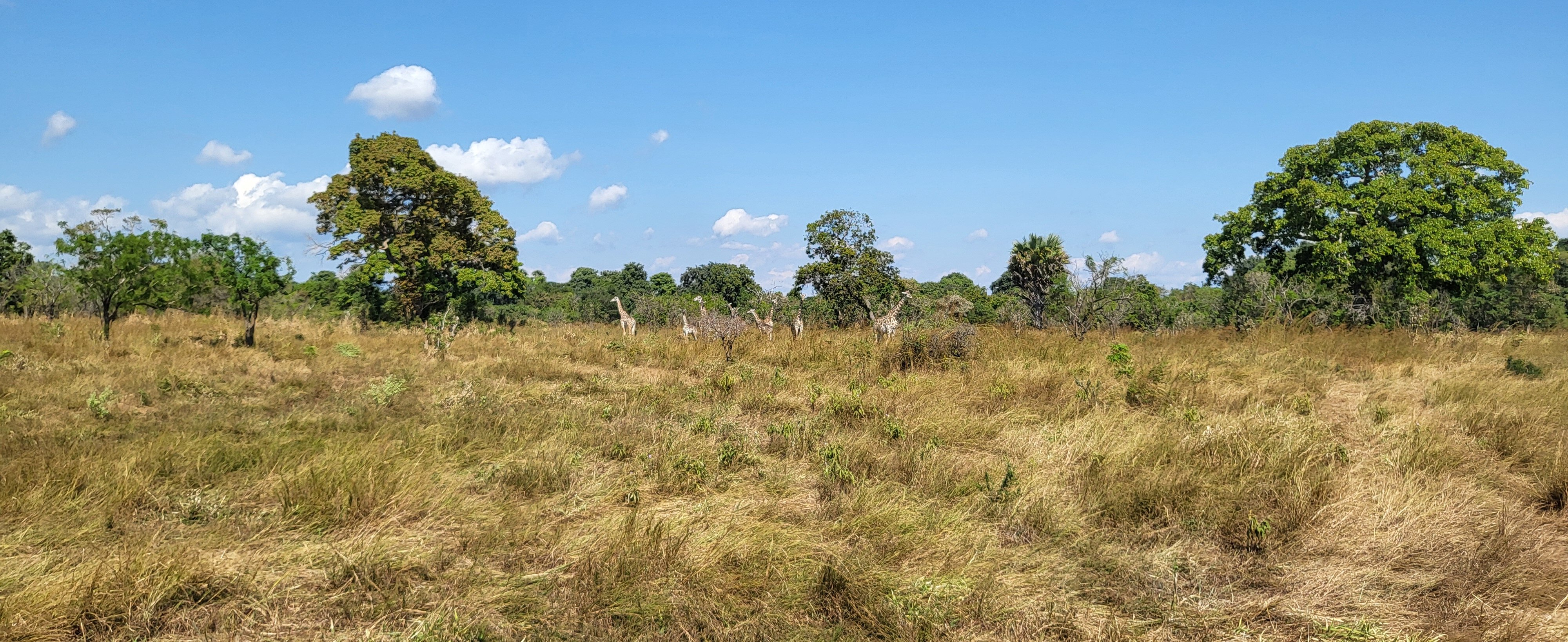
Here is the number that matters. The tourist road circuit on the Mkata Floodplain covers roughly 60 kilometres of graded track, and that is where virtually all commercial game viewing happens.
That circuit sits northeast of the Tanzam highway, crossing open grassland interspersed with acacia woodland, patches of borassus palm, black hardwood and the occasional baobab. Loops branch off and rejoin, so a morning drive and an afternoon drive can cover different ground without repeating.
Driven slowly with proper stops at the waterholes and the hippo pools, that 60 kilometres fills a full day and still leaves loops uncovered. There is no prize for finishing it early.
The hippo pools sit about five kilometres north of the main gate. The named waterholes, Mkata and Chamgore, sit further along. Mwanamboga lies below the rock outcrop where Stanley’s Kopje is built.
The Undeveloped South of Mikumi National Park
Around 80 per cent of Mikumi lies south of the highway, and almost none of it is set up for visitors. It is described as country for well equipped expeditions rather than ordinary game drives.
That southern portion is gentle foothills and miombo woodland savanna, and it is genuinely wild in a way the floodplain is not. Roads are minimal and there are no facilities.
The main exception is the southwestern corner, where the Vuma Hills rise and Vuma Hills Tented Camp sits above the treeline. The miombo woodland there holds sable antelope and greater kudu, species seldom seen out on the open plain, and it is reachable on a normal itinerary.
So the working figure for a visitor is not 3,230 square kilometres. It is the floodplain circuit plus the accessible woodland in the southwest.
Total park area: 3,230 square kilometres, around 1,250 square miles, Tanzania’s fourth largest national park, gazetted in 1964.
Main game viewing circuit: about 60 kilometres of graded track on the Mkata Floodplain northeast of the highway, where nearly all safaris take place.
Undeveloped area: roughly four fifths of the park south of the highway, with minimal roads, no facilities and very few visitors.
Mikumi Inside the Greater Selous Ecosystem
Mikumi’s own boundaries understate what it belongs to. The park borders Nyerere National Park along its southern edge, and the two function as a single ecosystem with animals moving between them.
Taken together with Nyerere, the Udzungwa Mountains and the Uluguru range, Mikumi forms part of a connected system spanning more than 75,000 square kilometres. Elephant and buffalo are also recorded using forest reserves in the Rubeho mountains to the west, apparently moving seasonally between those forests and the park.
That connectivity is why a park of 3,230 square kilometres carries the species list it does, including four of the Big Five, more than 400 recorded bird species and occasional African wild dog passing through from the wider ecosystem.
It is also why Mikumi’s ecological value does not depend on its own acreage. It is the accessible northern doorway into something far larger.
On paper Mikumi is a middling Tanzanian park. In practice it is the front gate of a wilderness of more than 75,000 square kilometres, and the only part of it a person can reach from the coast before lunch.
How Mikumi Compares in Size to the Serengeti and Ruaha
Serengeti covers around 14,750 square kilometres, roughly four and a half times Mikumi. Ruaha covers 20,226 square kilometres, around six times over. Nyerere is larger again.
Those comparisons cut both ways. The larger parks hold more animals across more habitat, and Serengeti in particular delivers scale and a migration that Mikumi cannot match. Game in Mikumi is more varied but less densely concentrated.
What Mikumi’s compactness buys is efficiency. In two days here you can cover the productive ground properly. In two days in Ruaha you have barely stopped driving. For anyone with a short window, that changes the calculation entirely.
Fees follow the same pattern. Serengeti and Nyerere sit near US$70 per adult non-East African, while Mikumi sits considerably lower, which is why budget conscious itineraries are steered here.
What Mikumi’s Size Means for a Short Safari
Because the usable area is compact, a two night trip covers Mikumi meaningfully in a way that two nights covers almost nowhere else in Tanzania. Three drives across the floodplain circuit plus a half day toward the miombo woodland gives you the park.
It also means the park never feels crowded, even as the most accessible park in the country. Visitor numbers are modest, most people stick to the central floodplain, and the southern terrain is left to almost nobody.
The flip side is that Mikumi rewards a longer stay less than a larger park would. Beyond three nights, most people add Udzungwa, Nyerere or Ruaha rather than adding days here.
Getting Around Mikumi National Park
The main gate sits on the Tanzam highway around seven to eight kilometres from Mikumi town, roughly 283 to 300 kilometres from Dar es Salaam and four to five hours by road via Morogoro.
Inside, a high clearance vehicle handles most of the dry season circuit, while four wheel drive becomes necessary after rain when black cotton soil turns. In March and April some tracks are impassable. Gates close at six in the evening.
Kikoboga airstrip inside the park handles light aircraft, with Safari Air Link connecting Dar es Salaam, Zanzibar, Nyerere and Ruaha. Park headquarters sit nearby, where campsite and banda bookings are handled.
Questions About Mikumi National Park’s Size
How many square kilometres is Mikumi National Park?
3,230 square kilometres, around 1,250 square miles. It was established in 1964 and is described in most sources as Tanzania’s fourth largest national park.
Is Mikumi bigger than the Serengeti?
No. Serengeti covers roughly 14,750 square kilometres, around four and a half times Mikumi. Ruaha covers 20,226 square kilometres and Nyerere National Park is larger again. Mikumi’s advantage is accessibility rather than size, sitting four to five hours from Dar es Salaam on surfaced road.
How much of Mikumi can I actually visit?
The main game viewing circuit runs about 60 kilometres of graded track on the Mkata Floodplain northeast of the highway. Roughly four fifths of the park lies south of the road with minimal roads and no facilities, suited to well equipped expeditions rather than ordinary drives. The accessible exception is the southwestern woodland around the Vuma Hills.
Does the size of Mikumi affect what it costs to visit?
Not directly, but the tariff is lower than the larger flagship parks. Adult foreign non-residents currently pay around US$30 per person per day for Mikumi against roughly US$70 for Serengeti or Nyerere. Children aged 5 to 15 pay about US$10. Vehicle fees run roughly US$40 per day for a six to twelve seat safari vehicle. Because the usable area is compact, fewer days are needed to cover it properly.
How long does it take to drive across Mikumi?
The highway crosses the park in well under an hour at normal speeds, though eleven speed bumps slow the corridor. The tourist circuit is a different matter: 60 kilometres driven slowly with stops at the waterholes fills a full day, and most people split it across a morning and an afternoon drive.
Is Mikumi big enough for a proper safari?
Comfortably. Four of the Big Five are present, more than 400 bird species have been recorded, and the mix of floodplain, miombo woodland and permanent pools supports a wide species list. Rhino were lost to poaching in the 1990s. Game is more varied than the Serengeti but less densely concentrated, and sightings are good rather than guaranteed.
Booking Your Mikumi Trip
The safari companies and tour operators listed on this website put trips like this together for a living and know which camps, guides and routes actually deliver. We are an independent guide to Mikumi; we do not book or sell tours ourselves.
When you are ready, arrange your safari, tour or holiday with one of the recognised operators listed here. Tell them your dates and what matters most, and a real person, not a form, will handle the itinerary, park bookings and logistics for you.