Bush Breakfast in Mikumi National Park
A bush breakfast in Mikumi National Park means eating out in the park after a sunrise game drive rather than returning to camp, and it is the single change that extends a morning through the productive mid-morning hours. Bush meals are among the activities the park offers alongside game viewing, walking safaris, birding and picnicking. It needs arranging in advance and is served at designated areas. Mikumi covers 3,230 square kilometres in Tanzania’s Morogoro region.
Below is how a bush breakfast works, why the timing matters more than the food, and what to expect.
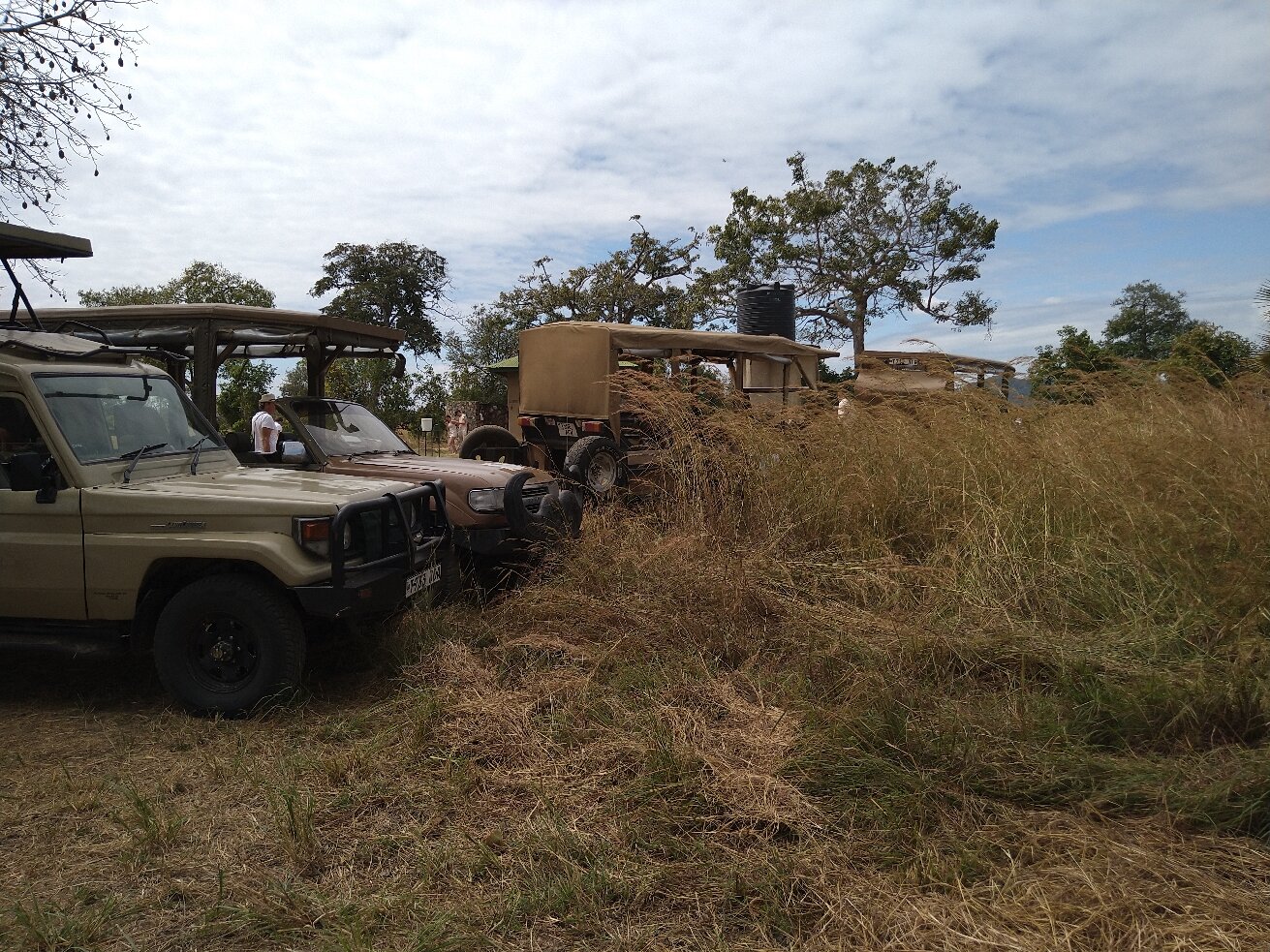
Why a Bush Breakfast Changes a Mikumi Morning
The standard pattern at most camps is a drive from first light, back at eight or nine, breakfast at a table, then a rest until the afternoon. That arrangement has one flaw and it is a real one.
Elephant and buffalo in Mikumi most often come to drink between about nine and eleven in the morning. Driving back to camp at eight puts you at a breakfast table exactly as the waterholes get busy.
A bush breakfast removes the return trip. You keep working the circuit through the second half of the morning and eat somewhere in the park when it suits, which turns a three hour drive into a five or six hour one without anyone going hungry.
It also removes the psychological end-point. Drives that have a table waiting tend to head home on time; drives that carry breakfast with them do not.
The value of a bush breakfast is not the novelty of eating outdoors. It is the ninety minutes between nine and eleven that you would otherwise spend driving back to camp and sitting down, which happen to be the best waterhole hours of the day.
How a Bush Breakfast Is Arranged in Mikumi
It has to be requested in advance. Camp kitchens are small and work to a plan, so ask when you book or at least the evening before rather than on the morning.
Two arrangements exist. The simpler one is a packed breakfast carried in a cool box in the vehicle, eaten at a designated picnic area when you choose. The more elaborate one is a set-up in the park, with a table, chairs and staff, arranged at a spot the park permits.
Eating in Mikumi is restricted to designated areas, since leaving the vehicle elsewhere on the circuit is not allowed. Your guide will know which spots are usable, and the main site is at the hippo pools about five kilometres north of the main gate, which has toilets and shade.
Tell the kitchen about dietary requirements at the same time. Supplies inside the park are limited and nothing can be improvised at short notice.
What a Bush Breakfast in Mikumi Includes
Contents vary by camp and it is worth asking rather than assuming.
A packed version typically runs to pastries or bread, cold meat or cheese, boiled eggs, fruit, yoghurt and a flask of coffee or tea. Camps that do a full set-up may cook on site, with eggs, sausages and toast made over a fire.
Some camps run buffet breakfasts as standard and will pack from that rather than preparing something separate. Stanley’s Kopje, for example, serves breakfast and lunch buffets with set evening menus.
Carry more water than you think you need alongside it. Heat and dry air dehydrate people faster than they notice in a vehicle, and there is nowhere inside the park to buy anything.
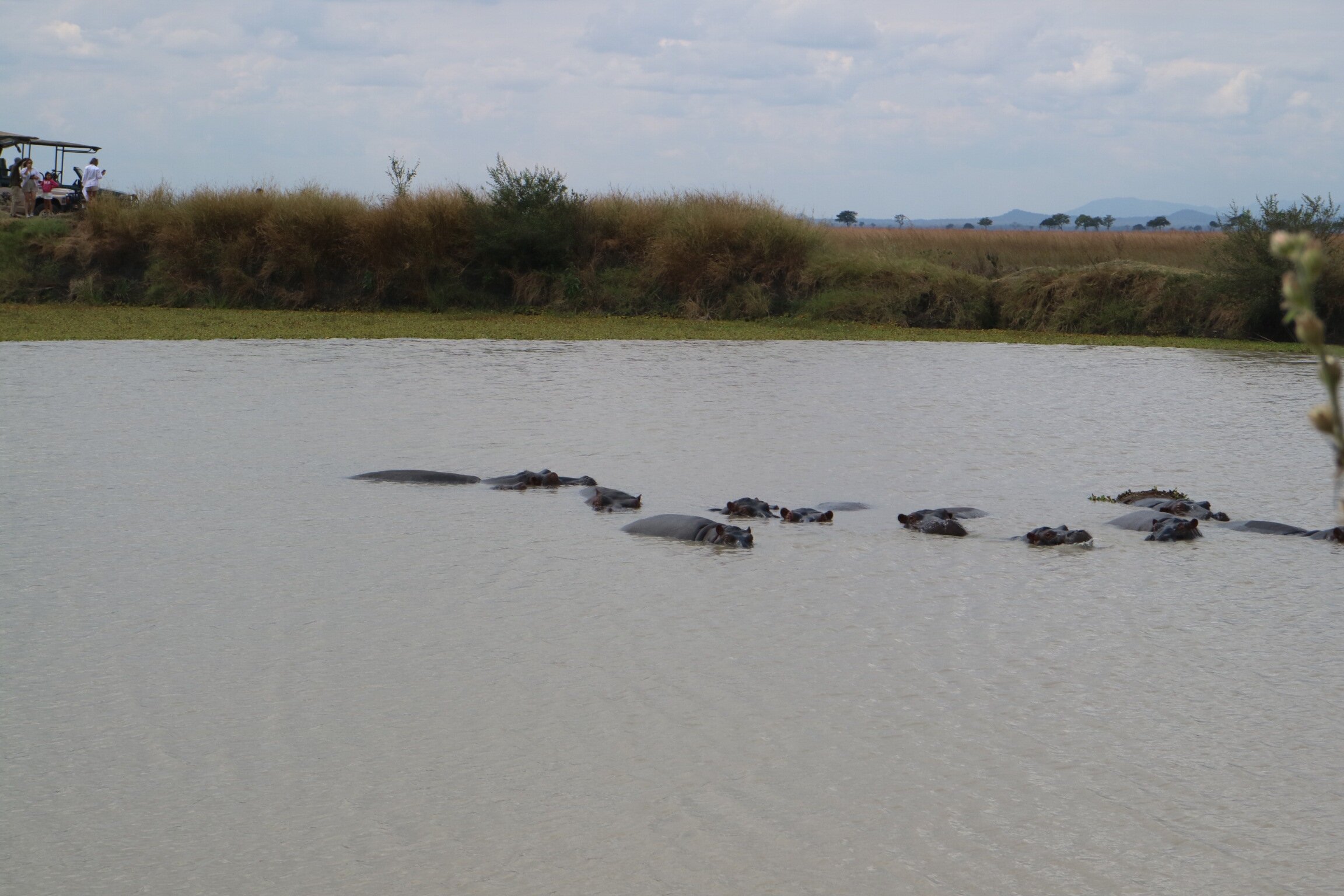
Where a Bush Breakfast Happens in Mikumi
The hippo pools picnic area is the default and it is a strong one. Two permanent pools hold hundreds of hippo along with Nile crocodile, and there is a designated viewing area where visitors may leave the vehicle, which is uncommon in Tanzanian parks.
Eating with hippo grunting a short distance away is the thing most guests remember. Open-billed storks gather around the animals in flocks, working the mud they churn up, and the bird list around the pools is the best in the park.
The riverine acacia and tamarind stands along the Mkata River are the other option where the park permits it, giving shade that the open plain does not.
Wherever you stop, stay within the marked zone and follow ranger instructions at the pools. Hippo are dangerous when anyone gets between them and their water.
Breakfast with hippo forty metres away sounds like a brochure line until you are actually doing it, at which point the grunting is a great deal louder than you expected.
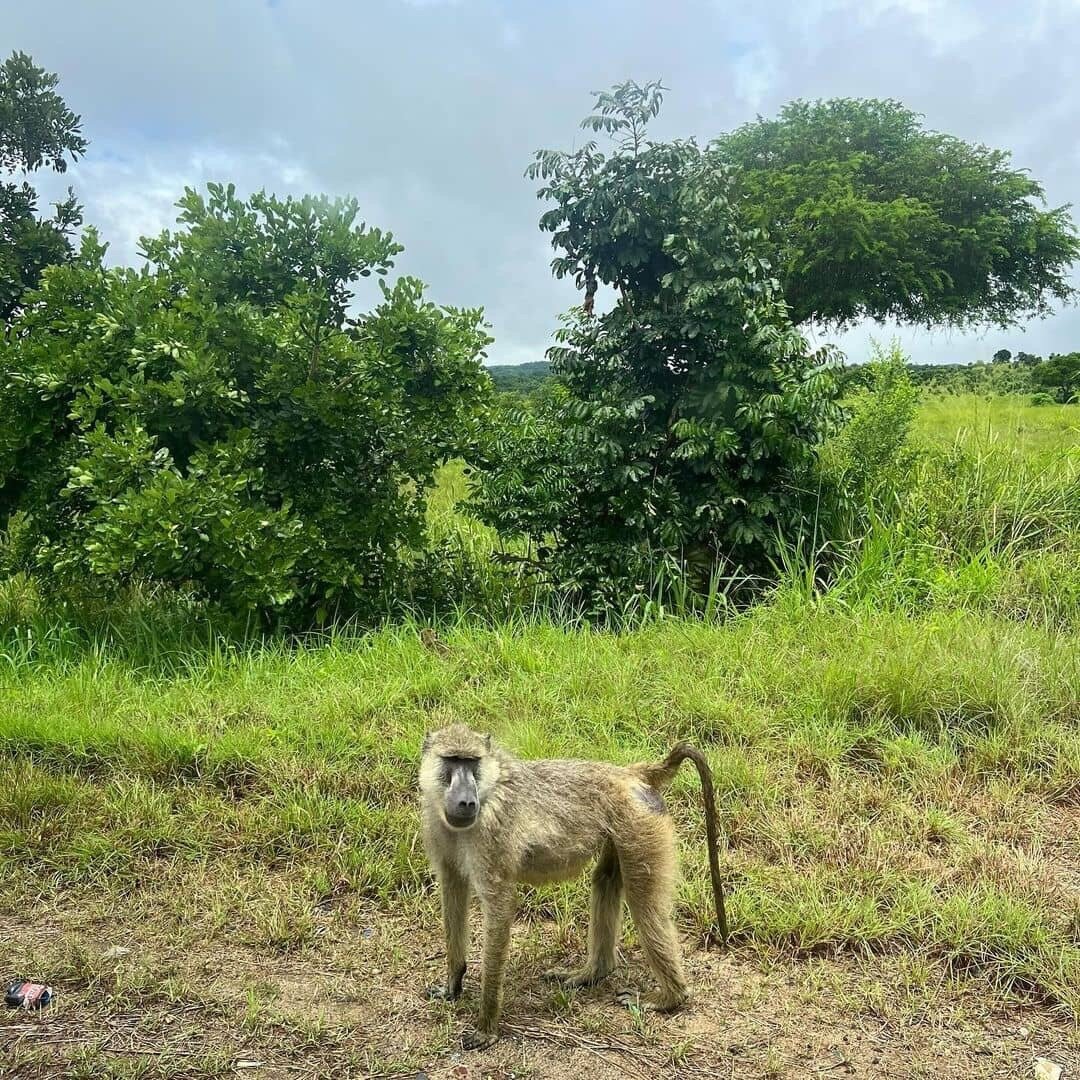
Baboons and Food Security at a Mikumi Bush Breakfast
This is the practical warning and it applies more to breakfast than to any other meal, because a spread table is exactly what baboons have learnt to look for.
Yellow baboons are a permanent presence around the picnic areas and park headquarters at Kikoboga, where troops have been studied for decades. They are strong, fast and unbothered by shouting.
Nothing edible goes unattended, not for thirty seconds. Keep vehicle windows closed while parked, bags zipped, and hands on food. A baboon will take a pastry from a hand without hesitating.
Never feed them. Habituated animals spend more time near the road and feature heavily in the park’s wildlife road mortality figures, which run above 360 animals a year.
Vervet monkeys work the same angle on a smaller scale.
Combining a Bush Breakfast With a Sunrise Safari
The two belong together, and the sequence is worth planning properly.
Gates open at first light, and the first two hours are the most productive of the day. Predators are still moving, mist lies over the grass in the cooler months, and lion are findable on the flattened tops of termite mounds where they watch the herds.
Breakfast around eight or nine, once that window has passed, then continue to the waterholes for the mid-morning drinking. That gives you both halves of the morning rather than one.
Coffee before departure is standard at most camps, since nobody wants a full breakfast at half past five. The real meal waits until you have earned it.
Bush Breakfasts and Full Day Game Drives
A bush breakfast pairs naturally with a full day drive, which runs from gate opening until the gates close at six with a packed lunch as well.
That combination is what lets you reach the far loops of the 60 kilometre circuit, the Kisingura area, or the miombo woodland toward the Vuma Hills where sable antelope and greater kudu live. Those species are seldom seen on the open plain and reaching them costs a half day that a split itinerary cannot spare.
Ten or eleven hours in a vehicle is a real commitment, and the middle of the day on an open floodplain is hot and quiet. The hippo pools are the exception, since hippo are most active in the water at midday.
Families with young children usually do better with a bush breakfast and a return to camp for the afternoon.
Best Season for a Bush Breakfast in Mikumi
June to October is easiest. Dry ground, firm tracks, no rain and the coolest temperatures of the year, which makes sitting outside at eight in the morning pleasant rather than sweltering.
September and October bring the busiest waterholes, so the mid-morning hours a bush breakfast buys you are at their most valuable.
From November to May, humidity builds and showers become likely, particularly in the afternoons. March and April bring the heaviest rain, when eating outdoors is unreliable and a packed breakfast in the vehicle is the fallback.
June to October: best conditions. Cool mornings, dry ground and busy waterholes through the mid-morning hours a bush breakfast keeps you out for.
November to February: hot and humid with showers likely. Green plains and migrant birds, with shade worth seeking out at the breakfast stop.
March to May: heaviest rain of the year. Outdoor set-ups unreliable, though a packed breakfast eaten in the vehicle still works.
Where to Base Yourself for a Bush Breakfast in Mikumi
Camps inside the park are the practical choice, since you need to be on the circuit at gate opening for the sunrise drive that precedes breakfast.
Stanley’s Kopje sits on a rocky kopje above the Mwanamboga waterhole and runs buffet breakfasts, though it closes through the wettest months. Mikumi Wildlife Camp near park headquarters is minutes from the hippo pools. Vuma Hills sits in the southwestern hills and stays open year round.
Park entry runs 24 hours from when you clear the gate, so an in-park camp keeps that clock running overnight. Lodges outside the boundary near Mikumi town mean a drive to the gate and a fresh entry fee before the morning starts.
Questions About Bush Breakfasts in Mikumi
Do I have to book a bush breakfast in advance?
Yes. Camp kitchens are small and need notice, so ask when you book or at least the evening before. Mention dietary requirements at the same time, since supplies inside the park are limited and nothing can be improvised on the morning.
Does a bush breakfast cost extra in Mikumi?
Camps may charge for a full outdoor set-up with staff, while a packed breakfast is often included in a full board rate. Park entry is unaffected, running around US$30 per adult foreign non-resident per day and about US$10 for children aged 5 to 15, plus a vehicle fee near US$40 per day. Ask your camp what the arrangement covers.
Where can I have a bush breakfast in Mikumi?
At designated areas only, since leaving the vehicle elsewhere on the circuit is not permitted. The main site is at the hippo pools about five kilometres north of the main gate, which has toilets and shade. Riverine stands along the Mkata River are the other option where the park allows it.
Is it safe to eat outdoors in Mikumi?
At designated picnic areas, yes, with ranger instructions followed. Stay inside the marked zone at the hippo pools and do not walk toward the water. The real nuisance is baboons, which raid unattended food, so keep everything covered and never feed them.
What time is a bush breakfast served?
Usually around eight or nine, after the first productive hours of a sunrise drive. Coffee is served at camp before departure at gate opening. Eating later than nine cuts into the mid-morning window when elephant and buffalo come to drink.
Is a bush breakfast worth it compared with returning to camp?
For most people yes, because it keeps you in the park through the mid-morning hours when the waterholes are busiest. Driving back at eight means arriving at a table just as the drinking starts. Families with young children sometimes prefer the break that a return to camp gives.
Booking Your Mikumi Trip
The safari companies and tour operators listed on this website put trips like this together for a living and know which camps, guides and routes actually deliver. We are an independent guide to Mikumi; we do not book or sell tours ourselves.
When you are ready, arrange your safari, tour or holiday with one of the recognised operators listed here. Tell them your dates and what matters most, and a real person, not a form, will handle the itinerary, park bookings and logistics for you.