Which Animals Can You See in Mikumi?
A Mikumi safari commonly turns up elephant, buffalo, zebra, giraffe, wildebeest, impala and eland on the open plains, with lion regularly seen and leopard, spotted hyena and African wild dog present but scarce. Hippo and crocodile hold the permanent pools, sable antelope and greater kudu keep to the miombo foothills, and more than 400 bird species have been recorded. Mikumi covers 3,230 square kilometres in Tanzania’s Morogoro region and holds four of the Big Five, rhino having been lost to poaching.
Below is the full picture, species by species, with an honest note on how likely each one is.
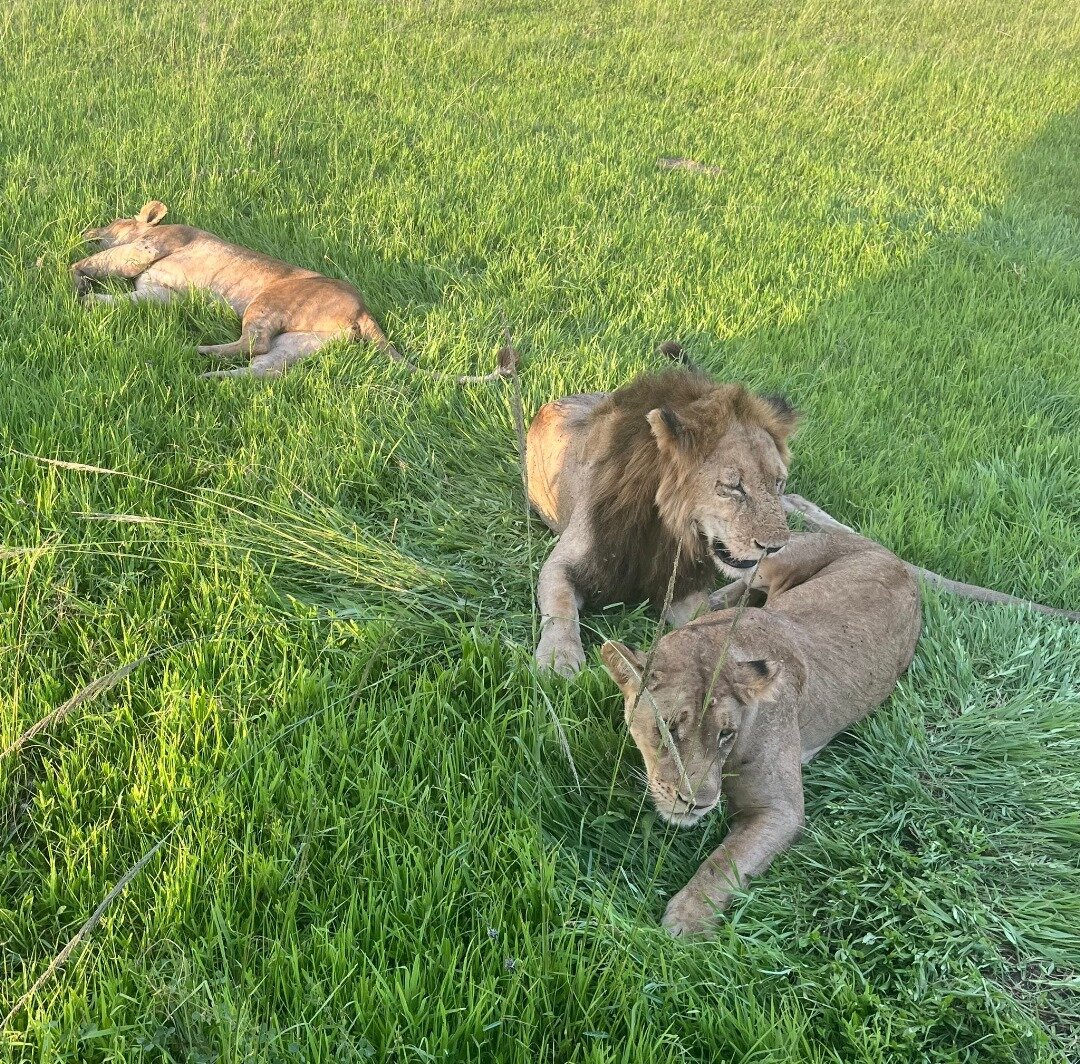
Big Cats and Predator Watching on a Mikumi Safari
Lion are the headline predator and are seen with reasonable regularity on the Mkata Floodplain, particularly through the dry season. Their signature behaviour here is using the flattened tops of termite mounds as lookouts over the herds, which gives a lioness the extra metre she needs to see across the grass.
During the rains, when grass grows past a metre, lion in Mikumi have been recorded resting in trees. It comes up often enough here to be worth asking your guide about and rarely enough that nobody should build a trip around it.
Leopard are present and genuinely rare to see. They favour the acacia and sausage trees along the Mkata River, hunting at night and lying up through the heat. Sightings happen, mostly on night drives, and cannot be planned for.
Spotted hyena turn up on early morning drives, often on the move back toward a den. African wild dog range across the wider Selous ecosystem to the south and pass through Mikumi occasionally, making this one of the few East African parks where they are a live possibility at all. Black-backed jackal work the open ground. Cheetah are not present.
Predator sightings in Mikumi are good rather than dependable. Ask your guide what has been seen over the past week, since that beats any general claim about the park by a wide margin. Two mornings out gives far better odds than one.
Elephant and Buffalo Herds on the Mkata Floodplain
Elephant are commonly seen and favour the acacia and tamarind stands fringing the Mkata River, where the shade is. They come to water mid-morning through the dry season, drink at length and throw mud across their backs before moving off.
Elephant numbers on the floodplain are not fixed. Animals appear to move seasonally between Mikumi and the forest reserves in the Rubeho mountains to the west, which is part of why a herd that was on the plain last month may be in the hills this one.
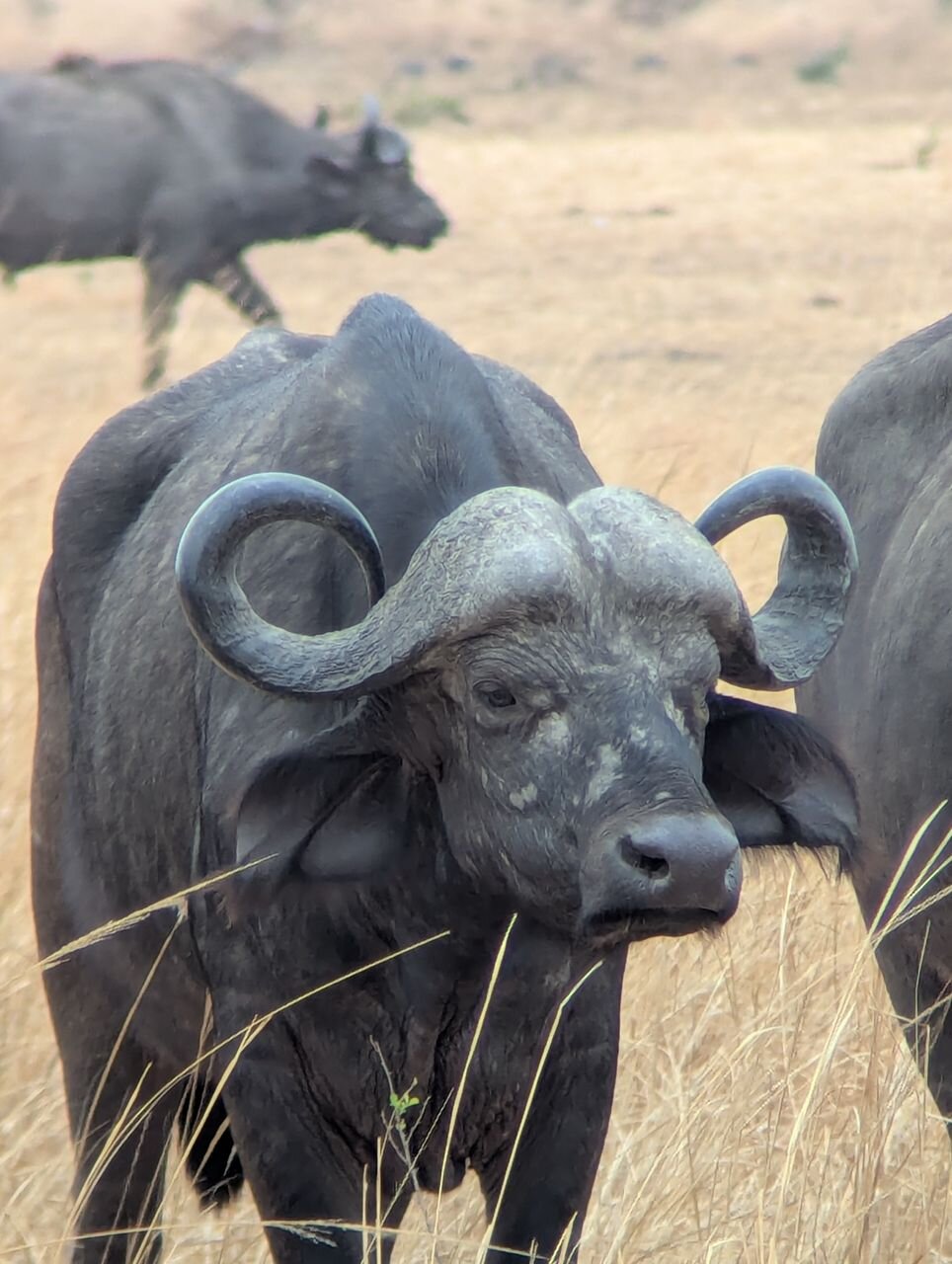
Buffalo gather in serious numbers once water gets scarce. Herds of several hundred are recorded in the dry season, and they come to the waterholes in tight groups, drink and leave quickly. They are also the species most often killed on the highway through the park, which says something about how much they move across it.
Both are reliably present through June to October and considerably harder to find once the rains scatter them.
Eland, Sable and the Rare Antelope of a Mikumi Safari
Mikumi’s real distinction among Tanzanian parks is its antelope. The Mkata Floodplain is widely rated the most reliable place in the country to see eland, the largest antelope in the world, with mature bulls close to a tonne, heavy dewlaps and spiralled horns.
Sable antelope hold to the miombo-covered foothills rather than the open plain. A bull carries backswept horns close to a metre long, black flanks and a white face mask, and the woodland near the Vuma Hills in the southwest is where to look. Greater kudu use the same cover, shy and quick to slip away, so early morning gives the better odds.
Lichtenstein’s hartebeest, unusual and often overlooked, is regularly seen on open ground and at the woodland edge. Bohor reedbuck occur on the floodplain. Waterbuck hold near wetter ground and bushbuck browse in denser cover.
Itineraries that never leave the floodplain miss sable and kudu entirely. That is the single most common gap in a short Mikumi trip.
Zebra, Wildebeest and Plains Game in Mikumi
Burchell’s zebra and blue wildebeest move across the Mkata grass in sizeable herds, often mixed with impala, and they are the animals most visitors see first. Zebra are also among the most visible species from the highway that crosses the park.
Impala are everywhere in the acacia country, leaping in that exaggerated way when something spooks them. Warthog run the verges and the waterhole edges, drinking fast and leaving faster. Common duiker and other small antelope occur in thicker cover.
Research on the floodplain found that in tall grassland several species keep well clear of the highway corridor, with zebra avoiding ground within 200 metres of the road and eland, reedbuck, jackal, elephant and wildebeest avoiding within 600 metres. The productive game viewing sits further north on the circuit, which is where guides go anyway.
Four of the Big Five live here. The fifth, rhino, was lost to poaching in the 1990s, and park authorities have signalled long-term intentions to bring them back. Any itinerary promising all five in Mikumi is out of date.
Giraffe of Mikumi National Park
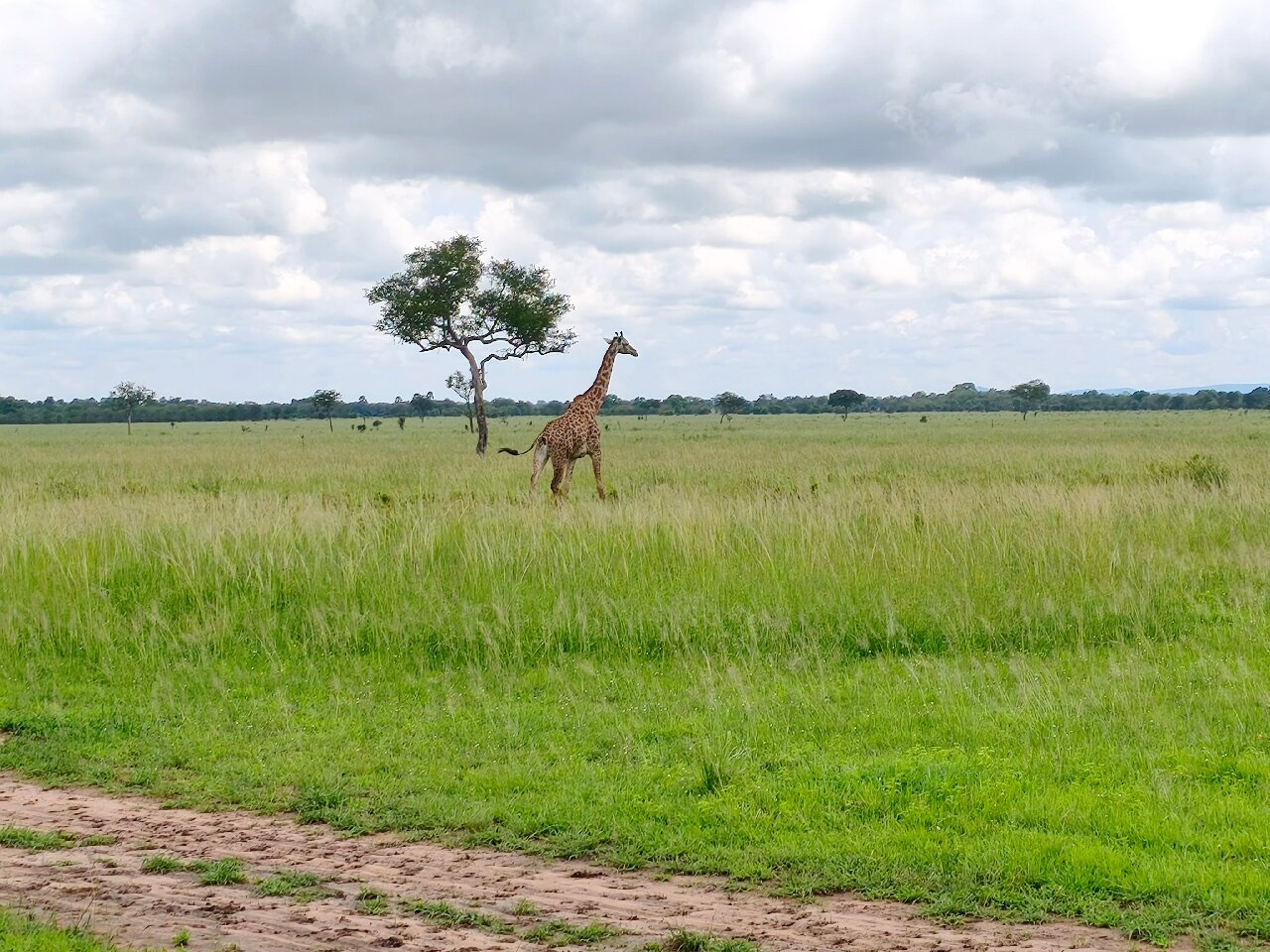
Giraffe are common and worth more than a passing glance. Biologists treat Mikumi’s population as transitional between the Masai and reticulated forms, so the coat patterning sits somewhere between the two rather than matching either cleanly.
They browse the isolated acacia stands that fringe the Mkata River, often spending hours on the same few trees, and the tamarinds are a particular favourite when the fruit is on. Elephant use the same shade, which makes those stands worth a slow pass rather than a drive-by.
Giraffe are also among the animals killed on the highway, with 17 recorded in the fifteen year period from 1973.
Hippo and Crocodile at the Mikumi Pools
Two permanent pools about five kilometres north of the main gate hold hundreds of hippo and are the park’s single most visited feature. Visitors can leave the vehicle at a designated viewing area, which is uncommon in Tanzanian parks.
Hippo timing runs opposite to normal safari logic. They are in the water through the middle of the day and out grazing at night, sometimes walking several kilometres, returning before first light. Aim for the pools between ten and two if hippo are your priority.
Nile crocodile share both pools and inhabit the park’s river systems more widely. On cooler mornings they haul out onto the bank to warm, which is when they are easiest to see and photograph. A large one lying half submerged reads as a log until it moves.
Primates and Smaller Mammals on a Mikumi Safari
Yellow baboon are the most visible primate, particularly near Kikoboga at the park’s centre where troops have been studied for decades. They use the highway as a bridge between foraging areas, which is why they feature heavily in road mortality figures.
Never feed them. Baboons around picnic areas and camps will take food from a table or an open vehicle without hesitation, and animals that learn to associate cars with food end up dead on the tarmac.
Vervet monkeys work the same margins in smaller numbers, and colobus occur in wooded areas. Bushbaby, genet and civet come out after dark and are among the reasons to book a night game drive, which Mikumi permits with an armed ranger.
Mongoose, porcupine and honey badger occur but are seldom seen.
Birds of Mikumi National Park
More than 400 bird species have been recorded, spread across grassland, seasonal swamp, riverine woodland and miombo.
On the open plain, look for yellow-throated longclaw, black-bellied bustard, secretary bird stalking through the stems, guineafowl running ahead of the vehicle and the lilac-breasted roller everybody photographs. Marabou stork stand about looking disreputable. Superb starling work the camp grounds.
Raptors are strong here. Bateleur, martial eagle and African fish eagle all quarter the plain and the river corridor, and Dickinson’s kestrel occurs in the woodland.
At the water, open-billed and yellow-billed stork gather in numbers around the hippo, joined by saddle-billed stork, hamerkop, herons, egrets and malachite kingfisher. Boehm’s bee-eater, straw-tailed whydah and various hornbills fill out the woodland list, with ground hornbill on the fringe.
From November through April, European and North African migrants arrive and push numbers up sharply. That is when a Mikumi birdwatching safari works best.
Reptiles in Mikumi
Beyond crocodile, water monitors work the muddy fringes of the pools and waterholes, hunting eggs and anything small enough to swallow. They are large lizards, often over a metre, and common once you learn the shape.
Pythons are recorded in the reeds and vegetation around the pools. Cobras occur. Terrapins and tortoises turn up, the former basking on exposed mud when levels drop.
Reptiles take the heaviest toll on the highway of any group by count. One fifteen month study logged 183 reptiles killed against 111 mammals and 55 birds.
Where and When to See Mikumi’s Animals
The dry season from June to October is the strongest window, and September and October the peak, when water is scarcest and animals concentrate on the remaining pools. Grass is at its shortest then, which improves spotting considerably.
November to May scatters everything. Water lies everywhere, grass grows past a metre and animals stop needing to visit any particular place, though birding improves markedly.
Habitat determines species. The Mkata Floodplain northeast of the highway holds the plains game, predators and eland, on a graded circuit of about 60 kilometres. The miombo foothills toward the Vuma Hills hold sable, kudu and hartebeest. The pools hold hippo, crocodile and waterbirds. Roughly four fifths of the park south of the road is undeveloped and not used for ordinary game drives.
June to October: best mammal viewing of the year. Elephant, buffalo, zebra and antelope concentrate at the last water, and short grass makes lion far easier to pick out.
November to February: migrant birds arrive in numbers and residents breed. Mammals dispersed and harder to find, calves appearing on the plain.
March to May: tallest grass, poorest access and the hardest game viewing of the year, with some park tracks impassable after heavy rain.
Questions About Mikumi’s Wildlife
Does Mikumi have all of the Big Five?
No. Lion, leopard, elephant and buffalo are present, though leopard sightings are rare. Rhino were lost to poaching in the 1990s and are currently absent from the park, with authorities having indicated long-term plans for reintroduction.
What does it cost to go on a game drive in Mikumi?
Park entry for adult foreign non-residents currently runs around US$30 per person per day, with children aged 5 to 15 near US$10. Tanzanian resident adults pay roughly US$15, and East African citizens less again in shillings. A six to twelve seat safari vehicle adds about US$40 per day and a private car around US$10. Night game drives carry a further per person charge, commonly near US$59.
How likely am I to see lions in Mikumi?
Regular but not guaranteed. Lion are commonly seen on the Mkata Floodplain through the dry season, often on termite mounds. Two mornings of drives gives noticeably better odds than one, and September and October are the strongest months because the grass is at its shortest.
Where do I see sable antelope and kudu in Mikumi?
In the miombo woodland foothills rather than on the open plain, particularly around the Vuma Hills in the southwest of the park. Both species are shy and more likely in the early morning. An itinerary that stays on the floodplain circuit will not produce either.
Are there wild dogs in Mikumi?
Occasionally. Packs range across the wider Selous ecosystem to the south and pass through Mikumi, which makes this one of the few East African parks where a sighting is possible. It is rare and nobody should book expecting it.
What is the best time of day to see animals in Mikumi?
The first two hours after the gates open at first light, when predators are still moving and the light is at its best. Mid-morning is when elephant and buffalo most often drink. Hippo are the exception, being in the water through the middle of the day. Afternoons pick up from around four, with gates closing at six.
Booking Your Mikumi Trip
The safari companies and tour operators listed on this website put trips like this together for a living and know which camps, guides and routes actually deliver. We are an independent guide to Mikumi; we do not book or sell tours ourselves.
When you are ready, arrange your safari, tour or holiday with one of the recognised operators listed here. Tell them your dates and what matters most, and a real person, not a form, will handle the itinerary, park bookings and logistics for you.