Self-Drive Safari in Mikumi National Park
A self-drive safari in Mikumi National Park is one of the easiest in Tanzania to attempt, since the road from Dar es Salaam is surfaced the whole way and the game viewing circuit is a graded 60 kilometre loop starting minutes from the main gate. You pay entry and a vehicle fee by card at the gate, drive yourself, and take responsibility for everything after that. Mikumi covers 3,230 square kilometres in the Morogoro region, four to five hours inland from the coast.
Below is what a self-drive trip involves, what the park charges, and where people get caught out.
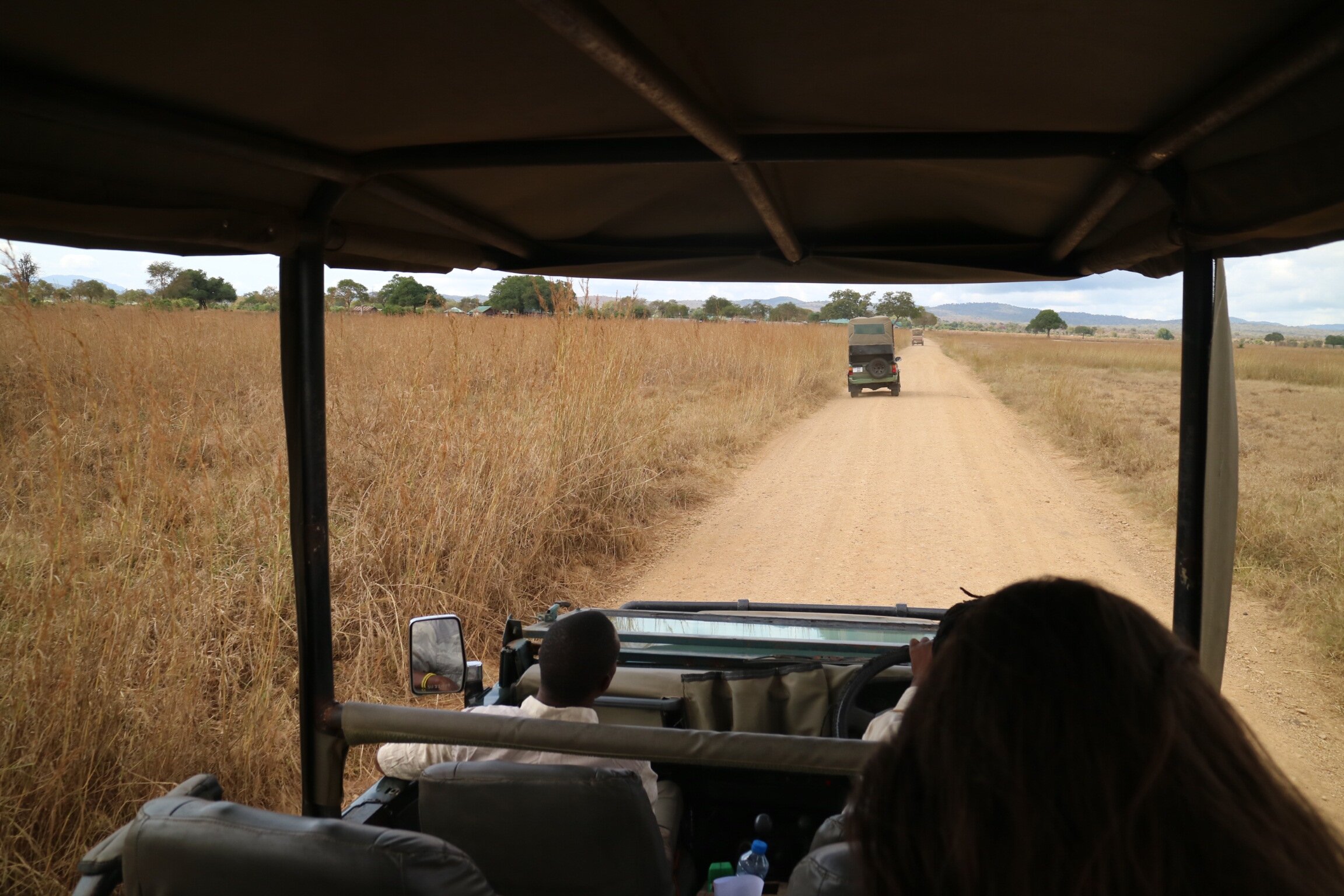
Is Self-Driving Practical in Mikumi National Park?
More so than almost anywhere else in Tanzania. The A7 runs from Dar es Salaam through Morogoro to the park on tarmac, signposting is adequate, and the main gate sits directly off the highway around seven to eight kilometres from Mikumi town.
Once inside, the tourist circuit across the Mkata Floodplain is graded track with loops that branch and rejoin. It is not technical driving. Navigation is straightforward, and park maps are available at the gate.
Mikumi also attracts the highest number of domestic visitors of any Tanzanian national park, so self-driving here is normal rather than unusual.
What you give up is a guide, and that is a larger loss than most first-timers expect. Guides find animals you drive past and read behaviour you cannot.
You can hire a TANAPA guide at the main gate to ride with you for the day. On a first self-drive visit it is the best money you will spend, and it costs a fraction of a full tour.
What a Self-Drive Safari in Mikumi Costs
Two charges apply at the gate and they are separate.
Park entry is per person per day: currently around US$30 for adult foreign non-residents and about US$10 for children aged 5 to 15. Tanzanian resident adults pay roughly US$15 and children US$5, with East African citizens paying a lower rate in shillings. Under fives enter free.
The vehicle fee depends on seat count and where the vehicle is registered. A private car of up to five seats runs around US$10 per day for a foreign registered vehicle and about US$5 for a Tanzanian one. A six to twelve seat vehicle is roughly US$40 against US$20, and buses or trucks sit near US$100 and US$50.
Entry is valid 24 hours from the moment you clear the gate. Sleeping outside the boundary means paying again on re-entry each morning, which quietly adds a full day of fees to a two night trip.
Choosing a Vehicle for a Mikumi Self-Drive
Ground clearance matters more than four wheel drive for most of the year, and both matter in the wet months.
In the dry season from June to October, much of the graded circuit is drivable in a two wheel drive vehicle with decent clearance. The black cotton soil sets hard. Low slung saloons are a bad idea at any time.
From November onwards the same soil turns to a heavy greasy paste and four wheel drive becomes necessary. In March and April parts of the circuit cannot be driven at all. Tracks in the miombo country toward the Vuma Hills deteriorate faster than the plain.
Hire a proper four wheel drive rather than a soft roader if your dates fall outside the dry months. Check the spare, the jack and whether any recovery gear is included, because there is no recovery service inside the park.
Paying Fees and Entering Mikumi as a Self-Driver
TANAPA takes payment by Visa or Mastercard at the main gate and through its online portal, and does not accept cash for park fees. Bring a card that works internationally and tell your bank you are travelling, since a declined transaction at the gate has no easy fallback.
Carry your passport or identity document. Rates depend on residency status and the gate checks rather than taking your word for it, and children’s ages need documenting too.
There are no ATMs inside the park, so carry Tanzanian shillings separately for anything bought outside it.
Gates open at first light and close at six in the evening. Late arrivals are turned away regardless of prepayment, so build slack into a day that starts on the coast.
The two things that ruin a self-drive day in Mikumi are a card that will not work at the gate and an arrival after six. Both are entirely avoidable and both happen regularly.
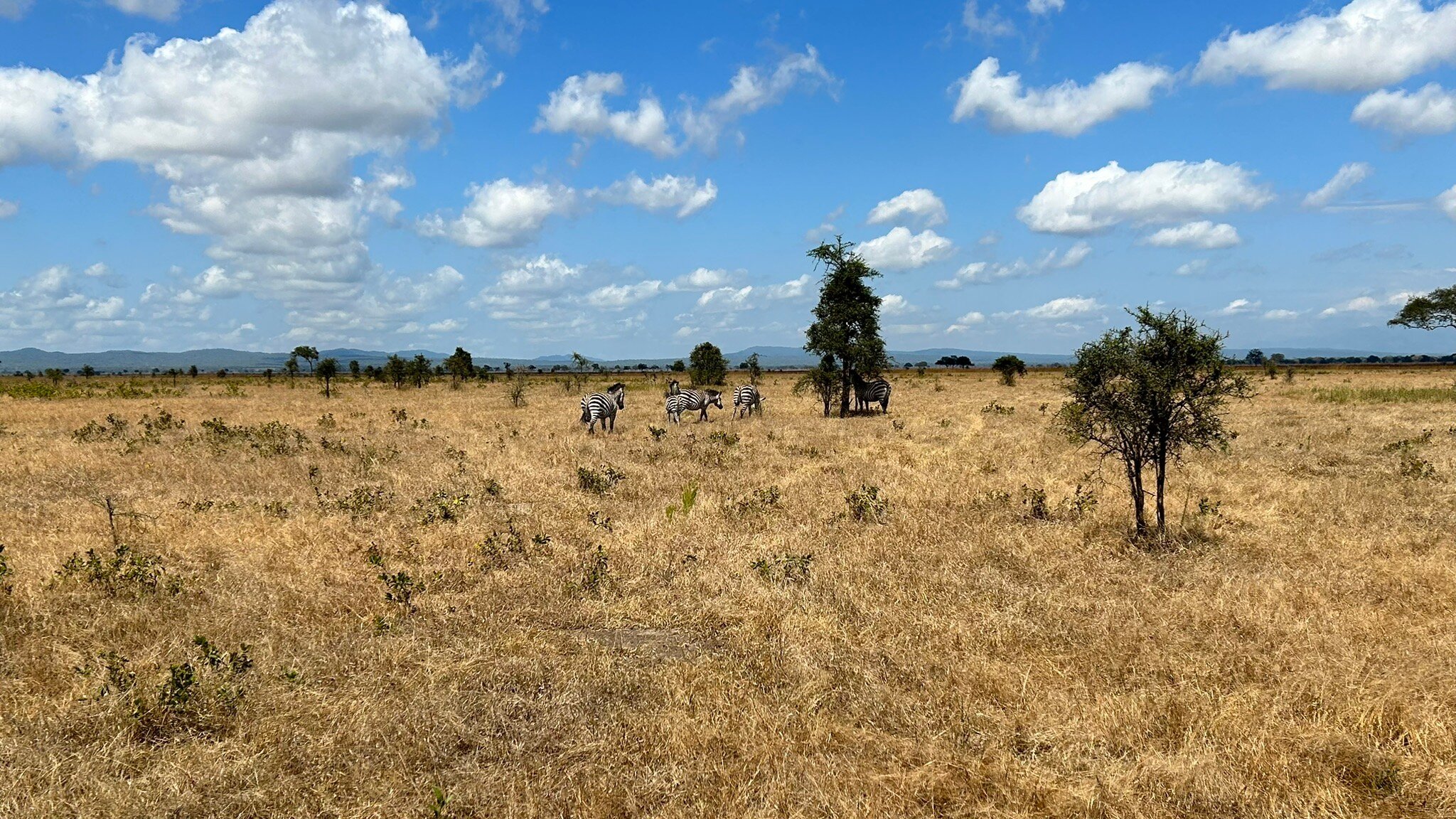
Driving the Mkata Floodplain Circuit Yourself
The circuit runs about 60 kilometres northeast of the highway, and roughly four fifths of Mikumi lies south of the road with minimal roads and no facilities, described as country for well equipped expeditions rather than ordinary drives.
Work the water rather than the distance. The hippo pools sit about five kilometres north of the gate, with the Mkata and Chamgore waterholes further along and Mwanamboga below the rocky kopje where Stanley’s Kopje camp stands.
Park, switch off and wait thirty or forty minutes at each. It is the single habit that separates a productive self-drive day from a frustrating one, and self-drivers are the group most likely to keep moving because nobody is telling them to stop.
Watch the termite mounds. Lion here use their flattened tops as lookouts over the herds, and that is the tell that finds them.
Rules and Safety on a Mikumi Self-Drive Safari
Stay in the vehicle except at designated areas, which means the hippo pools viewing area and marked picnic sites. Walking elsewhere is only permitted on a guided walking safari with an armed ranger.
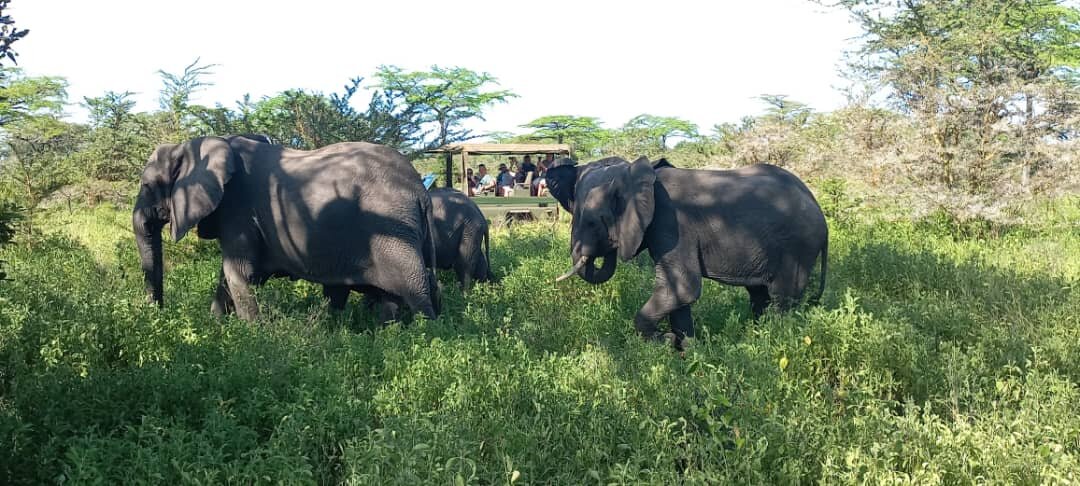
Do not drive off the tracks. Keep noise down at sightings, give elephant cows with calves room, and never position the vehicle between a herd and the water it is heading toward.
Baboons will take food from an open window at picnic areas, so keep windows closed when parked and never feed anything.
On the highway through the park, hold a low speed and stay slow between the eleven speed bumps. Wildlife mortality on the corridor runs above 360 animals a year, and hitting a buffalo at speed injures people and animals alike.
Fuel, Supplies and Practicalities for Self-Drivers
Morogoro, about 118 kilometres short of the park, is the last town with proper fuel, shops and a reliable place to eat. Fill up there rather than relying on anything closer.
There is nowhere inside the park to buy food or water. Carry more water than the distance suggests, since heat and dry air dehydrate people faster than they notice in a vehicle.
Bring a packed lunch if you intend a full day, and eat only at designated picnic areas. Take all rubbish out with you.
Mobile coverage is patchy inside the park. Tell someone your route if you are travelling alone, and do not rely on a phone for navigation.
Where Self-Drivers Stay Around Mikumi
TANAPA runs public campsites near park headquarters at around US$29.50 per adult per night, with children aged 5 to 15 near US$11.80, plus remote special campsites with no facilities at all. Bandas are also available. All are booked through park headquarters, and camping is a common way to break longer overland routes between Dar es Salaam, Iringa and the rest of the southern circuit.
Lodges outside the boundary near Mikumi town suit self-drivers who want a bed, with rooms starting around US$75 to US$84 a night. Tan-Swiss, Camp Bastian, Angalia and Afrika Yangu are the names that come up most.
Staying inside the park keeps your 24 hour entry running overnight, which is worth costing out over a two or three night trip.
June to October: the easiest self-drive months. Firm tracks, much of the circuit drivable in a high clearance two wheel drive, and the best game viewing of the year.
November to February: four wheel drive becomes necessary as the soil turns. Green plains, dispersed game and migrant birds, with afternoon showers likely.
March to May: hardest conditions. Some loops impassable, black cotton soil at its worst and no recovery service if you get stuck.
Questions About Self-Drive Safaris in Mikumi
Can I drive myself around Mikumi National Park?
Yes. Self driving is permitted, the road in from Dar es Salaam is surfaced the whole way and the game viewing circuit is graded track. You pay park entry and a vehicle fee at the main gate by card, and take responsibility for navigation, supplies and any breakdown, since there is no recovery service inside the park.
What are the vehicle fees for a self-drive in Mikumi?
A private car of up to five seats currently costs around US$10 per day for a foreign registered vehicle and about US$5 for a Tanzanian one. A six to twelve seat vehicle runs roughly US$40 against US$20. This is charged on top of your own entry fee of around US$30 per adult foreign non-resident per day.
Do I need a 4×4 to self-drive in Mikumi?
In the dry season from June to October, a high clearance two wheel drive handles much of the graded circuit. From November onwards the black cotton soil turns and four wheel drive becomes necessary, with some loops impassable in March and April. Tracks toward the Vuma Hills need it earlier.
Can I hire a guide at the gate in Mikumi?
Yes, TANAPA guides can be hired at the main gate to accompany you, and on a first self-drive visit it is worth doing. All guides operating in the park need TANAPA approval. Activities such as walking safaris and night drives require an armed ranger and must be booked in advance rather than arranged at the gate.
Can I pay park fees in cash at Mikumi?
No. TANAPA takes payment by Visa or Mastercard at the gate or through its online portal and does not accept cash for park fees. There are no ATMs inside the park. Bring a card that works internationally, tell your bank you are travelling, and carry shillings separately for purchases outside the park.
Where can I camp on a self-drive safari in Mikumi?
TANAPA public campsites near park headquarters cost around US$29.50 per adult per night, with children aged 5 to 15 near US$11.80. Remote special campsites with no facilities cost more per person. Both are booked through park headquarters and you need your own tent, food and water.
Booking Your Mikumi Trip
The safari companies and tour operators listed on this website put trips like this together for a living and know which camps, guides and routes actually deliver. We are an independent guide to Mikumi; we do not book or sell tours ourselves.
When you are ready, arrange your safari, tour or holiday with one of the recognised operators listed here. Tell them your dates and what matters most, and a real person, not a form, will handle the itinerary, park bookings and logistics for you.