Leopard & Hyena Spotting in Mikumi National Park
Leopard and spotted hyena are both present in Mikumi National Park, but they sit at opposite ends of the odds. Hyena turn up fairly often on early morning drives and after dark, while leopard are described as rare and are most realistically seen on a night game drive safari or in the riverine acacia and sausage trees along the Mkata River. Mikumi covers 3,230 square kilometres in Tanzania’s Morogoro region and permits night drives, which is what makes leopard a possibility here at all.
Below is where to look for each, when, and what expectations are honest.
How Realistic Leopard Spotting Is on a Mikumi Safari
Start with the honest position. Wildlife guides consistently rate leopard in Mikumi as rare, sitting below lion, which are themselves described as occasional rather than abundant.
The animals are there. What makes them hard is behaviour rather than scarcity: leopard hunt at night, lie up through the heat in dense cover, and are solitary and secretive by nature. A daylight game drive across open grassland is close to the worst possible way to find one.
That does not make it pointless. It means adjusting how and when you look, and accepting that a leopard in Mikumi is a piece of luck rather than a planned outcome.
Any operator promising leopard is overselling. Ask instead when one was last seen and where.
If leopard genuinely matter to you, book a night game drive and say so when you enquire. It is the single decision that moves the odds, and it needs arranging in advance because both the ranger and the fitted vehicle have to be organised.
Where Leopard Are Found in Mikumi National Park
Leopard favour cover, and in Mikumi that means one narrow strip of habitat rather than the open plain.
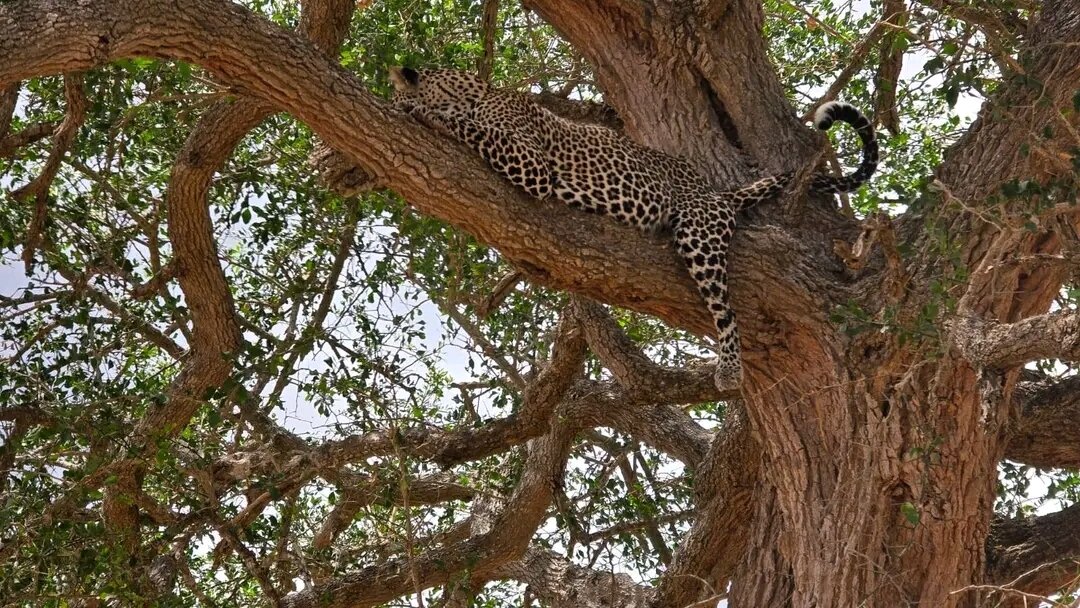
The riverine woodland along the Mkata River is the place. Acacia and sausage trees fringe the channels, forming shaded islands where leopard lie up through the day, often stretched along a horizontal branch several metres up.
Scan the trees rather than the ground. A tail hanging below a branch is the classic giveaway, along with an unnatural horizontal shape in a canopy that is otherwise all vertical lines.
Rocky outcrops are the other possibility, and Mikumi has kopjes breaking the floodplain, including the one on which Stanley’s Kopje camp is built. Miombo woodland toward the Vuma Hills gives cover too, though sightlines there are short enough to make anything difficult.
Night Game Drives for Leopard Spotting in Mikumi
Night drives are the realistic route, and Mikumi is one of a short list of Tanzanian parks where TANAPA permits them, alongside Ruaha, Katavi, Tarangire, Lake Manyara and Nyerere.
Drives run roughly eight until eleven in the evening, carry an armed ranger, and use a vehicle fitted with a proper spotlight. A spotter sweeps grass and treeline in slow arcs looking for eyeshine while the guide drives at little more than walking pace.
That timing catches the front end of a leopard’s hunting night, which no daylight drive can reach. Lodges that offer night drives describe leopard among the animals guests come across, alongside bush babies and other nocturnal species.
Charges run around US$50 per adult non-resident on top of park entry, with roughly US$50 more if you use your own vehicle. Booking must be in advance.
Spotted Hyena Sightings on a Mikumi Game Drive
Hyena are a far better bet than leopard and deserve more attention than they usually get.
Spotted hyena turn up on early morning drives with reasonable regularity, most often on the move back toward a den after a night’s activity. The first hour after gates open at first light is when to look.
They are also seen on night drives, when they are properly active rather than heading home. People staying at unfenced camps inside the park frequently hear them calling, and that whooping carries a long way across the plain.
Watch for them near carcasses and near the waterholes through the dry season, when prey concentration draws all the predators to the same geometry. Black-backed jackal work the same ground on a smaller scale.
Hyena get treated as a consolation prize by people hoping for something else. Spend twenty minutes with a clan and they are considerably more interesting than the cat you did not see.
Reading Signs That Point to Leopard and Hyena
Alarm calls do most of the work. Baboon troops shout when they see a leopard, and Mikumi has yellow baboons in numbers, particularly around Kikoboga near park headquarters. A troop making noise in the riverine trees is worth investigating properly rather than driving past.
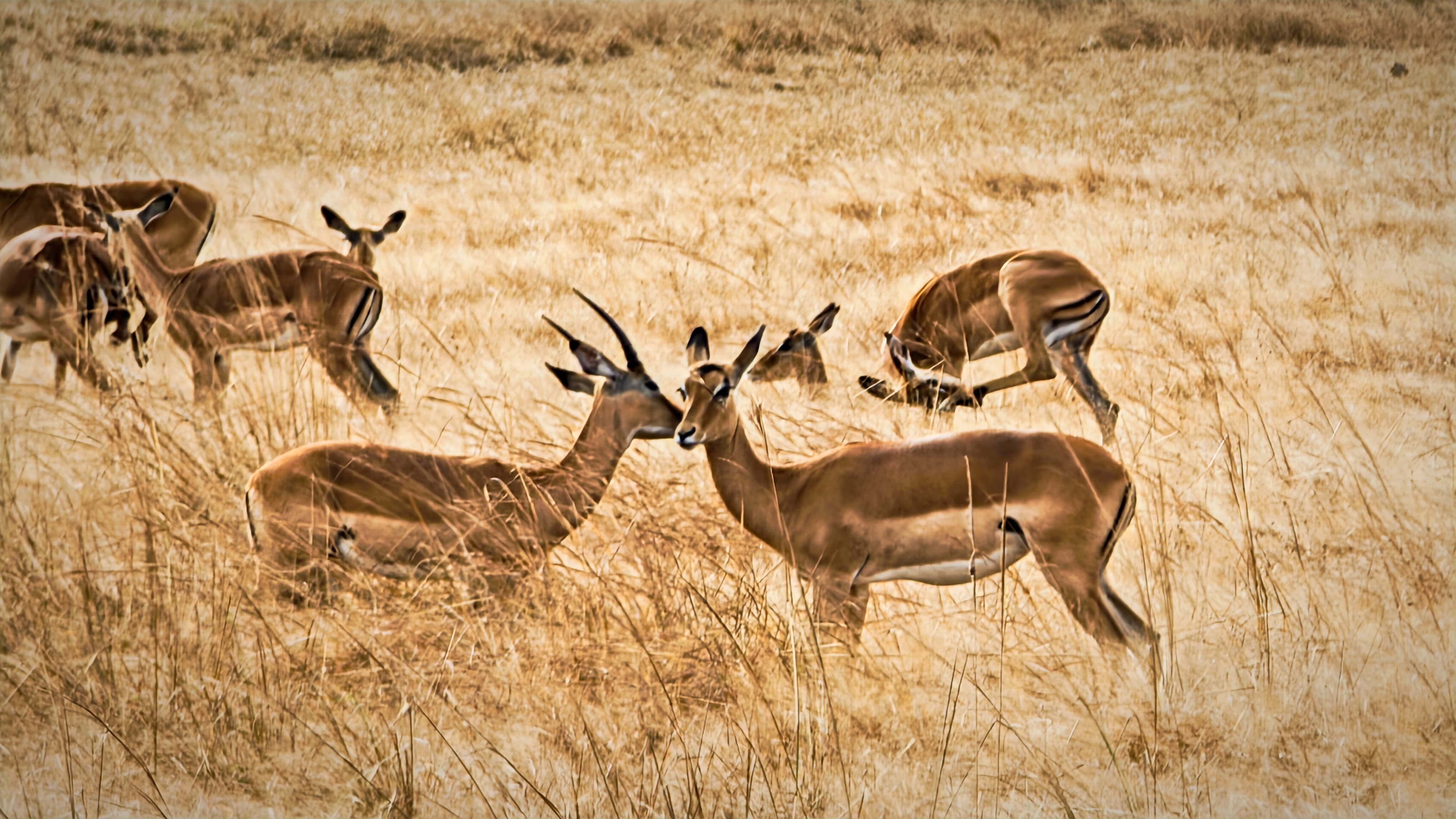
Impala give an explosive snort at predators. Vervet monkeys have their own alarm and it carries.
Tracks on the graded circuit hold well in the dry season. Leopard prints are rounder and smaller than lion, without claw marks. Hyena prints show claws and a distinctive asymmetry.
Vultures dropping or circling indicate a carcass, and hyena will often be on or near it. Kills dragged up into trees are a leopard signature, though this is more commonly seen in parks with higher leopard densities than Mikumi has.
Hyena Clans and Behaviour on a Mikumi Safari
Spotted hyena live in clans led by females, and the social structure is obvious once you spend time with a group rather than photographing one and moving on.
Females outrank all males, cubs inherit their mother’s position, and the greeting rituals between clan members are elaborate. A den site with cubs above ground is one of the better sightings available in Mikumi, and guides who know where one is will take you if the clan is still using it.
They are also far more effective hunters than their scavenging reputation suggests, taking a large share of their own food rather than living off lion kills. Watching a clan work a herd at dusk is a different animal from the one in the documentaries.
The whooping call carries several kilometres and is one of the sounds people remember from unfenced camps inside the park. Mentioning the direction you heard it from is useful information for your guide at breakfast.
Best Season for Leopard and Hyena in Mikumi
The dry season from June to October is stronger for both, for the same reason it is stronger for everything else. Prey concentrates on the last remaining water, predators follow, and short grass makes movement visible.
September and October are the peak. Night drives also work better then, since tracks hold up and spotlights reach further across short grass.
From November to May, grass grows past a metre and absorbs the spotlight, which reduces how far a spotter can usefully scan. Some camps suspend night drives when conditions deteriorate, and March and April are the worst of it.
June to October: best odds for both. Prey concentrated at water, short grass, firm tracks and night drives running reliably. September and October are the peak.
November to February: green and tall. Spotlighting range drops, hyena still audible at night, leopard sightings scarce.
March to May: the hardest months. Wet tracks, grass over a metre and night drives sometimes suspended when conditions turn.
How Many Days to Allow for Leopard and Hyena in Mikumi
For hyena, two nights giving three drives including two at first light is enough to make a sighting reasonably likely in the dry season.
For leopard, there is no number of days that makes it likely in Mikumi. Three nights with two night drives gives you the best structural chance available here, and it is still a matter of luck.
Anyone for whom leopard is the point of the trip would do better in a park with higher densities. Mikumi is a strong choice for eland, sable antelope, greater kudu and hippo, and a poor one for a guaranteed cat list.
That honesty is worth having before you book rather than after.
Where to Stay for Predator Spotting in Mikumi
Sleeping inside the park matters, because night drives depart from camp after dinner and park entry runs 24 hours from when you clear the gate.
Stanley’s Kopje sits on a rocky kopje above the Mwanamboga waterhole in ground guides rate as the park’s strongest, though it closes through the wettest months. Mikumi Wildlife Camp near park headquarters has its own waterhole and is closest to the airstrip. Vuma Hills sits in the southwestern hills and stays open year round.
Check directly whether the camp has a night drive vehicle. Not every property does, and it is the limiting factor rather than the ranger.
The main gate is roughly 283 to 300 kilometres from Dar es Salaam, four to five hours by road via Morogoro.
Questions About Leopard and Hyena in Mikumi
Are there leopards in Mikumi National Park?
Yes, leopard are present and are one of the four Big Five species found here, alongside lion, elephant and buffalo. They are rated rare by wildlife guides and are seldom seen on daylight drives, favouring acacia and sausage trees along the Mkata River and hunting at night.
What does a night drive cost for leopard spotting in Mikumi?
Around US$50 per adult non-resident and about US$25 for children, with lower rates in shillings for East African citizens. Some sources quote closer to US$59 per person. A separate vehicle charge of roughly US$50 applies if you use your own car. Park entry of about US$30 per adult foreign non-resident per day is charged on top.
How often are hyena seen in Mikumi?
Fairly regularly on early morning drives, most often heading back toward a den after a night out, and on night drives when they are properly active. Guests at unfenced camps inside the park frequently hear them calling. They are a far more realistic sighting than leopard.
Where should I look for leopard in Mikumi?
The riverine woodland along the Mkata River, where acacia and sausage trees give shaded cover. Scan horizontally along branches rather than at the ground, looking for a hanging tail or an unnatural horizontal shape. Rocky outcrops and the miombo woodland toward the Vuma Hills are secondary options.
Is Mikumi a good park for big cats?
It is reasonable for lion, which are seen regularly on the floodplain through the dry season, and poor for leopard, which are rare. Cheetah are not present. If cats are the point of your trip, a park with higher densities would serve you better. Mikumi’s strengths are eland, sable, greater kudu, hippo and its accessibility.
Can baboon alarm calls help find a leopard?
Yes, and it is one of the more reliable signals in this park. Yellow baboons are present in numbers, particularly around Kikoboga near park headquarters, and a troop calling loudly in the riverine trees is worth investigating rather than driving past. Impala snorts and vervet alarms serve the same purpose.
Booking Your Mikumi Trip
The safari companies and tour operators listed on this website put trips like this together for a living and know which camps, guides and routes actually deliver. We are an independent guide to Mikumi; we do not book or sell tours ourselves.
When you are ready, arrange your safari, tour or holiday with one of the recognised operators listed here. Tell them your dates and what matters most, and a real person, not a form, will handle the itinerary, park bookings and logistics for you.